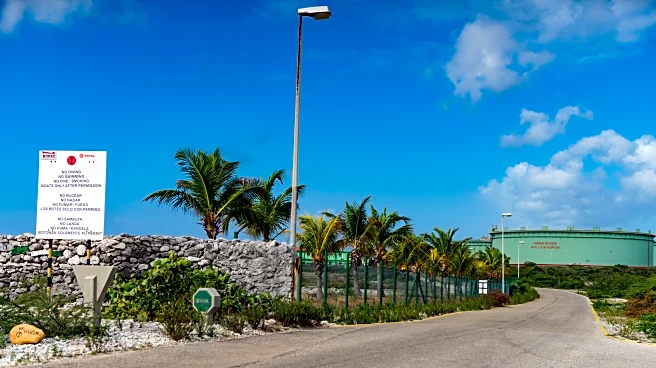




THE HAGUE, Netherlands (AP) — A Dutch district court is ruling Wednesday in a case brought by eight residents of a tiny Caribbean island who accuse the Netherlands' government of not doing enough to protect them from the devastating effects of climate change.
The case, backed by Greenpeace, is seeking to compel the government to better shield its citizens from the effects of increasing temperatures and rising sea levels and could set a precedent for
similar legal challenges elsewhere.
“It would be a victory of historic significance, should the court ruling force the State to take concrete measures to protect people from extreme weather and other consequences of the climate crisis,” Marieke Vellekoop, director of Greenpeace Netherlands, said in a statement.
The case is being heard at The Hague District Court because Bonaire, along with two other islands, St. Eustatius and Saba, became special Dutch municipalities in 2010. The island’s 20,000 residents are Dutch citizens based on their colonial history.
Lawyers for the government say the Netherlands already is making strides to combat climate change, citing greenhouse gas reductions and mitigation efforts. Government lawyer Edward Brans said the issue should be handled by national administrations and not judges.
The ruling comes as weeks of talks to form a new Dutch government following national elections in late October look like producing a new minority coalition headed up by centrist D66 leader Rob Jetten. He earned the nickname “climate pusher” when he was a minister responsible for shepherding through a raft of legislation intended to reduce the Netherlands' reliance on fossil fuels and significantly cut its carbon emissions.
The District Court of The Hague is the same court that heard the first stage of the landmark Urgenda case more than a decade ago. That case wrapped up in 2019 when the Dutch Supreme Court ruled in favor of climate activists and ordered the government to cut greenhouse gas emissions, a legal battle that paved the way for similar challenges around the world.
The Urgenda decision featured prominently in recent climate change decisions from the European Court of Human Rights and the United Nations’ highest court, the International Court of Justice. Judges. Both courts found that failing to combat climate change violated international law.
In the decade up to 2023, sea levels rose by a global average of around 4.3 centimeters (1.7 inches), with parts of the Pacific rising higher still. The world has also warmed 1.3 degrees Celsius (2.3 Fahrenheit) since preindustrial times because of the burning of fossil fuels.