





HAVANA (AP) — For months, two-thirds of Cuba had no electricity at night. Some neighborhoods in the capital Havana have been without running water for more than two weeks. Transportation is scarce and eggs, bread and cooking oil are hard to find.
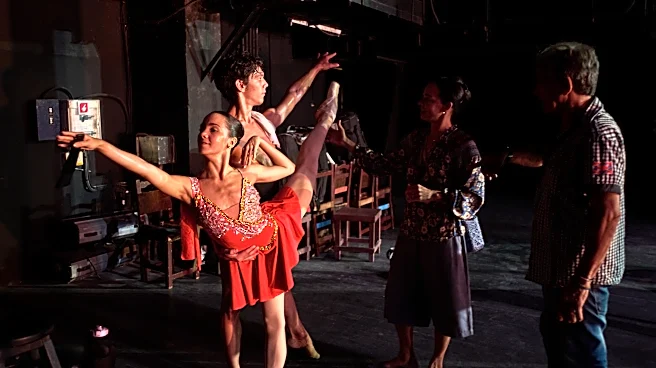
Yet every morning, about 178 young students gather for classes at the National Ballet School in the capital. Housed in an imposing Art Nouveau building in the heart of Old Havana, the school combines rigorous
dance training with academic classes in math, Spanish, history and science.
Training to become a top-tier classical dancer demands discipline and sacrifice anywhere. In Cuba today, where blackouts and shortages of fuel, water and food complicate daily life, those demands extend far beyond the dance studio.
For 14-year-old Roxana Pérez de La Mora, that means waking up before dawn and traveling about 20 kilometers (12 miles) from her home to the school.
“Sometimes I tell my mom I don’t feel like going, but missing it could cause problems for me later in training,” she said. “I’ve always said that my dream is to be a prima ballerina.”
Despite Cuba’s ongoing crises, classical ballet remains a celebrated part of the country’s culture, nearly as popular on the island as baseball. Over the decades, Cuba has produced internationally renowned dancers and choreographers whose careers are closely followed by a knowledgeable ballet audience.
The Cuban National Ballet, founded in the 1940s by revered ballerina Alicia Alonso and her husband Fernando Alonso, is considered one of the world’s most prestigious companies. Tickets cost less than $1, while comparable performances elsewhere can cost as much as $300.
For its season-ending gala in August, the company presented “Canto Vital,” a work by Russian choreographer Azari Plisetski to music by Gustav Mahler. The performance starred Dani Hernández, a principal dancer who also directs the National Ballet School, where Roxana trains each day.
Fuel shortages had left the streets nearly empty that night, but the Avellaneda Hall at the National Theatre of Cuba was packed with elegantly dressed patrons, their hair and makeup styled for the occasion. The audience gave a standing ovation, shouting “Bravo!”
The combination of demanding leadership at the National Ballet and rigorous training at a public school has helped produce dozens of prominent dancers. Some have gone on to become principals at leading companies including the Paris Opera Ballet, the Royal Ballet in London and American Ballet Theatre in New York.
Hernández, the professional dancer and teacher, rides an electric motorcycle every day from his apartment in Havana to ballet class, which is a risky commute for someone whose career depends on avoiding injury.
During recent persistent blackouts, heat and mosquitoes forced Hernández, 37, to sleep on the terrace of his apartment building.
“Whether I have electricity or not, I have to be in the studio,” he said. “But I keep thinking: Will the food in my refrigerator spoil?”
Hernández expressed his worry about how the country's mounting crises could affect future generations of dancers.
“The entire situation we’re experiencing today could affect a generation of students training in ballet, dance, music, the visual arts,” he said in an interview with The Associated Press. “And it’s been the same for all other fields: engineering, medicine, education, everything else.”
Yet classical ballet remains a source of national pride while maintaining its internationally recognized standards, an endurance that is reflected in the discipline's broad appeal across Cuban society.
“It’s one of those things where you go out on the street and say, ‘Hey, I saw the ballet,’ and everyone starts talking to you about ballet,” he said.
___
Follow AP’s coverage of Latin America and the Caribbean at https://apnews.com/hub/latin-america.