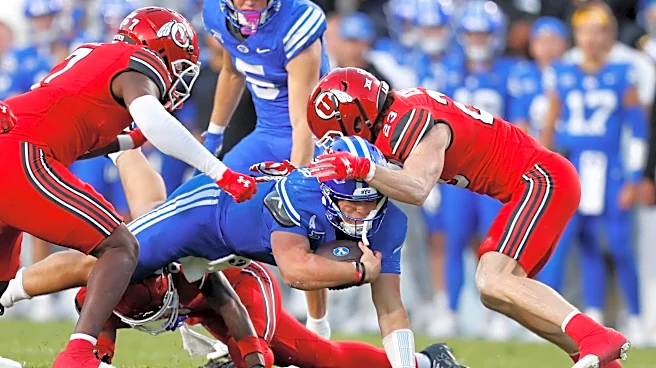



SALT LAKE CITY (AP) — Drawing interest from legions of football fans outside of Utah is becoming the new normal for the rivalry between Utah and BYU.
What began as an intense regional showdown has evolved into a rivalry among the top in the FBS because of what is typically riding on the game each season. Many past editions of the Holy War have decided conference championships. That might be the case again this year with both teams ranked in the Top
10 going into Saturday – the first time that’s happened in the history of the storied rivalry — giving the game College Football Playoff implications.
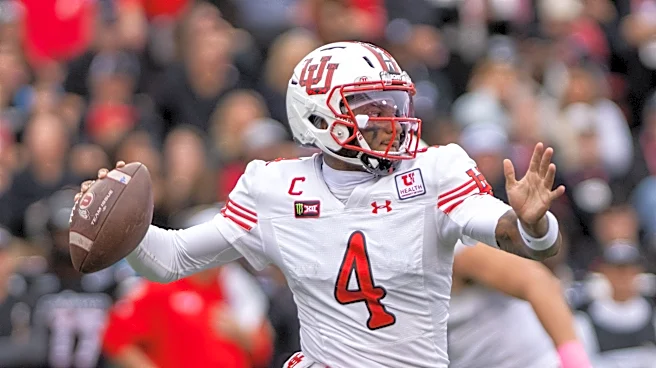
“This is such a significant game,” Utah quarterback Devon Dampier said. “So happy with the way both teams are performing to make the game what it is.”
A history of close, low-scoring battles peppered with dramatic finishes has helped shape the Holy War into must-see TV.
Of the last 25 games in the series, 21 were won by nine or fewer points. Many of those games were decided on the final play. Only wins for Utah in 2004, 2008, 2011, and 2019 featured a double-digit margin of victory.
“No matter the rankings, no matter the records, it’s a huge game,” Utah defensive back Jackson Bennee said. “This rivalry gets the best of both teams.”
The No. 3 Utes (8-0, 5-0 Big 12, No. 3 CFP) are seeking to snap a three-game losing streak in the series. They’ve lost by an average margin of only 4.3 points in that stretch.
No. 7 BYU (7-1, 5-1 Big 12, No. 9 CFP) has come out on top in back-to-back seasons since Utah joined the Big 12 in 2024, both times rallying from fourth-quarter deficits for dramatic victories.
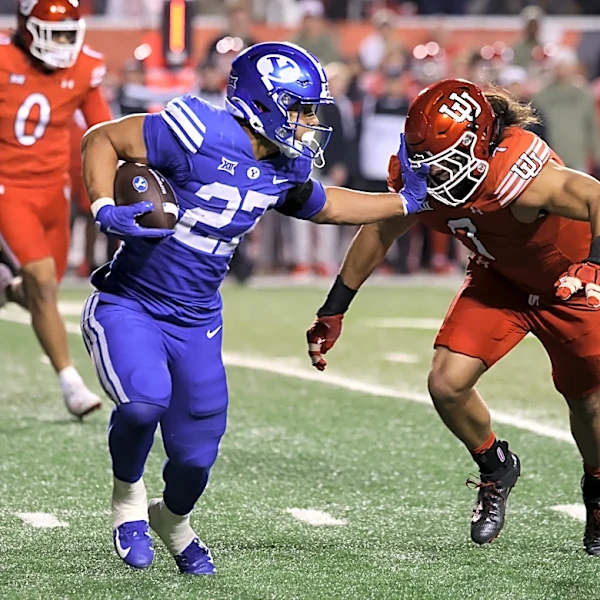
Will Ferrin kicked a 44-yard field goal with three seconds left in 2024 to help the Cougars complete a comeback from an 11-point second-half deficit for a 22-21 win. Last year, Bear Bachmeier led BYU on two fourth quarter touchdown drives, which included a memorable 22-yard TD run where he dragged defenders into the end zone to power a 24-21 win over the Utes.
Last season's Holy War victory helped the Cougars reach the Big 12 championship game while ultimately denying Utah a shot at the title.
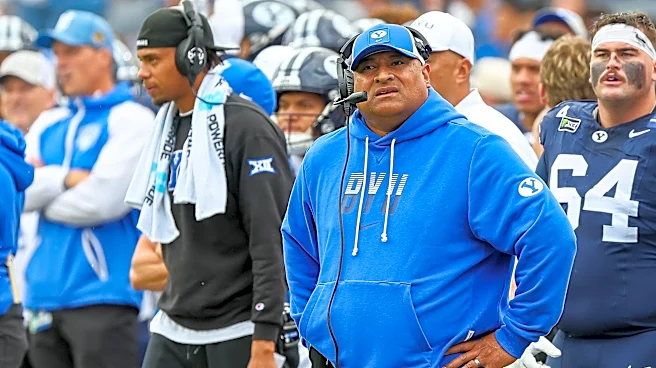
“There’s a lot of things that are riding on these games,” BYU coach Kalani Sitake said. “It just makes sense that we’re in the same conference and it makes sense that we’re in a power conference like the Big 12. It makes it even more fun. It definitely amplifies it.”
The Holy War wasn’t always such a competitive affair. Both schools took turns piling up wins against the other over stretches that lasted several decades.
Utah dominated the series before LaVell Edwards took over at BYU. From 1922 to 1971, the Utes lost to the Cougars only five times. Edwards turned the tide, leading BYU to a 19-2 mark against Utah in his first 21 seasons in Provo. Competitive balance wasn’t restored for the Utes until Ron McBride rebuilt Utah’s program in the 1990s.
Continued success in football for BYU and Utah since that time has helped keep the Holy War rivalry competitive and elevate its importance outside the Mountain Time Zone. Players and coaches from both schools acknowledge the impact that the game has beyond a single Saturday each fall and relish what it does for both schools and the state as a whole.
“I’ve known about the rivalry for a long time. I’ve gone to a lot of BYU football games,” BYU defensive end Bodie Schoonover said. “Being here actually playing in it, I’ve just felt it a lot deeper, I guess you could say. It’s been intense for sure, but it’s been something I’ve grown to love.”
___
Sign up for Top 25 poll alerts here. Visit the Top 25 here and see AP’s full college football coverage here