






A 10-day ceasefire between Israel and Lebanon came into effect at the stroke of midnight of April 16, pausing fighting between Israel and Hezbollah which
has left more than 2,100 Lebanese people dead and displaced over 2.1 million. The agreement was announced by Donald Trump, who said he had spoken with Israeli prime minister Benjamin Netanyahu and Lebanese president Joseph Aoun, and invited both leaders "for meaningful talks" at the White House. Both leaders also welcomed the agreement. While Israeli and Lebanese officials confirmed they would implement the ceasefire, uncertainty remains over its durability. Hezbollah signalled conditional acceptance, and both sides exchanged strikes in the final hours before the truce began. Against this backdrop, US and Iran also signalled readiness for further talks to extend their own ceasefire. Here are the major developments from the day:
1. A Fragile Ceasefire takes hold in Lebanon
The 10-day truce, which came into effect at midnight Friday, halts fighting between Israel and Hezbollah. Israeli Prime Minister Benjamin Netanyahu said Israeli forces would not withdraw from positions in southern Lebanon during the pause.
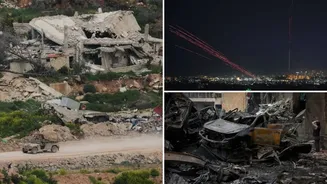
Hezbollah, for its part, indicated it would abide by the ceasefire only if Israel halts its attacks, with a senior official warning the group retains the right to respond. However, tensions continued in the region despite the ceasefire announcement. Gunfire erupted in Beirut’s southern suburbs as the ceasefire with Israel came into effect, according to AFP journalists and AFPTV footage. Agence France-Presse journalists reported hearing shots ring out and RPGs erupting into the air shortly after midnight and continuing for well over half an hour, as red bullet traces took off into the sky.
Israeli military spokesperson Avichay Adraee also issued an "urgent message" to the residents of southern Lebanon, warning them to remain north of the Litani River despite the commencement of the ceasefire.
2. Diplomacy Takes Centrestage
Trump said the truce could pave the way for renewed negotiations with Iran, adding that another round of talks might take place as soon as this weekend. He also floated the possibility of hosting Israeli and Lebanese leaders at the White House within "the next week or two", in what would mark a rare high-level meeting between the two countries.
The ceasefire followed a series of diplomatic contacts led by Secretary of State Marco Rubio, including meetings with Israeli and Lebanese representatives and calls coordinated with Lebanon’s president, Joseph Aoun.
3. US Signals Readiness for Renewed Conflict
Despite the diplomatic push, US officials said forces in the region are "rearming" and remain prepared to resume combat if negotiations with Iran fail. A naval blockade imposed by Washington remains in place, which Trump described as "amazing", claiming it has significantly curtailed Iran’s economic activity.
The President also warned that fighting could quickly resume if no agreement is reached, even as he suggested a ceasefire with Iran itself — due to expire next week — might not need to be extended.
4. The Red Lines
Details of the agreement underscore its provisional nature. According to the US State Department, Israel retains the right "to take all necessary measures in self-defense" during the ceasefire. Lebanese officials have urged civilians not to return to southern areas yet, citing ongoing risks.
Meanwhile, Iran’s parliament speaker Mohammad Bagher Ghalibaf told mediators that Lebanon must be included in any "comprehensive ceasefire" tied to US-Iran negotiations.
5. Stakes Remain High
Trump said Iran appeared increasingly willing to compromise, claiming Tehran had agreed to measures it had resisted just two months earlier. He also suggested he could travel to Pakistan to finalise a deal if negotiations succeed.
On the domestic front, he downplayed concerns over rising energy costs, saying gas prices were "not very high" and could fall below pre-war levels if an agreement is reached.
Even so, the situation remains highly fluid. The ceasefire between Israel and Hezbollah is seen as a temporary measure, and its success may determine whether wider talks between Washington and Tehran move forward — or whether the region slides back into open conflict.