






What is the story about?
New Delhi: In a sweeping set of directions aimed at tackling India's growing problem of uninsured vehicles, the Supreme Court on Tuesday proposed a pilot
project under which vehicles without valid insurance could be denied fuel at petrol pumps. The court also called for a technology-driven enforcement system to automatically detect uninsured vehicles and issue penalties. A bench of Justices Sanjay Karol and Prashant Kumar Mishra directed the Centre and the Insurance Regulatory and Development Authority of India (IRDAI) to prepare a roadmap for the pilot project, observing that the move could significantly improve compliance with mandatory motor insurance laws and ensure timely compensation for road accident victims.
'No Insurance, No Fuel': SC Wants Pilot Project
The court asked the Ministry of Road Transport and Highways (MoRTH) and IRDAI to examine the feasibility of linking fuel supply to a vehicle's insurance status.
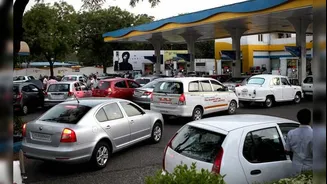
Under the proposed model, petrol pumps could refuse fuel to vehicles found without valid insurance until the owners renew their policies.
The bench noted that the Ministry of Petroleum and Natural Gas had, in principle, expressed no objection to such a proposal.
According to the court, the measure could act as a strong deterrent against uninsured vehicles while helping authorities identify both uninsured and unregistered vehicles more effectively.
56% of Vehicles Uninsured, Says Supreme Court
Expressing concern over the scale of the problem, the court observed that nearly 56% of vehicles on Indian roads do not have valid insurance, undermining the very objective of compulsory third-party insurance under the Motor Vehicles Act.
"The purpose of mandatory insurance is not merely to compensate victims of road accidents, but also to ensure they are not forced into years of litigation to secure that compensation," the bench observed.
It added that delays in compensation often defeat the very purpose of the law.
ANPR Cameras, E-Challans and Instant Verification
To strengthen enforcement, the Supreme Court directed authorities to integrate Automatic Number Plate Recognition (ANPR) cameras with the Insurance Information Bureau database and the VAHAN portal.
Once integrated, cameras installed on highways and city roads would be able to automatically identify uninsured vehicles and generate e-challans without manual intervention.
The court also directed all states to equip traffic police personnel with handheld devices or mobile applications connected to the insurance database, enabling them to verify insurance status in real time and issue penalties on the spot.
Higher Penalties, Longer Insurance Cover
The bench also called for stricter implementation of proposed amendments to Section 196 of the Motor Vehicles Act, which envisage tougher penalties for driving uninsured vehicles once notified by the Centre.
In another significant direction, the Supreme Court increased the mandatory third-party insurance period for newly purchased vehicles.
Under the revised directions:
- New private cars: Mandatory third-party insurance extended from three years to four years
- New two-wheelers: Mandatory third-party insurance extended from five years to six years
The court said the extension was necessary in the interest of road safety, even though IRDAI and the General Insurance Council had opposed increasing the insurance tenure.
The direction builds on the Supreme Court's 2018 judgment in S. Rajaseekaran vs Union of India, which had introduced long-term third-party insurance for new vehicles at the time of registration.
Motor Insurance Policies to Become More Transparent
The judgment also seeks to simplify motor insurance for consumers.
Accepting IRDAI's recommendations, the court directed implementation of a uniform four-part insurance framework comprising:
- Mandatory third-party insurance
- Optional legal liability cover for occupants and pillion riders
- Optional personal accident cover for the owner, driver and occupants
- Optional own-damage insurance
To improve consumer awareness, insurers will also have to provide buyers with a standardised option form clearly explaining mandatory and optional covers, along with a simple information sheet outlining the benefits of each policy component.
Insurance companies have also been directed to prominently display the advantages of comprehensive motor insurance on their websites in a consumer-friendly format.
Supreme Court Pushes Faster Compensation for Accident Victims
The bench also expressed concern over delays in Motor Accident Claims Tribunal (MACT) cases, noting that more than half of such cases remain pending for over four years.
To speed up compensation, the court revived earlier directions for road accidents that occurred before March 31, 2022, when the Detailed Accident Report (DAR) regime came into force.
State police have been directed to promptly submit Detailed Accident Reports along with all relevant documents before Motor Accident Claims Tribunals and ensure witnesses are produced without delay to facilitate quicker disposal of pending claims.
The bench emphasised that road safety and timely compensation form an integral part of the fundamental right to life under Article 21 of the Constitution.
The directions were issued while disposing of an appeal filed by the National Insurance Company against a Telangana High Court judgment involving compensation awarded to the family of a man who died in a 1996 road accident while travelling in his own Maruti 800.
The insurer had argued that its comprehensive policy did not cover the owner's risk. However, the Supreme Court upheld the High Court's ruling, holding that a comprehensive motor insurance policy extends to the owner travelling in the insured vehicle.
The court declined to interfere with the compensation award, reiterating that motor accident compensation cases should be decided with a humanitarian approach rather than on hyper-technical interpretations of insurance policies.
The Centre, IRDAI and other stakeholders have been directed to file compliance affidavits by August 14, with the matter scheduled for further hearing on August 18.