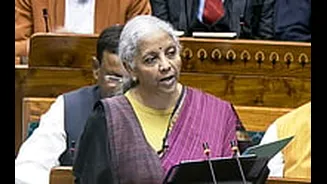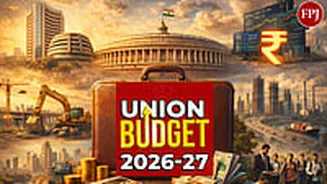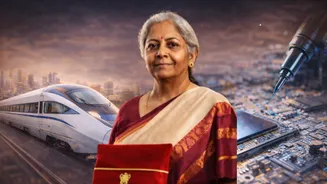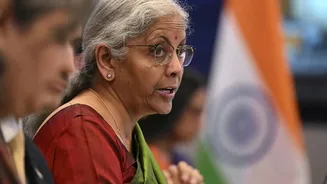








New Delhi: As Union Finance Minister Nirmala Sitharaman presented the Union Budget 2026–27 in Parliament on Sunday, many residents of Delhi watched closely,
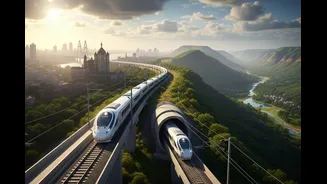
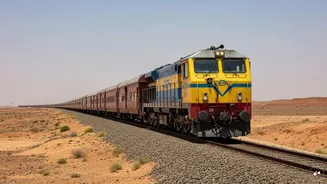
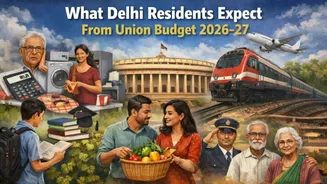
hoping the government would address their daily concerns, from rising household expenses and high travel costs to education funding and railway safety. In the days leading up to the Budget, Delhiites had told news agency IANS that easing inflation, cutting travel costs and increasing spending on education should be top priorities. With the Budget now unveiled, here is a look at what people in the national capital expected, and what the government has delivered. What Delhiites Wanted Residents across age groups had flagged similar issues. Many said household expenses were rising too fast and wanted essential goods, home appliances and daily-use items to become cheaper. Travel costs were another major concern, with people calling for lower flight fares and affordable train tickets. Before the Budget, a Delhi resident, Seema Bansal, said household expenses must be reduced. "Home appliances and household-related items should become cheaper. Travel should also be made more affordable. Flight fares and train ticket prices should be reduced, and inflation must be brought under control,” she said. Senior citizens raised concerns over high taxes and limited railway concessions, while students demanded higher spending on education, better scholarships and improved facilities. Railway safety and convenience also featured high on the list of expectations. Overall, the demand was clear: relief from inflation, affordable travel, stronger public education and better infrastructure that directly impacts daily life. Also Read: Railway Budget 2026: List of 7 High-Speed Rail Corridors Connecting 8 Major Cities What the Budget Delivered on Travel and Railways One of the biggest announcements in Budget 2026 came in the form of a renewed push for high-speed rail connectivity. The government proposed seven high-speed rail corridors, aimed at improving inter-city travel and boosting tourism and regional growth. The proposed corridors include: Mumbai–Pune Pune–Hyderabad Hyderabad–Bengaluru Hyderabad–Chennai Chennai–Bengaluru Delhi–Varanasi Varanasi–Siliguri According to the finance minister, these corridors will strengthen connectivity across western, southern and eastern India, linking technology hubs, manufacturing centres and major population clusters. While the Budget did not directly announce fare cuts, the emphasis on faster and safer rail infrastructure signals long-term improvements in travel convenience and regional mobility. No change in Income Tax Slabs Both old and new tax regimes remain unchanged for FY 2026–27. Take-home pay stays the same. Boost for Tourism and Regional Connectivity The expanded rail network is also expected to benefit the travel and tourism sector by improving access to tier-2 and tier-3 cities. Once implemented, the network could support multi-city travel, new tourism circuits and easier movement for business and leisure travellers. This addresses, at least partly, public demands for better and more affordable travel options, though immediate relief on ticket prices was not announced. Education Gets a Significant Push Education, a key demand from students and parents in Delhi, received notable attention in Budget 2026. The government announced the establishment of a National Institute of Design in eastern India to strengthen design education and innovation. In addition, five university townships will be created near major industrial and logistics corridors, aiming to improve access to higher education and skill development. A major gender-focused step includes the proposal to set up one girls’ hostel in every district at higher education STEM institutions, improving safety and access for female students. The Budget also proposed setting up or upgrading four telescope infrastructure facilities to promote astrophysics and astronomy research. In a move aimed at employment generation, Sitharaman announced the formation of a high-powered ‘Education to Employment and Enterprise’ Standing Committee. The committee will focus on strengthening the services sector as a key driver of “Viksit Bharat” and aims to help India achieve a 10 per cent global share in services by 2047. The panel will study the impact of emerging technologies, including artificial intelligence, on jobs and skill requirements, and recommend steps to boost employment and exports. In her budget speech, the Finance Minister said the initiative is aimed at providing a clear pathway to fulfilling the aspirations of a youthful India. "To provide a pathway to fulfilling aspirations of a youthful India with the following measures, I propose to set up a high-powered Education to Employment and Enterprises Standing Committee to recommend measures that focus on services sector as a core driver of economic growth," she said.