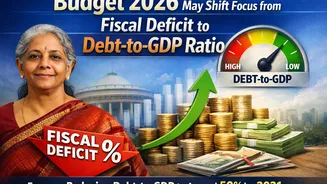









India’s Union Budget 2026 is expected to place greater emphasis on reducing the debt-to-GDP ratio rather than targeting a fixed fiscal deficit number.
This marks a strategic shift in fiscal policy as the government approaches the end of the glide path outlined under the Fiscal Responsibility and Budget Management (FRBM) framework. The Centre’s debt-to-GDP ratio is currently around 56%, and policymakers are now looking to use this metric as the primary fiscal anchor. Under the revised FRBM Act, the fiscal deficit target for 2025–26 was set below 4.5% of GDP. With that milestone close, the government has introduced a new medium-term roadmap that prioritizes a gradual reduction in overall debt levels relative to the size of the economy. For a developing economy like India, a fiscal deficit in the range of 3–4% of GDP is generally considered manageable, as it balances growth needs with financial stability. However, moving toward a debt-based anchor is seen as more flexible and transparent, since it reflects the cumulative impact of both past and present fiscal decisions rather than just a single year’s borrowing gap. In earlier budget statements, Finance Minister Nirmala Sitharaman had highlighted the government’s commitment to fiscal consolidation, noting that the path announced in 2021 had supported economic stability and growth. She indicated that from 2026–27 onward, fiscal policy would aim to ensure that central government debt steadily declines as a share of GDP. The FRBM statement released in February 2025 laid out a six-year fiscal roadmap from FY 2026–27 to FY 2030–31. It outlined multiple fiscal scenarios based on growth assumptions and varying degrees of policy calibration. The framework assumes no major external macroeconomic shocks and seeks to balance development needs with prudence. Under this plan, the government aims to guide fiscal deficits each year in a way that steadily lowers the central government’s debt burden, with a target of bringing the debt-to-GDP ratio to about 50% (plus or minus 1%) by March 2031, which coincides with the end of the 16th Finance Commission cycle. Officials say this approach will help rebuild fiscal buffers, allow room for growth-oriented spending, and improve transparency — especially through better disclosure of off-budget borrowings. Overall, the shift signals a move toward longer-term fiscal sustainability rather than year-to-year deficit targeting.