








What is the story about?
A hunger strike is an unusual form of political confrontation because its force comes from refusal. The protester carries no weapon, blocks no road and
commands no army. Instead, the body becomes both argument and evidence. India’s political history is filled with such fasts, but their outcomes have never been uniform. Some compelled governments to negotiate. Some reshaped electoral politics. Others ended in death, leaving the country to respond only after the protester could no longer speak.
1. Mahatma Gandhi’s Fast Against Untouchability
In May 1933, Mahatma Gandhi began a 21-day fast that he described as an act of self-purification and a moral appeal against untouchability. It formed part of his campaign for the rights of communities then officially described by him as “Harijans”, a term now widely considered paternalistic and outdated.
The fast drew national attention to caste discrimination, but it also exposed the limits of moral symbolism. Gandhi could awaken conscience, yet the structures sustaining caste exclusion were far harder to dismantle. His protest gave urgency to reform while leaving later generations to confront how slowly social equality followed political awakening.
2. Bhagat Singh’s Battle From Inside Lahore Jail
Bhagat Singh’s 1929 hunger strike was directed not at freedom alone, but at the discriminatory treatment of Indian prisoners under colonial rule. Along with other revolutionaries imprisoned in Lahore, he demanded better food, clothing, hygiene, access to books and recognition as a political prisoner.
The strike lasted for weeks and transformed jailed revolutionaries into national figures. Jatin Das died after fasting for 63 days, turning the protest into a public indictment of British prison conditions. Bhagat Singh continued far longer before ending his fast. The campaign demonstrated that colonial authority could imprison a body without fully controlling what that body came to represent.
3. Potti Sriramulu’s Death Created A State
Few hunger strikes altered India’s political geography as dramatically as Potti Sriramulu’s. In October 1952, he began fasting for a separate state for Telugu-speaking people. After 58 days, he died.
His death triggered widespread protests across the Telugu-speaking regions of the former Madras Presidency. Within days, Prime Minister Jawaharlal Nehru announced that a separate Andhra State would be created. It formally came into existence in October 1953, with Kurnool as its capital. Andhra Pradesh followed in 1956 after Telugu-speaking areas of Hyderabad State were merged with Andhra State.
Sriramulu did not live to witness the result. His death revealed both the power of linguistic identity and the devastating political cost of waiting until sacrifice became irreversible.
4. Irom Sharmila’s Sixteen-Year Refusal
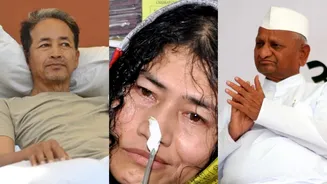
Irom Sharmila began fasting in November 2000 after ten civilians were killed at Malom in Manipur. Her demand was the repeal of the Armed Forces Special Powers Act, which grants sweeping powers to armed forces operating in designated “disturbed areas”. She was arrested repeatedly on charges related to attempted suicide and force-fed through a nasal tube. The fast continued for nearly 16 years, becoming one of the longest recorded hunger strikes.
When Sharmila ended it in 2016, AFSPA remained in force. Her protest achieved international recognition but not its central demand. That painful contrast exposed a hard truth: moral endurance can command attention without necessarily compelling the state to surrender authority.
5. Anna Hazare’s Anti-Corruption Mobilisation
Anna Hazare’s 2011 hunger strike at Delhi’s Ramlila Maidan became the emotional centre of a nationwide anti-corruption movement. His campaign demanded a stronger Lokpal institution based on the proposed Jan Lokpal Bill. The protest drew enormous crowds, constant television coverage and support from a public frustrated by corruption scandals. After 13 days, Hazare ended his fast when Parliament agreed in principle to consider key elements of his demands.
The movement proved that a hunger strike could become a mass-media event capable of unsettling an elected government. It also showed the limits of translating popular anger into lasting institutional reform. The Lokpal eventually became law, but the political coalition built around the agitation fractured, producing competing interpretations of its legacy.
6. Mamata Banerjee’s Fast Over Singur
In December 2006, Mamata Banerjee began an indefinite hunger strike in Kolkata against the acquisition of agricultural land in Singur for Tata Motors’ proposed Nano factory. She opposed what she described as the forcible acquisition of farmland and demanded that land taken from unwilling farmers be returned.
The fast lasted 26 days and elevated Singur from a regional land dispute into a national political question. It strengthened Banerjee’s image as a defender of farmers and helped consolidate the movement that eventually ended more than three decades of Left Front rule in West Bengal.
Her protest showed how a hunger strike could do more than pressure policy. It could create a political identity powerful enough to reshape an entire state.
7. Medha Patkar’s Long Campaign For The Displaced
Medha Patkar has undertaken several hunger strikes as part of the Narmada Bachao Andolan’s opposition to displacement caused by large dam projects, particularly the Sardar Sarovar Dam. Her fasts focused on families facing submergence without adequate rehabilitation, compensation or alternative land. In different years, court intervention, government assurances and deteriorating health brought individual fasts to an end, but the larger dispute continued.
Patkar’s protests exposed a fundamental contradiction in India’s development story. Infrastructure projects could be celebrated as symbols of national progress while the people bearing their greatest costs struggled to make themselves visible. Her hunger strikes forced rehabilitation into the public debate, even when they could not permanently halt construction.
8. Swami Nigamananda’s Fatal Protest For The Ganga
Swami Nigamananda fasted in opposition to illegal mining and stone crushing near the Ganga in Uttarakhand. He argued that extraction along the river was damaging its ecology and threatening a landscape regarded as both environmentally fragile and spiritually sacred. His fast continued for 115 days. He died in June 2011 after his health deteriorated severely.
The case received national attention largely after his death, prompting difficult questions about whose protests become visible and when. Nigamananda’s sacrifice revealed the imbalance between environmental warnings and political responsiveness. By the time the country listened, the protester was no longer alive to participate in the conversation he had forced open.
9. Sonam Wangchuk’s Fast Over India’s Examination Crisis
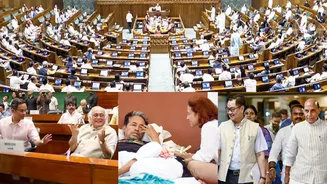
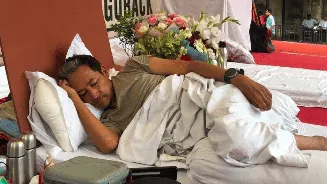
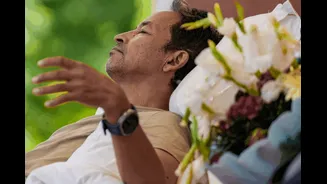
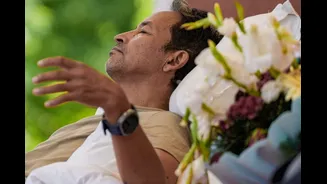
Sonam Wangchuk began an indefinite hunger strike at Jantar Mantar on 28 June 2026 in solidarity with a youth-led movement protesting alleged examination paper leaks and failures in India’s education system. The protesters demanded accountability, reforms to the examination process and the resignation of Union Education Minister Dharmendra Pradhan. By mid-July, Wangchuk had lost more than eight kilograms. Doctors and supporters warned that continuing the fast could place his health at serious risk, while political figures urged the government to begin talks.
Unlike the historical protests whose outcomes are already known, Wangchuk’s fast remains unresolved. Its significance lies partly in the coalition forming around it: students, unemployed young people, activists and public figures united by a belief that institutional failure has become impossible to treat as an isolated mistake.
When The Body Becomes The Last Argument
These nine hunger strikes belong to different eras, causes and political traditions. Their stories should not romanticise starvation. A hunger strike is also evidence that ordinary channels of representation have failed. It begins when petitions, meetings, courts, elections or public appeals appear insufficient. That may be the most unsettling legacy of India’s political fasts. They celebrate extraordinary courage, but they also reveal how often power responds only when dissent becomes physically unbearable.