








The United States has formally waived oil sanctions on Iran for two months, allowing Tehran to openly sell crude oil while negotiations over its nuclear
programme continue in Switzerland. The waiver, announced by the US Treasury Department on Monday, will remain in effect until 21 August. It comes as senior American and Iranian officials continue talks aimed at reaching a broader agreement following last week's memorandum of understanding intended to end nearly four months of conflict. The move also follows President Donald Trump's decision last week to lift a two-month US naval blockade of Iranian ports. The temporary waiver will allow Iran to sell oil without the restrictions that have limited its access to international markets for decades. According to estimates cited in US government analyses, Iran could generate as much as $10bn in revenue during the 60-day period. Annual revenues could reach about $60bn if exports continue under similar conditions. Iran has continued exporting oil to China despite existing US sanctions. However, analysts say the waiver could allow Tehran to sell its crude at market rates rather than offering discounts that have reportedly reached as much as $10 per barrel.
Those higher prices could generate an estimated $14m in additional daily revenue, amounting to roughly $840m over the duration of the waiver.
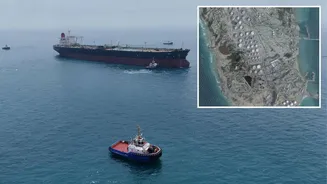
The exact figures remain uncertain and depend on global oil prices as well as the operational capacity of Iran's oil infrastructure, including facilities on Kharg Island.
Part of Broader Talks
The easing of oil restrictions forms part of a wider package of incentives being discussed between Washington and Tehran following last week's agreement.
The Trump administration is also proposing the phased unfreezing of more than $100bn in Iranian assets and support for a Gulf Arab-financed reconstruction fund reportedly worth up to $300bn.
According to US officials, these measures would be implemented gradually and would depend on Iranian actions regarding its stockpile of highly enriched uranium and its support for regional armed groups.
Vice-President JD Vance defended the administration's approach last week, arguing that sanctions had become increasingly difficult to enforce and had failed to stop Iranian oil exports to China.
Vance on Unfrozen Assets
Speaking in Switzerland on Monday, Vance said any assets released under a future agreement would not be handed directly to the Iranian government.
Instead, he said the funds would be used to purchase "American soy, American corn, and American wheat for the benefit of the Iranian people". A similar arrangement was proposed in 2023 when the administration of then-President Joe Biden agreed to release $6bn in Iranian funds as part of a prisoner exchange involving five American citizens detained in Iran.
Those funds were transferred to Qatar for humanitarian purchases. However, access to the money was later suspended following the Hamas attack on southern Israel in October 2023.
Negotiations between US and Iranian officials are continuing in Switzerland as both sides seek a longer-term agreement on Iran's nuclear programme and other outstanding issues.