






What is the story about?
DUBAI, United Arab Emirates (AP) — Iran launched attacks on commercial vessels across the Persian Gulf and targeted Dubai International Airport on Wednesday,
intensifying its campaign amid escalating global energy concerns. This surge in hostilities follows American and Israeli airstrikes against the Islamic Republic. Two Iranian drones struck near Dubai International Airport, which serves as a hub for Emirates Airlines and is the busiest airport for international travel. Four individuals sustained injuries, but flight operations continued, according to the Dubai Media Office.
Targeting Financial Institutions
In addition to its assaults on shipping and airports, Iran's joint military command announced intentions to target banks and financial institutions throughout the Middle East. This announcement poses significant risks to Dubai, which houses numerous international financial entities, as well as to Saudi Arabia and Bahrain.Incidents in the Strait of Hormuz
Earlier in the day, a projectile struck a container ship off the coast of Oman in the Strait of Hormuz, igniting a fire that compelled most crew members to abandon the vessel, as reported by the British military. Additionally, Kuwait confirmed that its defenses intercepted eight Iranian drones, while Saudi Arabia reported the interception of five drones aimed at its Shaybah oil field.Impact on Oil Traffic
Iran has effectively halted cargo traffic in the Strait of Hormuz, a crucial route for approximately 20% of the world's oil shipments from the Persian Gulf. The Islamic Republic has also targeted oil fields and refineries in Gulf Arab nations, seeking to inflict economic pain on the U.S. and Israel to halt their military actions.United Nations Response
The United Nations Security Council was scheduled to vote later on Wednesday regarding a resolution proposed by the Gulf Cooperation Council, which demands an end to Iran's attacks on its Arab neighbors.Israeli Airstrikes Intensify
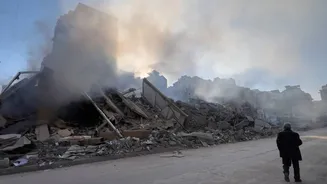
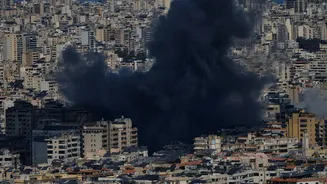
In response, Israel renewed its airstrikes on Tehran, following a series of heavy attacks described by residents as some of the most intense since the onset of the conflict. Explosions were also reported in Beirut and southern Lebanon as Israel targeted sites linked to the Iran-affiliated militant group Hezbollah.Casualties in Lebanon
The Israeli strikes ignited a building in the densely populated Aicha Bakkar area of central Beirut, causing damage to the top floors. Although no immediate casualties were reported, other strikes in southern Lebanon resulted in the deaths of seven individuals. A Red Cross worker succumbed to injuries sustained during a prior Israeli attack.Since Hezbollah initiated the latest conflict with Israel, nearly 500 fatalities have been reported in Lebanon.
Iran's Ongoing Military Actions
Early Wednesday, Israel reported three Iranian attacks, with sirens sounding in Tel Aviv and surrounding areas, though no immediate casualties were noted. Saudi Arabia stated it had intercepted six ballistic missiles aimed at the Prince Sultan Air Base, a critical facility operated by both the U.S. and Saudi Arabia.Economic Implications of Attacks
Oil prices remain elevated, having increased by approximately 20% since the conflict began. This surge is affecting global financial markets due to fears that the ongoing war may disrupt the flow of oil and natural gas.On Tuesday, the U.S. military reported the destruction of 16 Iranian minelayers near the Strait of Hormuz. However, President Donald Trump indicated there were no confirmed reports of Iran mining the passage, a scenario that experts had warned about before the war.
Iran's Crude Exports and Health Concerns
Despite the conflict, some tankers associated with Iran continue to transit the strait, often turning off their Automatic Identification System trackers. The security firm Neptune P2P Group reported that seven ships passed through the strait since March 8, with five linked to Iranian shipping.Additionally, concerns are rising regarding the health of Iran's new Supreme Leader, Ayatollah Mojtaba Khamenei, following reports of his injury. Khamenei, who succeeded his father as Supreme Leader, has not been seen since his appointment.
Rising Casualties and Exodus of Foreign Nationals
In Lebanon, the death toll has reached nearly 500, with Iran reporting over 1,300 fatalities. In Israel, twelve individuals have died, while the U.S. has lost seven soldiers and eight others have sustained severe injuries.Since the conflict's outbreak, many foreign nationals have fled the Persian Gulf region, including over 45,000 U.K. citizens and approximately 40,000 Americans returning to the United States.