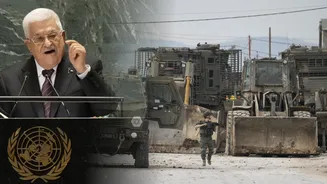







Palestine is set to hold its first legislative election in nearly two decades, with Palestinian Authority President Mahmoud Abbas issuing a decree scheduling
the vote for November 28, 2026. If the election goes ahead, Palestinians in Jerusalem, the West Bank and Gaza will vote for members of the Palestinian Legislative Council (PLC), ending a prolonged period without a functioning elected legislature. The last Palestinian legislative elections were held in 2006. Hamas defeated Abbas's Fatah movement in that vote, triggering a political struggle that eventually left Hamas in control of Gaza and the Palestinian Authority governing parts of the West Bank; the PLC has not met since 2007. “The presidential decree calls on the Palestinian people in Jerusalem, the West Bank and the Gaza Strip to participate in free and direct legislative elections to elect members of the Palestinian Legislative Council on the date specified,” the official Wafa news agency reported, citing the decree. The date is now fixed. Whether Palestine can actually conduct the election across three politically and operationally different territories is the harder question.
Why Are Palestine Elections Being Held After Two Decades?
The election announcement comes amid growing pressure on the Palestinian Authority to reform its institutions and address questions over political legitimacy. Abbas, now 90, won the last Palestinian presidential election in 2005 for a four-year term, but no presidential vote has been held since.
Abbas has continued to govern by presidential decree, drawing criticism from Palestinians as well as international partners. Thursday's decree only deals with the legislative election, although a separate order signed in June said presidential elections would be held in 2027. Ghassan Khatib, a political science professor at Birzeit University, said the long absence of elections had widened the divide between Palestinian leaders and the public.
“There is a feeling among everyone that Palestinian legitimacy has eroded because of how long it has been since elections were held,” Khatib told AFP. He described a “gap between the public and the leadership and a need to ‘renew the blood'” at the top.
“The absence of a legislative council for such a long time has caused significant damage to the political system,” he added. International pressure is also in the background. The European Union, a major financial supporter of the Ramallah-based Palestinian Authority, has pushed for governance reforms as the PA faces a deep financial crisis.
Can Hamas Contest The Palestine Legislative Election?
That remains unclear. A new election law signed by Abbas last month requires candidates to accept the political programme of the Palestine Liberation Organization. The programme includes recognition of Israel and support for a two-state solution — positions Hamas has not accepted.
The rule could therefore make it difficult for Hamas or Hamas-linked candidates to participate in the November election. No final determination on their eligibility has been announced.
The issue is particularly significant because the 2006 legislative vote ended in a Hamas victory over Fatah. The political fallout from that election and the subsequent split between Gaza and the West Bank shaped Palestinian politics for the next two decades.
Hamas has, meanwhile, announced that it will dissolve its governing administration in Gaza in preparation for an eventual transfer of authority to a technocratic committee formed under the October 2025 US-brokered ceasefire. The committee has yet to enter Gaza. The election has a date. Its path to the ballot box remains considerably less certain.