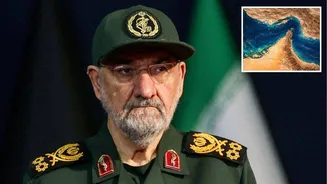







Iran will establish a new "prohibited zone" near the strategic Strait of Hormuz in the coming days, the country's top security chief Mohsen Rezaei said
on Sunday, as Tehran also announced a sharp increase in petrol prices for heavier consumers. Rezaei said the zone would extend beyond the strait and cover parts of the Persian Gulf, with ships entering it facing Iranian sanctions. "In the coming days, a prohibited zone will be announced outside the Strait of Hormuz. This zone will start from the US Navy's blockade line and include areas of the Persian Gulf. Any ship entering this new zone will be placed on the sanctions list" of Iran, Rezaei told state television. The announcement comes as the US steps up sanctions aimed at putting further pressure on Iran's economy. Iranian authorities also announced on Sunday that the price of petrol for consumers exceeding their monthly quota would double from 8 September. Iran operates a three-tier petrol pricing system. Consumers pay 1,500 tomans per litre for their first 60 litres each month, 3,000 tomans for the next 50 litres and 5,000 tomans for any additional fuel.
Government spokeswoman Fatemeh Mohajerani said the third-tier price would rise to 10,000 tomans, or about 4.5 US cents, per litre.
"The rate will increase to 10,000 toman rials from the morning of September 8," Mohajerani said in remarks carried by state media. "Different numbers were mentioned in expert meetings but because the president had promised the people, the rate of 10,000 tomans was set," she added.
Mohajerani later clarified that prices for the first and second tiers would remain unchanged.
Iran is a major oil producer and has some of the world's cheapest fuel, largely because petrol has been heavily subsidised for years. Changes to fuel prices are therefore politically sensitive.
The latest measures come as the Iranian rial continued to weaken. The currency was trading at more than 2.2 million rials to the US dollar on the black market on Sunday, according to websites tracking the exchange rate.
Before the US-Israel war on Iran began on 28 February, the rial traded at about 1.7 million to the dollar. It reached what was then a record low of 1.8 million in late April.
Last month, US Treasury Secretary Scott Bessent outlined plans for what he described as the "economic asphyxiation" of Iran, with Washington seeking to use financial pressure to hasten an end to the war.
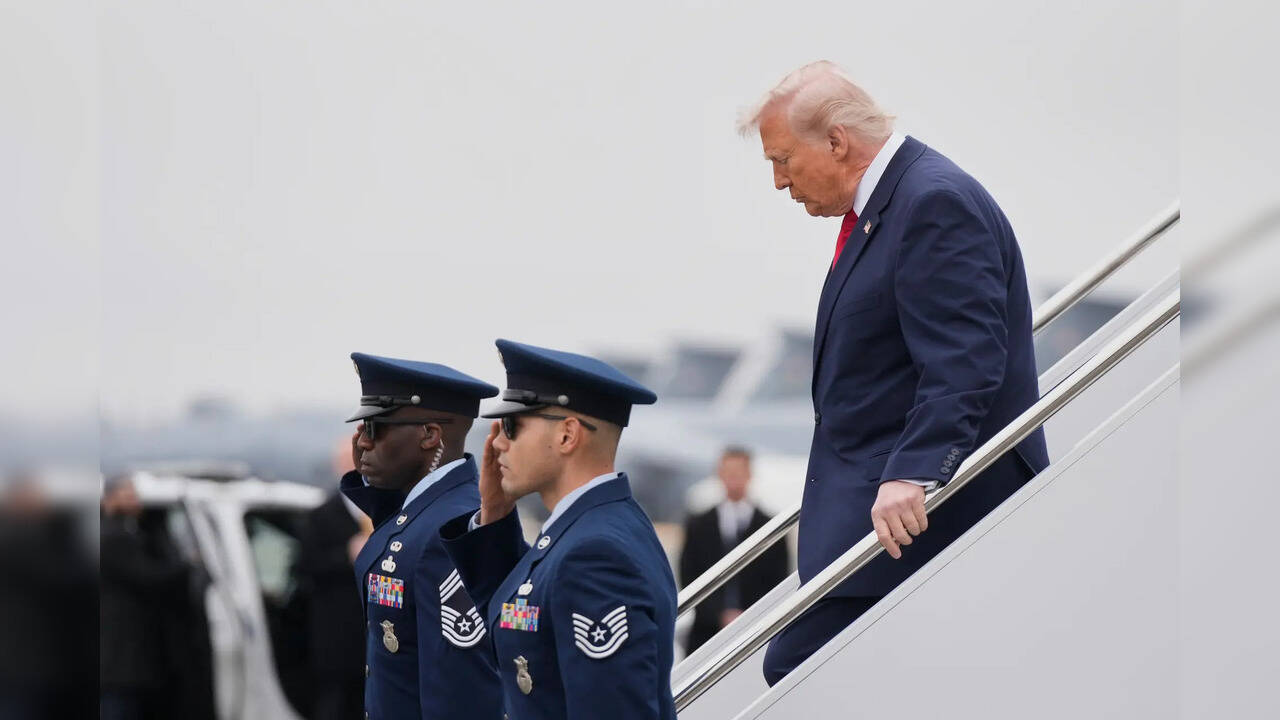
The measures build on a US-led sanctions regime that has been in place since 2018, when then-President Donald Trump withdrew from an international agreement with Tehran over its nuclear programme.
The United States has also imposed a naval blockade on Iranian ports as part of efforts to reduce Iran's oil exports to zero.
The Strait of Hormuz, through which a significant share of the world's oil supplies passes, has become a major focus of the confrontation between Iran and the US.