





The Supreme Court on Wednesday asked the Centre to apprise it of the measures taken to implement the recommendations of the Radhakrishnan panel and the Nandan
Nilekani Committee, while highlighting the need to institutionalise reforms in NEET. A bench of Justices PS Narasimha and Alok Aradhe asked Solicitor General Tushar Mehta to file a fresh affidavit in the matter. "The Radhakrishnan Committee has correctly said it is a systemic problem which needs institutionalisation, which is the most important part of it. This process, on paper, everything is good. But then one exam happens, and by the time the second exam happens, it is a new picture altogether," the bench said. During the hearing, Solicitor General Tushar Mehta placed on record the process adopted with safeguards from printing the NEET question paper until the students receive it. He elucidated the composition of the task force, with domain expertise drawn from technology, space, intelligence, academia and public administration.
‘GPS Installed In Vehicles Carrying Question Papers To Track Movement’: SG Mehta On NTA Safeguards
Apprising the apex court of the measures taken by the National Testing Agency (NTA) to ensure foolproofness, SG Mehta said that it has introduced significant changes for question paper preparation and security, including a four-tier review system to enhance scrutiny and catch errors before question papers reach candidates.
He added that numerous moderators are roped in to prepare the question bank, without them having any intimation of which part will form the actual paper.
Mehta said vehicles carrying NEET question papers have GPS and even small movement is recorded, affirming that the system in place for examination is foolproof and difficult to breach.
Responding to SG Mehta, Justice Narasimha said, “What you have put up and narrated was all under the purview of the earlier committee too ... the Radhakrishnan Committee... What we need is institutionalisation. Institutionalisation of NTA is most important for us; the new committee must review the recommendations of the Radhakrishnan Committee. Some continuity should be there.”
The SC noted that the recommendations should not be limited to papers but put into practice. “Some system should be set up that will function itself.”
“The committee has suggested a separate department relating to digital infrastructure. Do you have a separate full-time officer for digital infrastructure? Testing infrastructure, research and development... Institutionalisation is very important rather than quick temporary fixes. We need permanent, deeply ingrained structural systems,” the Justice remarked.
Sharing the UPSC instance, the Justice said that the commission held exam after exam over a period of time and collected institutional memory and expertise because it happened gradually. It said that the body tasked with conducting examinations also ensures its upgradation and becomes a vibrant institution like that.
SC Asks Centre To File Affidavit On Recommendations Of Radhakrishnan Committee
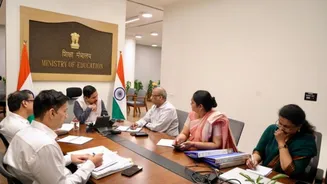
“We are informed that the Nilekani Committee is convening a meeting to consider various recommendations, including adoption of AI to strengthen security. We are concerned about the need to institutionalise NTA,” Justice said, asking the Centre to file an affidavit on steps taken to adopt the key recommendations provided by the Radhakrishnan Committee.
“We are not for micro-managing. We need a vibrant institution for the country to be proud of,” the bench remarked.
The petitions seeking the dismantling of NTA over alleged systematic failures and the formation of an independent body to conduct the entrance test were filed by the Federation of All India Medical Association (FAIMA) and United Doctors’ Front (UDF).