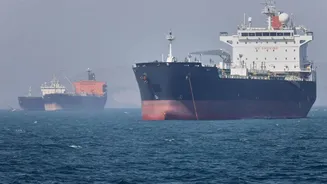








Tehran: As the US-Iran war is far from over, vessel traffic through the key Strait of Hormuz dipped significantly over the weekend as compared to the previous
week. A dozen commodity vessels passed through the strategic waterway on the weekend. However, the number was three times the prior weekend. During the last weekend, 35 ships reportedly transited through the Strait of Hormuz. Four trackable vessels — including two tankers carrying refined oil products and two empty bulk and gas carriers — left the strait on Sunday, while two smaller oil tankers entered the Gulf, reported Reuters, citing data from analytics firm Kpler. The data showed that five vessels departed the Gulf on Saturday, transporting agricultural goods, liquefied petroleum gas and fertiliser, while an empty very large gas carrier entered the waterway. For the unversed, 125 large merchant vessels were used to pass through the strait before the start of the US-Iran war on February 28 this year, which was around one-fifth of the total crude oil and liquefied natural gas trade. Iran Rules Out Reopening Of The Strait Of Hormuz: Iran on Sunday ruled out the possibility of the reopening of the key waterway. or resume talks with the United States under the earlier framework unless Washington accepts Tehran’s conditions, Iranian Parliament Speaker Mohammad Bagher Ghalibaf said. According to Al Jazeera, Ghalibaf said Iran had communicated its demands to the US through intermediaries. He further added that Tehran would maintain its stance unless Washington met those conditions. “Our messages and conditions have been conveyed explicitly to the other side through intermediaries... And until these conditions are met, the inalienable rights of the Iranian nation are recognised, and the Americans fulfil their commitments, there will be no possibility of a return to the previous negotiation framework or to reopen the Strait of Hormuz,” Ghalibaf said. Ghalibaf's remarks came after Iran's central military command warned that any renewed US military action against Tehran would trigger attacks against American bases and interests across the region.