






What is the story about?
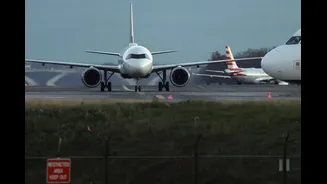
US air travel is expected to return to normal by Sunday, following the nation's longest nationwide ground stop in 25 years. Thousands of flights were cancelled
on Saturday as airlines scrambled to restore operations and accommodate stranded passengers. Federal Aviation Administration (FAA) Administrator Bryan Bedford said the “worst is behind us,” expressing confidence that flight schedules would stabilise by the end of Sunday. The disruption also impacted international travel, leaving passengers across the world facing delays and cancellations.
What caused the ground stop?
The problem began when contractor L3Harris Technologies Inc. was replacing a section of the air traffic control system's old copper wire with new fiber wire, somehow causing the system to overload, Transportation Secretary Sean Duffy said.
The work led to "intermittent" communications and radar gaps, prompting the government to shut down air traffic for more than four hours. Officials were investigating whether contractor "incompetence" or a faulty router was the cause," he said.
"Our contractor didn't meet the moment or the equipment didn't meet the moment," Duffy said.
L3Harris said in a statement that it was supporting the FAA in the investigation to understand what led to the ground stop and the company takes seriously the impact to travellers, airlines and air traffic operations.
Thousands of flights delayed and cancelled
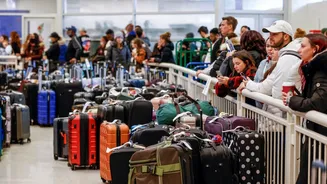
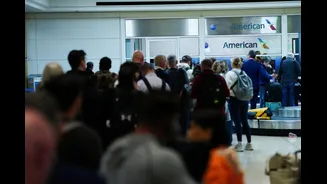
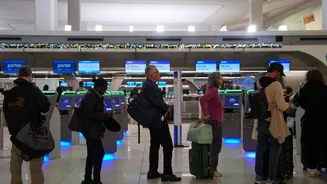
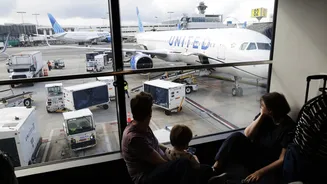
At airports across the US, passengers scrambled Saturday to figure out how to reach their destinations. Some waited out the chaos in hotels while others sprinted to snag rental cars and bus or train tickets. Many camped out in airports.
FlightAware, a website that tracks flights, said more than 6,000 flights within, into or out of the US had been cancelled Saturday.
Duffy reiterated Saturday that no one was in danger as more than 3,000 flights in the air at the time of the grounding order landed safely.
Trump administration officials blamed Congress for failing to approve more money to replace decades-old technology that helps manage air traffic. Duffy said 70% of the system had been replaced, but his agency needs new air traffic control towers and runways.
"We have aging infrastructure throughout the airspace," Duffy said, while stressing that flying remains safe.
The FAA has replaced thousands of old copper wires with fiber optic lines and upgraded hundreds of radio systems as part of the overhaul that began last year with USD 12.5 billion in funding. Duffy and the White House want USD 30 billion more to complete the work.
(With AP inputs)