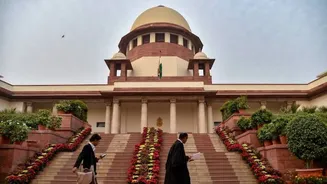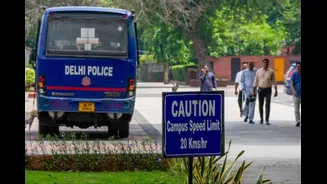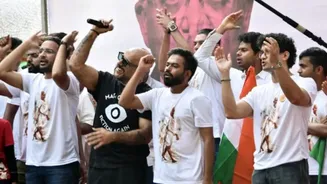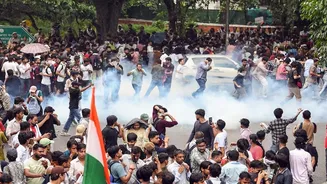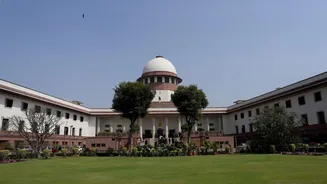



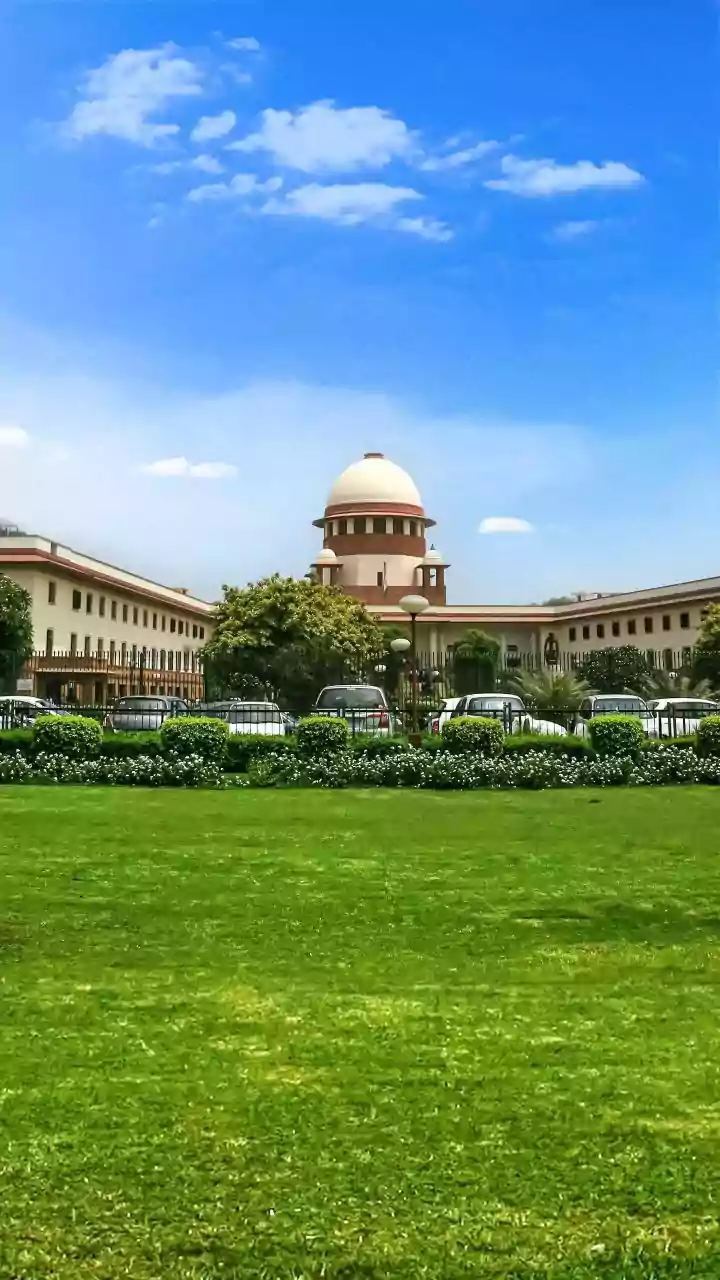


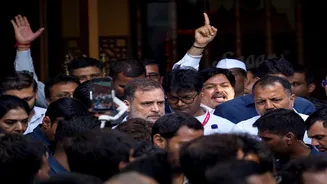
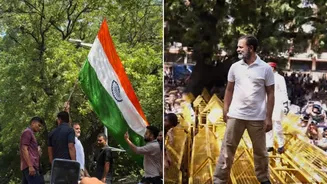
The Supreme Court on Friday directed the Centre to ensure there is no complete stoppage of Delhi Metro services or trains arriving at New Delhi and Hazrat
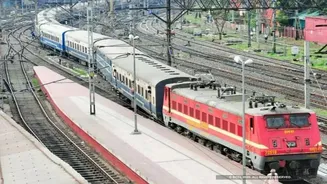
Nizamuddin railway stations ahead of Saturday’s planned protests against Chief Election Commissioner Gyanesh Kumar. Making it clear that public transport could not be completely prohibited, the court said Metro and train services should be regulated appropriately to prevent inconvenience to ordinary commuters. “We make it clear there shall be no complete prohibition of Metro,” Chief Justice of India Surya Kant said while passing interim directions. “A considered decision may be taken to allow Metro trains in a regulated and appropriate manner so that public is not inconvenienced.” The court said the same principle would apply to trains arriving at New Delhi and Hazrat Nizamuddin stations. “They shall be regulated and there cannot be complete stoppage. Common man shall not be inconvenienced,” the CJI said. The bench was hearing a petition filed by CPI(M) leader MA Baby challenging restrictions on public transport ahead of the October 10 protest at Jantar Mantar, called by the Cockroach Janta Party (CJP) and student groups demanding Kumar’s resignation over alleged irregularities in the Special Intensive Revision (SIR) of electoral rolls.
‘You Can Stop Unruly Mob, But Don’t Hurt Common Citizen’
During the hearing, the CJI expressed concern over the proposed restrictions and their impact on people travelling to Delhi for work.
“We have serious concern about closure of Metro stations. We are concerned about commuters who come from far for their livelihood. Common citizens shall not suffer,” the CJI said. “You can stop unruly mob but don’t do anything that hurts common citizen,” he told the government.
Senior advocate Kapil Sibal, appearing for the petitioner, urged the court to address the cancellation of trains.
When the CJI asked whether there was a complete closure, Solicitor General Tushar Mehta assured the bench that the government would regulate services depending on how the situation developed.
“We assure that we will regulate as per how the situation develops,” Mehta said.
The CJI responded: “Make sure everything is not halted.”
Centre Seeks 'Leeway' For Law Enforcement In Handling Protest
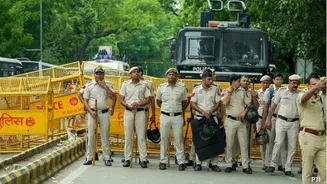
Mehta argued that the authorities needed room to respond to a developing law-and-order situation. "If something untoward happens, complete closure will be a proportionate measure. Everything cannot be decided inside this court. Some leeway has to be given to law enforcement authorities depending upon the emerging and evolving situation," Mehta said.
He cited an earlier NEET-related protest on June 20, saying permission had been granted for one day but protesters remained at the site for 17 days.
The Solicitor General said that there had been penal violations during that period and that protesters had reached Parliament despite assurances about the nature of the demonstration.
“Parliament is not a political building,” Mehta said, arguing that the earlier incident showed why the authorities could not rely solely on assurances of a peaceful protest.
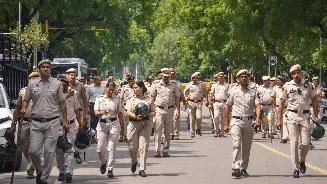
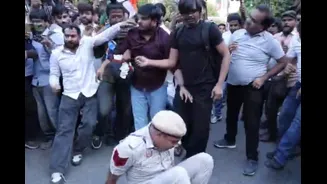
He also claimed that more than 200 police personnel had been injured during earlier protests. Referring to a demonstration two days ago, he stated that female police personnel had been “almost molested” and said the government could produce videos to support its claim.
Mehta said Saturday’s protest had not been permitted and argued that a complete closure could become necessary if an untoward incident occurred.
Lawyer Raises Allegation About Mosques
Senior advocate Nitya Ramakrishnan told the bench that police personnel were visiting mosques and asking people offering namaz not to join the protest.
The CJI declined to comment on the allegation at this stage, saying the court needed to hear the other side before reaching any conclusion. “We are not going to it right now till we hear other side. We cannot say anything. We have to see if there is any justifiable reason on grounds of law and order,” he said.
What The Petition Sought
Baby’s petition requested the court to permit and regulate a peaceful assembly at Jantar Mantar on October 10, relying on the rights guaranteed under Articles 19 and 21 of the Constitution.
It challenged the proposed closure of 57 Metro stations and the cancellation of Mail and Express trains scheduled to arrive at New Delhi and Hazrat Nizamuddin railway stations on Saturday.
The petition also sought directions to ensure that no person was intercepted, detained or confined merely for travelling to Delhi to participate in a peaceful protest. It asked that preventive arrests comply with Section 170 of the Bharatiya Nagarik Suraksha Sanhita (BNSS), with detained persons released or produced before a magistrate without delay.
Arguing that transport restrictions imposed to prevent a peaceful protest, without a reasoned order under law, would violate Articles 14, 19 and 21, the petition challenged the impact of the measures on citizens’ rights.