







What is the story about?
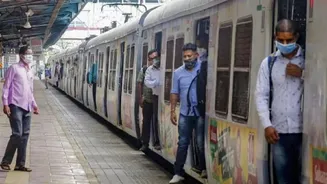
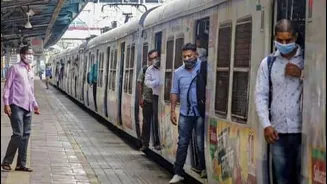
Mumbai’s local train network is often called the lifeline of the city, carrying millions of commuters every day across the Central Railway, Western Railway, and
Harbour lines. Despite the expansion of the metro network, overcrowding in local trains continues to remain a major concern for daily passengers. To address this growing issue, railway authorities are now exploring the possibility of introducing underground local train routes in Mumbai. The move is aimed at reducing congestion and improving travel comfort for lakhs of commuters who depend on suburban trains every day.
Mumbai Local To Go Underground: Why This is Being Considered
With Mumbai facing severe space constraints, expanding existing railway tracks has become increasingly difficult. Land acquisition, removal of encroachments, and rehabilitation of affected residents make such projects expensive and time-consuming.
Because of these challenges, railway authorities have started examining underground corridors as a practical alternative. A feasibility study is currently being planned to assess whether underground local train routes can be implemented efficiently in the city.
Mumbai Local To Go Underground: Proposed Routes And What It Means For Commuters
Railway officials are considering key high-density routes for this project. On the Central line, the stretch between Chhatrapati Shivaji Maharaj Terminus and Kalyan is under discussion. On the Western line, the Churchgate to Virar corridor is being explored.
The Mumbai Railway Vikas Corporation Limited has already initiated a study to convert a section between Churchgate and Mumbai Central into an underground corridor. Similarly, studies are being conducted to add extra suburban lines between CSMT and Parel.
If implemented, underground local trains could significantly transform daily commuting in Mumbai. It can help reduce overcrowding, improve passenger safety, and prevent accidents caused by track crossing. Controlled entry systems may also be introduced, making travel more organised.
In addition, moving tracks underground could free up valuable land in the city and support the modernisation of Mumbai’s transport infrastructure. While the project is still in early stages, it offers a promising solution to one of the city’s biggest urban challenges.