


What is the story about?
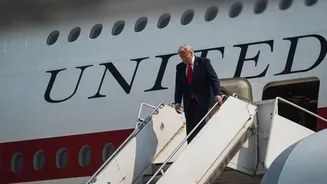
Donald Trump’s reported escape from Turkey aboard a smaller military aircraft, while an Air Force One carrying journalists and White House personnel continued
as a decoy, may sound like something from a spy thriller. But the basic idea is older than Trump’s presidency. US Presidents have repeatedly relied on secret flights, misleading schedules, alternate aircraft and concealed movements when travelling through high-risk environments. The closest parallel came in 2000, when President Bill Clinton travelled to Pakistan during a tightly secured South Asian tour. Clinton’s arrival in Islamabad involved multiple aircraft and a deliberate deception designed to prevent potential attackers from knowing which aircraft was carrying the President.
Bill Clinton’s Decoy Plane In Pakistan
On March 25, 2000, Clinton arrived in Islamabad after a stop in India. A Gulfstream C-20 carrying US presidential markings landed first, and a Secret Service agent resembling Clinton reportedly emerged from the aircraft before it departed, creating the impression that the President had arrived on that plane.
The real Clinton arrived shortly afterwards aboard an unmarked C-20 painted in off-white and silver. He emerged behind a black limousine and was then moved through another layer of deception involving multiple similar vehicles. The operation was not triggered by a single publicly identified assassination warning, but officials described the security environment in Pakistan as exceptionally dangerous.
The precautions had been planned for weeks. Clinton’s team regarded the conspicuous presence of Air Force One as a potential liability during the brief Pakistan stop, despite the aircraft having been used for the wider India trip.
Pakistan itself presented a difficult security environment. General Pervez Musharraf had seized power in a military coup only months earlier, while Islamist militants and other extremist groups posed a significant threat. Clinton spent roughly six hours in Islamabad, meeting Musharraf and then-President Muhammad Rafiq Tarar. He also delivered a televised address in which he urged Pakistan to restore civilian democracy, exercise restraint in its nuclear and missile competition with India and address terrorism.
Clinton Had Faced Other Security Threats
The Pakistan deception was not Clinton’s only experience of presidential travel being altered because of a security threat. During a 1996 visit to Manila for the Asia-Pacific Economic Cooperation summit, his Secret Service detail received intelligence about a possible bomb along the route of his motorcade.
The presidential convoy switched to a backup route shortly before departure. Filipino security forces subsequently discovered an explosive device on a bridge along the original route, along with an SUV containing AK-47 rifles.
The episode demonstrated one of the fundamental problems of presidential protection: the route itself can become the target. An aircraft may be secure, but the President must still travel through airports, roads, buildings and public venues where hostile actors can attempt to exploit predictable movements.
That is why presidential travel is rarely as straightforward as the public itinerary suggests. Routes can change, schedules can be deliberately vague and duplicate vehicles or aircraft can be introduced to make it harder for an attacker to identify the President’s actual location.
George W. Bush’s Secret Iraq Mission
George W. Bush used a different form of deception in 2003 when he made a surprise Thanksgiving visit to American troops in Iraq. The trip was kept so tightly controlled that even members of Bush’s family were reportedly not informed beforehand.
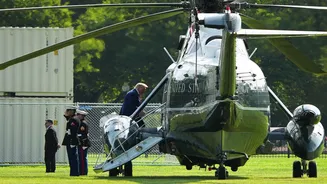
Bush had publicly been expected to remain at his ranch in Crawford, Texas, for Thanksgiving. Instead, he secretly left the ranch, travelled to Andrews Air Force Base and then continued towards Baghdad aboard Air Force One.
The flight itself involved additional precautions. The aircraft’s lights were darkened and window shades were drawn as it approached Baghdad International Airport, while the plane used a corkscrew-style approach because of concerns about the possibility of being shot down. Just days earlier, an aircraft had been hit at the airport.
Bush spent around two and a half hours in Iraq before leaving. The trip was not revealed publicly until the aircraft was already on its way back, allowing the President to appear unexpectedly before American troops.
The objective was different from Trump’s reported Turkey operation. Bush was not using a second aircraft as a public decoy, but the secrecy surrounding his route and destination served the same basic purpose — preventing hostile forces from knowing where the President would be and when.
Obama’s Secret Afghanistan Flights
Barack Obama also relied on secrecy during presidential travel. In March 2010, Obama made an unannounced visit to Afghanistan, arriving at Bagram Airfield after an overnight flight kept secret for security reasons. The White House had not publicly announced the trip in advance.
The operation involved travelling under the cover of darkness and limiting knowledge of the President’s movements. Obama met Afghan officials and US military personnel during the visit before returning to Washington.
The trip demonstrated another established presidential-security tactic: conceal the destination and timing rather than construct an elaborate physical decoy. Obama also made another unannounced Afghanistan visit later in 2010, again travelling under tight security.
Unlike Clinton’s Pakistan operation or Trump’s reported Turkey aircraft switch, Obama’s missions did not involve leaving a presidential aircraft behind as a deliberate public deception. The secrecy centred instead on keeping the President’s movements and schedule away from potential attackers.
Trump’s Turkey Ruse Takes The Tactic Further
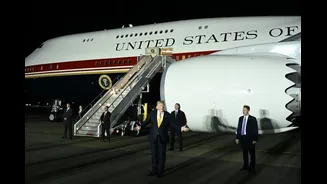
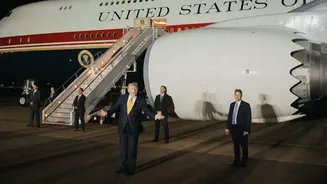
Trump’s reported operation in Turkey combined several of these older techniques. He initially boarded the presidential aircraft in front of cameras, creating the appearance that he would leave Ankara on that plane, before being secretly transferred to a smaller C-32A military aircraft using an airport catering truck.
The original aircraft then continued as a decoy while journalists and some White House personnel reportedly remained aboard. The operation was prompted by a credible threat linked to Iran, according to US officials, and Trump has since confirmed that the aircraft switch was directed by the Secret Service.
That is what makes the episode unusual. In previous presidential operations, secrecy generally meant keeping a trip hidden until the President was safely on his way, as with Bush and Obama, or using decoy aircraft and vehicles to confuse observers, as with Clinton.
Trump’s Turkey operation appears to have combined both approaches — a public performance designed to suggest one movement, followed by a completely different movement concealed from people travelling with him.
The technology has changed. The security problem has not. Whether the threat comes from a terrorist cell, a shoulder-fired missile, a bomb along a motorcade route or hostile intelligence monitoring presidential movements, the Secret Service faces the same basic challenge: make it impossible for an attacker to know where the President will actually be at the moment an attack could occur.