






![[WATCH]: T20 World Cup 2026: Abhishek Sharma reveals massive health update ahead of Pakistan clash](https://g-mob.glance-cdn.com/public/fc/image/_6qWvVYj_1x0.webp)
India’s swift and precise retaliation following the April 22 Pahalgam terror attack not only jolted Pakistan militarily but also sent shockwaves through
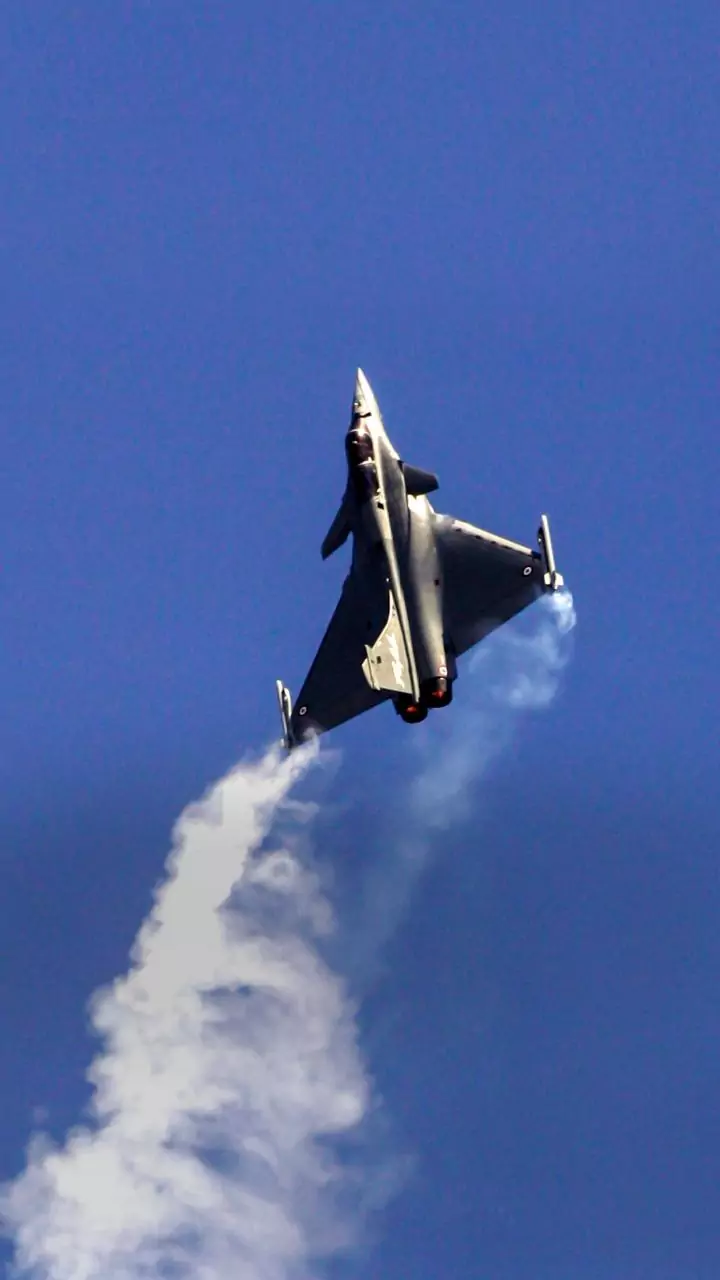
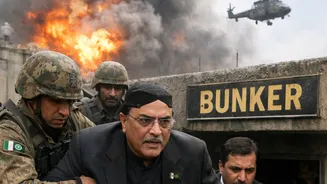
its top leadership, with President Asif Ali Zardari admitting he was advised to take shelter in a bunker during the May escalation. Speaking at an event on Saturday, Zardari disclosed that as India carried out its retaliatory strikes, his Military Secretary urgently urged him to move to a bunker for his safety -- an admission that underscores the level of anxiety and fear within Pakistan’s highest corridors of power amid New Delhi’s operation. The May escalation, referred to as India’s Operation Sindoor, was launched in retaliation for the Pahalgam terror attack that claimed the lives of 26 civilians. As part of the operation, India’s armed forces carried out strategic precision strikes on Pakistani military installations, following earlier actions that targeted nine terror camps in Pakistan and Pakistan-occupied Jammu and Kashmir (PoJK). Despite the warning from his Military Secretary, Zardari claimed he chose not to move to a bunker, instead responding with rhetoric and asserting that he refused to take shelter. "My MS (Military Secretary) was there. He came to me and said, 'Sir, the war has started.' I had actually told him four days earlier that a war was going to happen. But he came to me and said, 'Sir, let's go to the bunkers.' I said, 'If martyrdom is to come, it will come here. Leaders don't die in bunkers. They die on the battlefield. They don't die sitting in bunkers'," Zardari said. The Indian Armed Forces launched Operation Sindoor in the early hours of May 7 in retaliation for the April 22 terror attack in Pahalgam, Jammu and Kashmir. Following India’s operation, tensions between India and Pakistan escalated, triggering increased cross-border shelling by Pakistan and retaliatory strikes by the Indian Armed Forces. Amid the heightened conflict, Pakistan’s Director General of Military Operations (DGMO) unexpectedly proposed a ceasefire to India’s DGMO, which was accepted. Pakistan's DGMO called India's DGMO to propose a ceasefire, which India accepted. The contact from the Pakistani side was also confirmed by Foreign Secretary Vikram Misri, who noted that the two sides agreed to halt all military operations - on land, at sea, and in the air.