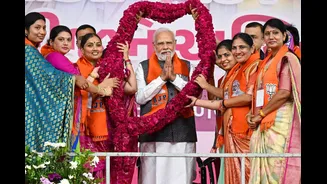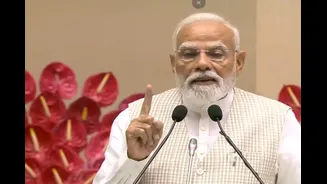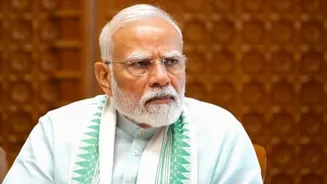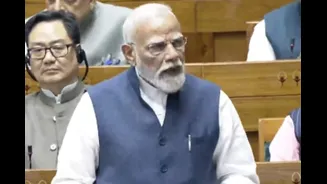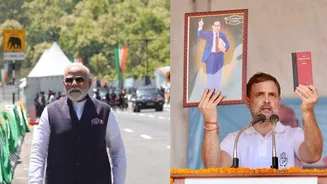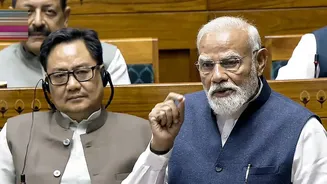







Prime Minister Narendra Modi on Friday (April 17) made a strong appeal to Members of Parliament ahead of key legislative voting in the Lok Sabha, urging
them to support the proposedwomen’s reservation amendment bill. Addressing MPs in a post on X, he called it a historic opportunity to strengthen women’s representation in Indian democracy and appealed to their conscience while emphasising the importance of empowering “women power” in the country. Follow LIVE: Parliament Special Session 2026 Live “Keeping in mind the memory of your mother, sister, daughter, wife in your home, listen to your conscience,” Modi said, urging lawmakers not to block what he described as a path to new opportunities for women. He added that the amendment would be passed by consensus and said it would further strengthen both women’s empowerment and democracy.
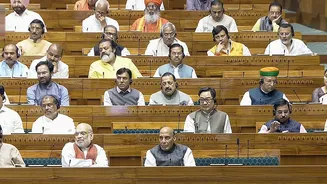
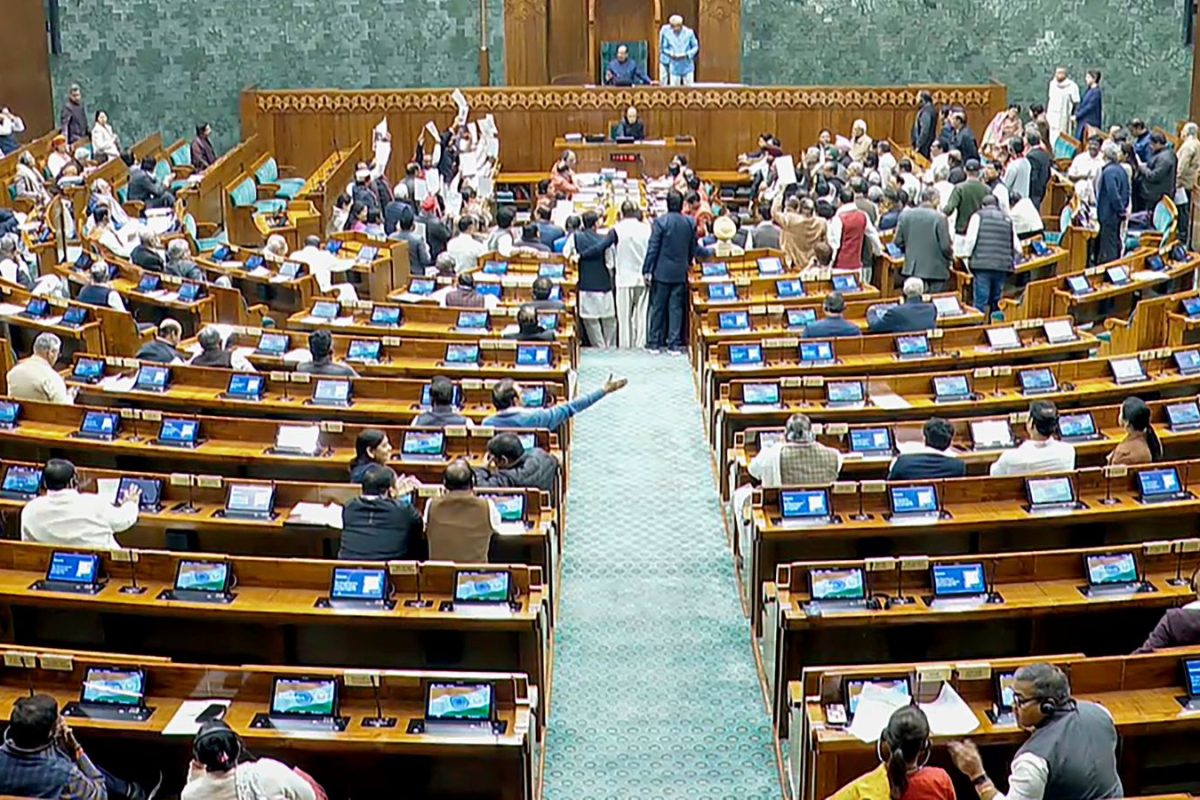
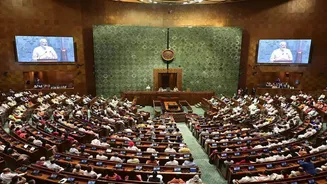
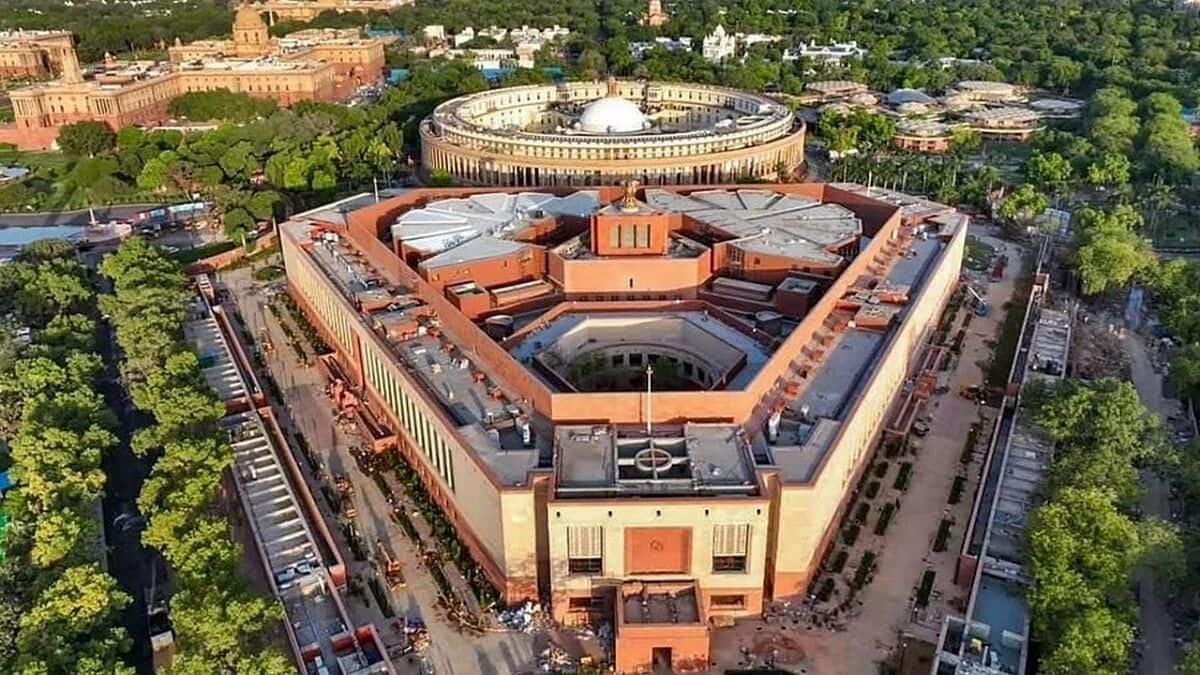
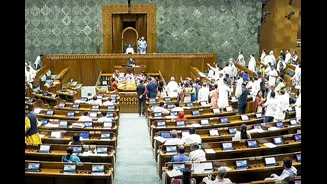
Voting on three major bills, including amendments related to women’s quota and the setting up of a delimitation commission, is scheduled for 4 pm on Friday in the Lok Sabha, according to Speaker Om Birla. Meanwhile, a debate is ongoing in the House before voting.
Why Delimitation Is Central to Women’s Quota
In 2023, Parliament passed the Constitution (One Hundred and Sixth Amendment) Act, granting one-third reservation for women in the Lok Sabha and state assemblies, including sub-quotas for SC and ST women.
However, the law came with a key condition: it would only be implemented after the next Census and a delimitation exercise based on updated population data.
That effectively pushed the timeline to post-2027, since delimitation, last carried out between 2002 and 2008, takes years and, this time, would also involve reallocating seats between states, not just redrawing boundaries.t
Now, the Centre wants to move faster. It has introduced three bills in the ongoing session:
- The Constitution (131st Amendment) Bill, 2026 to delink women’s reservation from a fixed Census timeline and allow Parliament to decide which population data to use
- The Delimitation Bill, 2026 to set up a new commission with powers to redraw constituencies and reallocate seats
- The Union Territories Laws (Amendment) Bill, 2026 to align UTs like Delhi, Puducherry and Jammu & Kashmir with the new framework
The three legislations introduced are the Constitution (One Hundred and Thirty-First Amendment) Bill, 2026, the Delimitation Bill, 2026, and the Union Territories Laws (Amendment Bill), 2026.
According to the draft amendment, Lok Sabha seats are proposed to be increased to a maximum of 850 from the current 543, in order to implement the women’s reservation law ahead of the 2029 general elections following a delimitation exercise based on the 2011 Census.
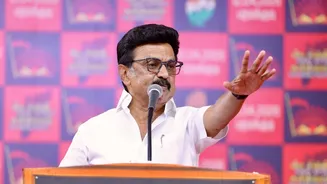
The proposed delimitation exercise has triggered a massive political storm, with southern states warning of a potential loss of representation in Parliament. The Centre has insisted there will be "no disadvantage" to the southern states under what some reports are describing as Prime Minister Narendra Modi's 50% seat expansion formula.