





What is the story about?
DUBAI, United Arab Emirates (AP) — U.S. President Donald Trump issued a warning on Monday regarding potential widespread destruction of Iran's energy resources
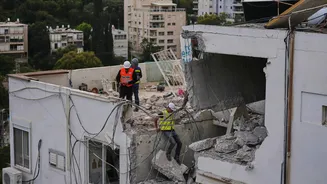
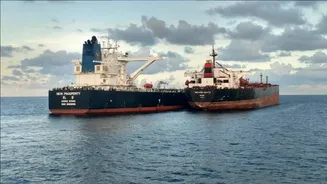
and critical infrastructure if a resolution to the ongoing conflict is not reached promptly. Simultaneously, Iran conducted attacks on key facilities in Kuwait and Israel, including a drone strike on a Kuwaiti oil tanker in Dubai waters, leading to a fire that emergency services are currently addressing.
Escalating Military Actions
The conflict has intensified, with Israel and the United States launching new strikes against Iranian targets. Trump's threat emerged in a social media statement, following earlier remarks to the Financial Times suggesting the possibility of American troops seizing Iran's Kharg Island oil export hub. Despite claims of diplomatic progress from Trump, Tehran has denied engaging in direct negotiations, even as the U.S. has deployed thousands more troops to the region.Diplomatic Claims and Threats
In a communication with the New York Post, Trump asserted that negotiations were underway with Iran's parliament speaker, Mohammad Bagher Qalibaf. However, Qalibaf dismissed the discussions as a pretext for U.S. military escalation.Trump's social media post indicated that significant progress was being made in diplomatic talks with Iran. He warned that failure to reach an agreement soon, coupled with the closure of the Strait of Hormuz, would compel the U.S. to escalate its military actions, potentially leading to the complete destruction of power plants, oil wells, and desalination facilities.
Legal and Humanitarian Concerns
Legal experts note that international laws governing armed conflict permit attacks on civilian infrastructure only if the military advantage significantly outweighs the potential harm to civilians. This threshold is notably high, and actions causing excessive civilian suffering could be classified as war crimes.A resident of Karaj, near Tehran, recounted fears of losing power due to strikes in the vicinity, stating, 'I was really scared. I thought that they’d hit the power plants and that we are not going to have power anymore.'
Iran's Response to U.S. Demands
The U.S. has already targeted military positions on Kharg Island, while Iran has threatened to retaliate by invading Gulf Arab nations and mining the Persian Gulf if U.S. forces enter Iranian territory. Iranian Foreign Ministry spokesman Esmail Baghaei characterized the 15-point proposal from the Trump administration as 'excessive, unrealistic and irrational,' denying any direct negotiations.Qalibaf indicated that Iranian forces were prepared to respond aggressively should U.S. troops deploy to the region.
Attacks on Regional Infrastructure
Iran has continued its offensive against Gulf Arab nations, with Saudi Arabia intercepting missiles aimed at its oil-rich Eastern province and reports of an Iranian missile striking a power and desalination plant in Kuwait, resulting in casualties.Noura Al Kaabi, a UAE minister, stated that the region cannot accept a regime that engages in such hostile actions and called for assurances that similar incidents will not recur.
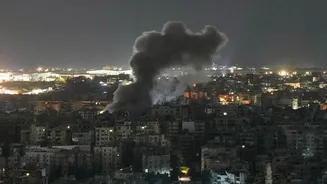
In a related incident, NATO air defenses intercepted a ballistic missile launched from Iran over Turkey, marking the fourth such occurrence since the conflict began. Meanwhile, Israel reported a new wave of strikes targeting Iranian military infrastructure.
Casualties and Global Energy Concerns
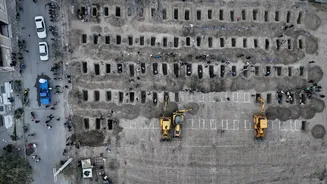
The ongoing conflict has resulted in significant casualties, with over 1,900 reported deaths in Iran, and more than 1,200 in Lebanon. The conflict has also raised alarm regarding global energy supplies, particularly as Iran's actions threaten vital infrastructure in the Strait of Hormuz.Brent crude oil prices have surged to approximately $115 per barrel, reflecting fears of a potential energy crisis due to disruptions in supply.
International Response
The U.N. Security Council has scheduled an emergency session following the deaths of three peacekeepers in southern Lebanon amid ongoing Israeli-Hezbollah clashes. The peacekeeping mission has not confirmed the circumstances of their deaths, while an Israeli airstrike in Beirut resulted in additional casualties.As the conflict escalates, international efforts continue to address the humanitarian crisis and potential resolutions to the ongoing violence.