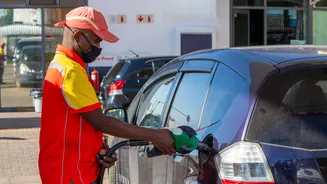

New Delhi: Delhi’s stringent “No PUCC, No Fuel” rule came into force on Thursday, barring petrol and diesel sales to vehicles without a valid Pollution
Under Control Certificate (PUCC) in an attempt to rein in the capital’s worsening air pollution. While the Delhi government has framed the move as a necessary emergency measure, petrol pump operators say implementing the order on the ground poses serious legal, technical and safety challenges. The rule also coincides with a ban on the entry of all private non-Delhi vehicles below BS-VI standards into the capital, adding to the enforcement burden on fuel retailers.
Petrol Dealers Say They Support the Intent
The Delhi Petrol Dealers’ Association (DPDA) said it “whole-heartedly supports” all steps taken by the Delhi government to combat severe air pollution. However, in a representation to Environment Minister Manjinder Singh Sirsa, the association warned that while “extraordinary steps are indeed necessary”, enforcing the directive without addressing key gaps would be “an extremely difficult and arduous task”.
The DPDA also pointed out that a significant portion of Delhi’s pollution is transboundary, originating outside the city limits, and argued that measures limited only to the National Capital Territory (NCT) are unlikely to deliver results unless implemented uniformly across the entire NCR.
‘Petrol Pumps Are Not an Enforcement Agency’
One of the core concerns raised by the dealers is the legal position of fuel retailers. The DPDA said refusal to sell petrol or diesel, an essential commodity, falls under the Essential Commodities Act, 1955, and the Motor Spirit and High Speed Diesel Order, 1998.
According to the association, unless refusal of sale is formally decriminalised by the competent authority, petrol pumps remain legally exposed.
“Petrol pumps are not an enforcement agency. The implementation of the ‘No PUCC, No Fuel’ rule has to be done by authorities vested with statutory powers,” the DPDA said.
Risk of Law-and-Order Issues at Fuel Stations
The association also flagged safety concerns, warning that petrol pump staff are “never looked upon by customers as an enforcing authority”.
- Denial of fuel could lead to arguments, aggression and law-and-order disturbances
- Frontline staff may be placed in unsafe situations
- Dealers have requested that penal action against petrol pump owners be avoided, as they are only assisting the government in implementing the order
Outdated Emission Checks and Tech Gaps
The DPDA further highlighted technical flaws in the current system:
- The emission checking system is obsolete and needs urgent upgrading
- There is no live dashboard or real-time feed linked to the ANPR cameras installed at petrol pumps
- A proper trial run has never been established
According to the dealers, a previous trial resulted in junk data being transmitted to petrol pumps, leading to the failure of the exercise and confusion at outlets.
Dealers Seek Fixes for Smooth Implementation
While reiterating their support for pollution-control efforts, petrol dealers urged the government to resolve legal ambiguities, upgrade technology, and clarify enforcement responsibility before expecting full compliance from fuel stations.
They said addressing these concerns is essential to ensure that the “No PUCC, No Fuel” directive does not collapse under operational pressure or create unintended public disorder.