





What is the story about?
The United States has made one of its most sweeping battlefield claims yet in the ongoing Iran war — that Iran’s navy has effectively been neutralised
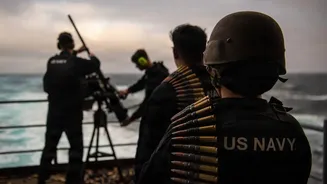
as a regional force. Admiral Brad Cooper, head of US Central Command, said in an operational update that 92% of Iran’s largest naval vessels have been damaged or destroyed, describing the impact as decisive. His assessment went further: Iran, he said, has now “lost the ability to meaningfully project naval power” across the region. The statement marks a significant escalation in how Washington is framing the war — not just as a campaign of strikes, but as one aimed at dismantling Iran’s military infrastructure across domains.
Scale Of Strikes: From Ships To Shipyards
According to Cooper, the naval losses are part of a broader degradation effort under ongoing operations. US forces, he said, have struck more than two-thirds of Iran’s missile, drone and naval production facilities, including key shipyards and industrial sites. The campaign has also crossed a major operational threshold, with over 10,000 military targets hit inside Iran since the war began.
This aligns with earlier updates from CENTCOM indicating that dozens of Iranian vessels — including corvettes, support ships and smaller naval platforms — have been targeted in successive strike waves. In the early phase of the war alone, US forces reported hitting over 60 ships and key maritime infrastructure.
The objective appears cumulative. Rather than focusing solely on frontline assets, the campaign is targeting the entire ecosystem — ships, shipyards, missile depots and drone production lines.
Naval Power Reduced — But Not The War
Despite the scale of US claims, the conflict itself is far from over. Iran continues to launch missile and drone attacks across the region, including strikes targeting Israel and US-linked assets in the Gulf. While US officials say launch rates have dropped significantly — by as much as 90% — the persistence of these attacks suggests that Iran retains operational capability, even if degraded.
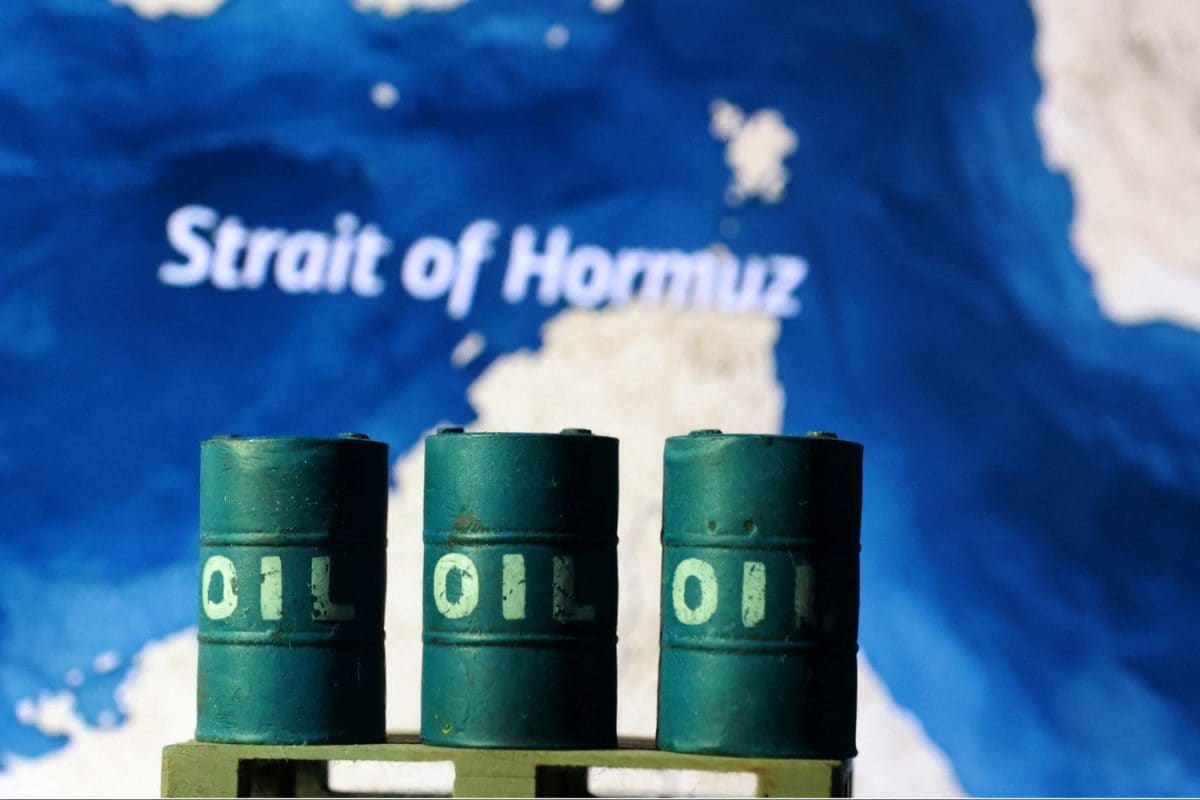
This gap between capability and capacity is important. A reduced navy does not mean a neutralised adversary. Iran’s strategy has long relied on asymmetry — smaller vessels, coastal missile systems and drone swarms — rather than conventional blue-water naval dominance. Even with major vessels destroyed, those elements can continue to pose a threat, particularly in confined waters like the Strait of Hormuz.
Strategic Message Behind The Claim
The 92% figure is as much a message as it is an assessment. For Washington, it signals progress — a war plan that is “on or ahead of schedule”, as Cooper put it. It reinforces the narrative that Operation Epic Fury is systematically dismantling Iran’s ability to wage sustained conflict. But it also serves a deterrent function. By publicly framing Iran’s navy as largely destroyed, the US is projecting dominance in the maritime domain, particularly in the Gulf, where shipping routes and energy flows remain under threat.
At the same time, such claims are inherently difficult to verify independently during an active conflict. Iran has not confirmed the extent of losses described by US officials, and battlefield reporting remains fragmented.
What It Means For The War
If accurate, the scale of damage described would represent one of the most significant naval degradations in modern conflict — achieved not through a single decisive battle, but through sustained, distributed strikes.
But even then, it does not resolve the central question. The war is no longer being fought solely at sea. It spans airspace, missile exchanges, proxy fronts and economic pressure points. Iran’s ability to retaliate — even at reduced levels — keeps the conflict active.
For now, the US narrative is clear: Iran’s naval power has been largely dismantled. The battlefield reality is more complex: the war continues, and Iran is still fighting back.