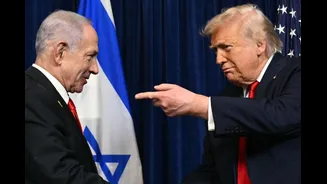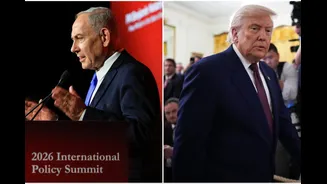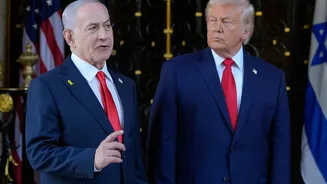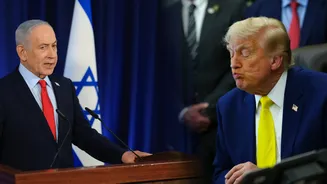






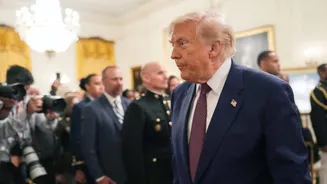
Israeli Prime Minister Benjamin Netanyahu has pushed back against long-standing claims about his relationship with US President Donald Trump, insisting
that neither leader dictates the other's decisions and that both governments operate according to their own national interests. Speaking at the JNS International Policy Summit in Jerusalem on Monday, Netanyahu addressed perceptions circulating in both Israel and the United States amid ongoing diplomatic discussions involving Iran and broader questions about Washington's role in West Asia. The Israeli leader said commentary surrounding the relationship between the two governments often misrepresents how decisions are made. According to Netanyahu, critics in the United States frequently claim Trump follows Israeli preferences, while critics inside Israel argue that Jerusalem simply falls in line with Washington's demands. "In the United States, they say that President Trump does everything that I ask him to do. And in Israel, they say that I do everything he wants me to do. Well, neither is true," Netanyahu told the gathering. He added that both countries remain sovereign states pursuing their own strategic priorities, even when their interests overlap on major regional issues.
Netanyahu Stresses Independence Amid Iran Diplomacy
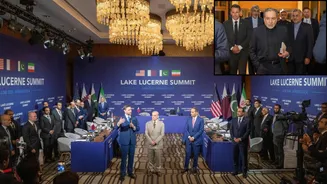
The remarks come at a sensitive moment as Washington and Tehran continue negotiations in Switzerland aimed at implementing a ceasefire framework and exploring a broader agreement covering sanctions, regional security and Iran's nuclear programme.
While reports have suggested occasional disagreements between the Trump administration and the Israeli government over diplomatic approaches towards Iran, Netanyahu sought to emphasise that differences do not undermine the broader strategic relationship.
"We're leaders of independent and proud countries. We stand for our interests. I stand for the interests of Israel, and for its security. Often we see eye to eye. Sometimes we don't. But we respect each other's sovereignty and leadership and commitment to our people," he said. The comments appeared aimed at countering narratives that either side is excessively dependent on the other at a time when regional diplomacy remains in flux.
Netanyahu also used the platform to restate Israel's longstanding position that Iran must never acquire nuclear weapons, regardless of any future political agreements or diplomatic arrangements. "And with regard to Iran, whatever political developments may unfold, I will not allow Iran to acquire nuclear weapons. As long as I serve as Prime Minister of Israel, that will not happen," he said.
Israeli Leader Defends Military Campaign Against Iran
A significant portion of Netanyahu's speech focused on Israel's recent military operations, which he argued had fundamentally altered the regional balance of power. The Israeli prime minister claimed Israeli and American actions had severely damaged Iran's military and nuclear infrastructure. He further asserted that Israel's operations had delayed Tehran's ability to pursue nuclear weapons, though these claims remain part of Israel's official assessment and have not been independently verified.
Netanyahu argued that Israel had moved away from a traditionally defensive security posture towards a doctrine centred on pre-emptive action against emerging threats.
"For years, people told us, you cannot attack the soil of Iran," he said, referring to Israeli strikes against targets inside Iranian territory. The prime minister maintained that Israel's military campaign extended beyond Iran itself and included operations against Tehran-backed groups across the region, including Hezbollah in Lebanon.