DUBAI, United Arab Emirates (AP) — The U.S. military condemned Iran for violating a tenuous ceasefire after Kuwait reported missile attacks on its territory.
This incident represents a significant escalation in the ongoing conflict and threatens the fragile negotiations aimed at ending the war. U.S. Central Command confirmed that Kuwait intercepted missiles launched by Iran late Wednesday night, labeling the Iranian assault on a key U.S. ally in the Persian Gulf as an “egregious ceasefire violation.” The situation has raised concerns about the stability of diplomatic efforts in the region.
Details of the Attack
Kuwait's announcement of the missile attack coincided with Iran's claim of retaliation for earlier strikes on a U.S. base in an unnamed Gulf state. Kuwait's Foreign Ministry expressed strong condemnation of Iran's actions, describing them as “blatant aggression.”
Escalation of Military Actions
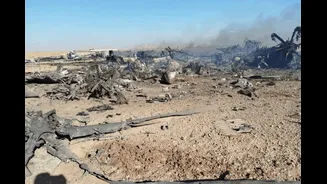
Throughout the week, tensions have escalated as the U.S. and Iran engaged in a series of military strikes. On Monday, the Pentagon reported that U.S. forces executed “defensive” strikes targeting missile launch sites and minelaying boats in southern Iran. Additionally, U.S. officials disclosed that four one-way attack drones were shot down on Wednesday, and an Iranian ground control station was struck before it could launch a fifth drone.
Iran's Response
Iran's paramilitary Revolutionary Guard acknowledged the attack near Bandar Abbas International Airport, asserting it launched a retaliatory strike against the air base responsible for the initial assault. However, specifics regarding whether the attack targeted Kuwait were not disclosed.
Kuwait's Defense Measures
Kuwait's military reported successful interception of incoming missiles and drones on Thursday, although further details on the targeted sites were not provided. The nation, which hosts U.S. Army Central’s forward headquarters and various military bases, has previously faced attacks from Iranian forces and affiliated militias prior to the April ceasefire.
Ongoing Negotiations and Broader Implications
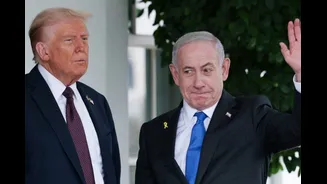
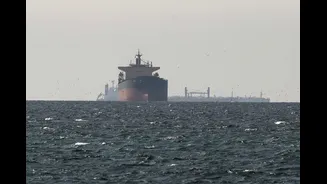
The announcement of the missile attack arrives amid ongoing discussions to resolve the war in the Middle East. President Donald Trump has expressed optimism regarding the potential for a resolution that would facilitate the reopening of the Strait of Hormuz, a critical passage for global oil and natural gas trade. Iran seeks relief from economic sanctions and the return of frozen assets, while the U.S. aims for Iran to relinquish its stockpile of highly enriched uranium. The conflict has generated widespread discontent in the U.S., and disruptions in the Strait have contributed to rising oil prices worldwide.