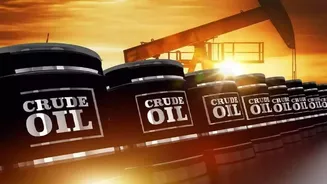







India has expanded its liquefied petroleum gas (LPG) sourcing from the United States while pushing domestic production to guard against disruptions in international
energy supplies, Union Minister for Petroleum and Natural Gas Hardeep Singh Puri said. Speaking on the sidelines of the 29th Energy Technology and Innovation Meet in South Goa, Puri said advance planning and efforts to broaden import partnerships helped India respond to supply constraints linked to the Strait of Hormuz crisis. The country has increased the share of LPG imports from the US from an initial 10 per cent arrangement to nearly 67 per cent, while also sourcing supplies from Algeria and other countries. India has simultaneously increased domestic LPG production, strengthening its ability to meet consumer demand during periods of uncertainty in global energy markets. Puri explained that India anticipated potential supply disruptions when its traditional suppliers in West Asia faced difficulties. The country subsequently increased purchases from the US and explored additional international sources. "When the Hormuz crisis took place, three of your major sources of supply were the Qataris, the Emiratis and the Saudis. Suddenly it looked as if they would not be able to supply, but in anticipation of that we had signed an arrangement with the United States to import 10 per cent of our LPG from there, which was in January. When that worked, we decided to increase that. Today we are importing 67 per cent of our LPG from the United States. We started buying from Algeria, other sources, anybody who could give us LPG," Puri said. According to the minister, India's broader energy sourcing network has also grown, with the country expanding its procurement reach from 27 nations to 41 nations. The strategy aims to reduce dependence on a limited number of suppliers and improve resilience against international supply shocks. Domestic LPG Production Rises To 55,000 Tonnes A Day Alongside diversifying imports, India has increased domestic LPG output to meet demand more effectively. Puri said daily production climbed from 34,000 metric tonnes to 55,000 metric tonnes, with cooperation across the sector contributing to the expansion. "I think the most important component of that was the fact that we were able to ramp up domestic production from 34,000 metric tons per day to 55,000 metric tons per day in which everybody collaborates." The minister also highlighted the commercial considerations that influence refinery operations. Refineries may favour petrochemical products because of their profitability, but production priorities can change when domestic fuel requirements increase. "All the refineries do not want to make LPG, they want to make Pet cam because it's more commercially viable, but if push comes to shove, you will make more LPG." Puri also addressed concerns about a possible domestic LPG shortage. He said daily cylinder indents rose temporarily from 51 lakh to 90 lakh amid rumours and speculative hoarding. Administrative monitoring, coordination with state governments and changes to waiting periods helped ease the pressure, he added. India's Refining Capacity Set To Reach 300 Million Tonnes India is also preparing to expand its refining infrastructure even as refining capacity declines in several other parts of the world. "Our refining capacity today is 290 million metric tons per annum. The issue is between today and 2030 you are going to 300 million metric tons per annum. This capacity expansion is taking place at a time when global refining capacity is on the decline," he said. Puri said Europe continues to see capacity reductions, while Western countries are not adding new greenfield refining facilities. India's planned expansion could strengthen its position as a major refining centre, supporting domestic consumption, exports and petrochemical production. The minister's remarks underline the role of refining infrastructure in meeting India's growing energy needs while improving its ability to respond to changes in global fuel availability. Strategic Reserves And Energy Infrastructure Strengthened In a post on X, Puri highlighted several developments in India's energy infrastructure, including higher refining capacity, expanded fuel retail networks and increased storage capabilities. “India has also been able to overcome these challenges because our energy sector was prepared well in advance for such situations. Over the past decade, we diversified crude sourcing from 27 to 41 countries, built 5.33 MT of strategic reserves, raised refining capacity from 215 to 267 MMTPA, and expanded fuel outlets from about 52,000 to over 100,000, LPG import terminals from 11 to 22 and strengthened LPG security by increasing domestic production from around 34,000 tonnes a day to 55,000 a day.” The minister also referred to Samudra Manthan, an initiative aimed at tapping India's offshore hydrocarbon resources. The programme includes opening nearly 1 million square kilometres of previously designated “No-Go” areas for exploration. Beyond conventional fuels, the government is pursuing alternative energy initiatives to reduce import dependence and create additional income opportunities for farmers. “E20 continues to not just provide additional income to our farmers but is also playing a pivotal role in keeping our energy import bills down, while GOBARdhan Scheme is helping unlock the potential of agricultural residue and organic waste for Compressed Biogas (CBG), advancing the vision of ‘Annadata se Urjadata’ while supporting rural livelihoods and waste-to-wealth initiatives,” he said on X. (With Agency Inputs)