





The United States will withdraw troops by the end of September following a 23-year presence that started with the 2003 invasion against Saddam Hussein
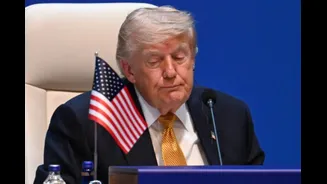
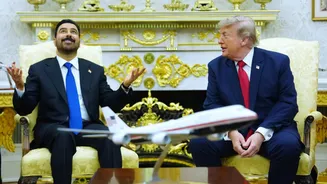
and ended with much smaller operations against the Islamic State group. The announcement was officially made by US President Donald Trump, who, standing alongside Iraqi Prime Minister Ali al-Zaidi at the White House, said, "We don't think we need the military there anymore." "The relationship is a whole big relationship where we don't need the military," Trump said. "We're there to help them. We're there to protect them if need be. But we don't think that's going to be necessary." Speaking through an interpreter, al-Zaidi said "U.S. forces will be out of Iraq" by September 30, "while U.S. companies will be inside Iraq." The Pentagon said in a subsequent statement that it was reaffirming a 2024 agreement with Iraq to end its mission against IS fighters. Many of the US troops still serving in Iraq at the time of the deal, which was made during the Biden administration, already have departed. Over the years, the American troops have been diminishing their footprint and have shifted the fight against IS in Iraq to Iraqi troops. The US military has also trained the troops.
American Invasion of Iraq - When US Deployed 1,70,000 Troops In The Country
The US had invaded Iraq in March 2003 with the claim that Saddam Hussein had secretly stashed weapons of mass destruction. However, the claims never materialised.
The US presence grew to more than 170,000 troops at the peak of counterinsurgency operations in 2007.
From Withdrawal to Return: US Troops’ Changing Role in Iraq
The Barack Obama administration oversaw a phased reduction of US forces in Iraq, with the last combat troops leaving the country in December 2011. A limited number of personnel remained even after 2011 to support security assistance operations, while Marines continued to protect the US embassy compound.
In 2014, the emergence of the Islamic State (IS) group and its rapid capture of a wide swath across Iraq and Syria led the US and allied forces to return at the request of the Iraqi government.
The return of US military was focused on rebuilding and retraining the police and military units that had collapsed.
After IS lost control of the territory it had claimed, coalition combat operations formally ended in 2021. The US had maintained about 2,500 troops in Iraq for training and to conduct partnered counter-IS operations with Iraq's military.
Many have withdrawn since the 2024 agreement to end the mission, with just a small contingent of military advisers and others still remaining in Iraq who are all set to back in America by September.
(With inputs from Associated Press)