




Iran has warned that the ongoing war could expand into the Indian Ocean if the United States or Israel launches another attack, raising the prospect of
a much wider maritime battlespace stretching beyond the Persian Gulf, Strait of Hormuz and Red Sea. Yahya Rahim Safavi, a senior military adviser to Iran’s Supreme Leader Mojtaba Khamenei, said the geographical scope of the conflict could continue to widen if hostilities resume. “Since the conflict has spread from the Persian Gulf and Strait of Hormuz to the Red Sea, it is possible that, in response to more war, the front will expand even further, reaching the Indian Ocean and perhaps beyond,” Safavi said in remarks released by Iran’s Fars news agency. The warning comes amid continued tensions between Tehran and Washington, with Iran repeatedly threatening retaliation against US interests if American forces launch another attack.
War Already Spilled into the Indian Ocean
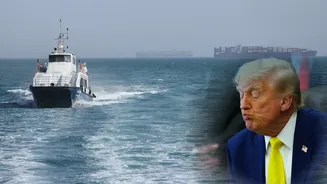
An expansion into the Indian Ocean would fundamentally widen the geography of the conflict. The war has already placed pressure on shipping through the Strait of Hormuz and Red Sea, two of the world's most important maritime chokepoints.
The Indian Ocean connects those waters to major commercial routes linking the Middle East with South Asia, Southeast Asia and beyond. The conflict has already demonstrated that military operations around Iran can have consequences well outside the immediate Gulf theatre.
https://t.co/PiqQpVIrMu pic.twitter.com/Wc1e0B0um7
— Department of War 🇺🇸 (@DeptofWar) March 4, 2026
In March, the US-Iran conflict reached the Indian Ocean directly when the Iranian frigate IRIS Dena was sunk by a US submarine off Sri Lanka after taking part in an India-hosted naval exercise. Analysts at Singapore's RSIS described the episode as evidence that the war had already spilled into the Indian Ocean and created new security dilemmas for regional states.
That means Safavi's warning would represent an expansion of an existing maritime dimension rather than an entirely new geographic development.
US naval power could face a wider maritime challenge
Iran cannot match the United States in conventional naval power. Its military strategy has therefore traditionally placed greater emphasis on missiles, drones, submarines, coastal surveillance and other asymmetric capabilities.
A wider maritime conflict could allow Tehran to impose pressure across a much larger area without attempting to establish conventional control of the Indian Ocean. The Gulf of Oman and Arabian Sea would be particularly important because they connect the Strait of Hormuz with the wider Indian Ocean. Any sustained threat to shipping or military movements in those waters could force the US and other countries to devote additional naval and surveillance resources to protecting commercial routes.
The United States also maintains significant military infrastructure in the wider Indian Ocean, including Diego Garcia, which provides a major logistical and air-support hub for American operations across the region.
That does not mean Safavi's remarks amount to a declared Iranian plan to attack Diego Garcia or other US facilities. Rather, the warning signals that Tehran sees the wider maritime environment as part of the potential battlespace if the conflict escalates again.
Shipping could become the wider pressure point
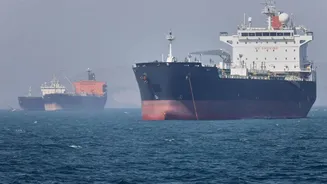
Commercial shipping would remain one of the most vulnerable elements of any geographical expansion. The Strait of Hormuz, Gulf of Oman, Red Sea and Indian Ocean form an interconnected maritime system for energy and global trade. Disruption in one section can push vessels towards longer routes, raise insurance costs and increase pressure on freight and energy markets.
The possibility is particularly significant because the conflict has already demonstrated how military action around Iran can affect civilian shipping. Recent attacks and restrictions around Hormuz have forced commercial operators to reassess routes and security risks.
Safavi's warning therefore does not establish that Iran is preparing to attack the Indian Ocean. It does, however, indicate that senior Iranian military figures are publicly considering a conflict geography extending well beyond the immediate Gulf theatre.
If further US or Israeli strikes trigger such an expansion, the Indian Ocean could become an increasingly important secondary theatre — bringing regional naval forces, commercial shipping and major international sea lanes closer to the conflict.