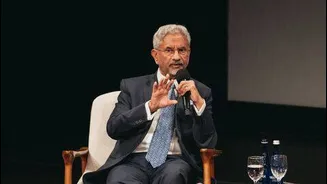






India’s concerns over cross-border terrorism and friction over trade are creating “bumps” in its relationship with the United States, External Affairs
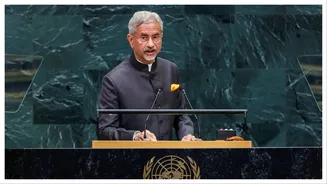
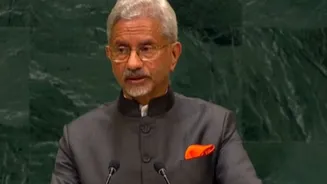
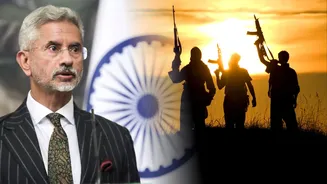
Minister S Jaishankar said in New York on Tuesday. Speaking at the Asia Society after the UN General Assembly’s High-Level Week, Jaishankar said terrorism remains one of India’s most important security concerns because of its experience with attacks originating from a neighbouring country over several decades. “There isn't enough understanding or appreciation or empathy of that,” Jaishankar said, arguing that the disconnect affects India’s bilateral relationships. “Terrorism emanating from its neighbour is one of India’s primary concerns, and if this is not fully appreciated by New Delhi's partners, it impacts bilateral ties,” he said. The remarks come as Washington has stepped up engagement with Islamabad even as India continues to regard cross-border terrorism as a central security concern. Jaishankar had also used his UNGA address to warn against attempts to normalise terrorism, without naming Pakistan directly.
Trade deal faces a new complication
The other major issue Jaishankar highlighted was the long-running India-US trade negotiation. He said the two sides had reached “more or less an understanding” on the agreement, but changes in the American tariff framework had complicated the final stage.
According to Jaishankar, the earlier reciprocal-tariff framework was struck down, leaving Section 301 as a new basis for tariff action. The Section 301 process is still under way, he said, creating another complication for an agreement that has otherwise made substantial progress.
India’s Trade Minister Piyush Goyal is travelling to the US from September 29 to October 5 for further discussions on the proposed bilateral trade agreement, according to the Indian government. Jaishankar also explained why the negotiations have been particularly complex for India.
Unlike economies dominated by large industrial producers, India has a vast base of small farmers, manufacturers and businesses, making tariff concessions more politically and economically sensitive. He said closing the agreement would be one factor that could contribute to a better overall relationship.
Public opinion is now part of diplomacy
Jaishankar also pointed to a less traditional source of diplomatic pressure: public opinion. In his assessment, social media has changed the way foreign policy is conducted, particularly in democratic countries where governments have to account for increasingly vocal domestic constituencies.
“Today the economics of mobility and the politics of mobility are at odds with each other,” he said, adding that public perception had become a significant factor in international relations.
China ties improve, but border remains key
Jaishankar also offered an assessment of India-China relations, saying ties were better than they had been in 2025 and had improved further compared with 2024.
He linked the improvement to the easing of the prolonged border standoff that followed the 2020 crisis, arguing that the condition of the frontier ultimately determines the wider relationship.
“We came down to a very fundamental principle, which is that the state of the border determines the state of the relationship,” Jaishankar said. Recent reporting also quotes him as saying the relationship has recovered from its lowest point but remains closely tied to developments along the border.
Beyond bilateral ties, Jaishankar warned that the wars in Ukraine and the Iran-Gulf region were putting additional pressure on developing economies through energy, food and fertiliser markets. He also described the international system as moving towards greater multipolarity, arguing that countries will increasingly seek stable and diversified partnerships.