





Just as India and the European Union moved to seal a landmark Free Trade Agreement, the United States has took a swipe at the economic and political bloc’s
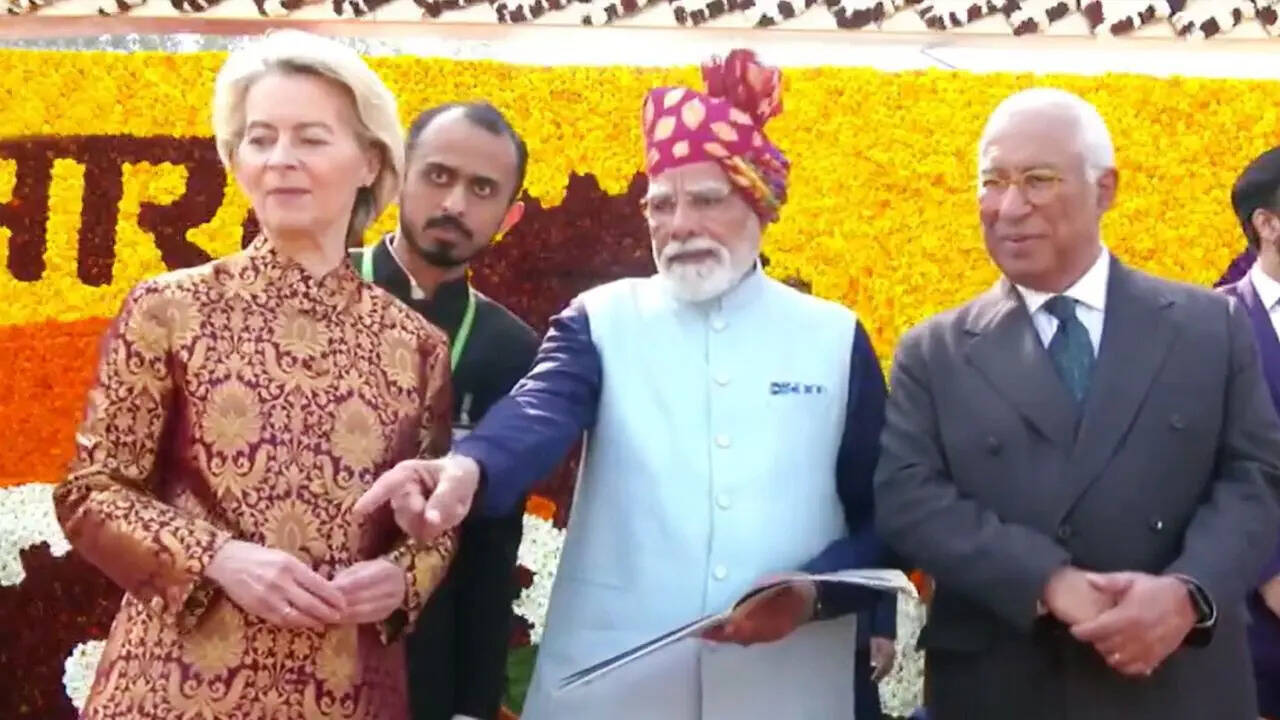
purchase of oil products from New Delhi, reviving allegations that this trade is indirectly financing the war in Ukraine. The India-EU trade deal, described by European Commission President Ursula von der Leyen as the “mother of all deals”, was declared finalised for legal scrubbing during her visit to New Delhi. The agreement, formally expected to be announced on January 27, aims to strengthen economic ties between India and the EU at a time when global trade is being reshaped by US tariff actions. Negotiations for the deal began as early as 2007. However, while the agreement is expected to be signed later this year, it is likely to come into force in early 2027. Also Read | At Kartavya Path, A Signal To Washington: Reading EU Chief Ursula von der Leyen's Republic Day Visit
‘Financing the War Against Themselves’
US Treasury Secretary Scott Bessent has been openly critical of European leaders for expanding trade ties with India while backing Ukraine. Speaking in an interview with ABC News on Sunday, Bessent said, “We have put 25 per cent tariffs on India for buying Russian oil. Guess what happened last week? The Europeans signed a trade deal with India.”
The Trump administration has imposed tariffs totalling 50 per cent on Indian goods, including an additional 25 per cent penalty linked to India’s continued purchase of Russian crude. Bessent argued that European nations were undermining their own position on Ukraine by buying refined fuel from India.
“Just to be clear again, the Russian oil goes into India, the refined products come out, and the Europeans buy the refined products. They are financing the war against themselves,” he said, adding that under Trump’s leadership, “we will eventually end” the Russia-Ukraine war.
Also Read | Did EU Avoid Tariffs on India for ‘Big Trade Deal’? Trump Aide’s Big Claim
Bessent also claimed the US had borne a greater economic and strategic cost than Europe in confronting Russia, saying Washington had made “much bigger sacrifices” than its allies.
Before this, Bessent had described US tariffs linked to Russian oil as a “huge success”. Speaking to Politico on January 24, he said, “We put 25 per cent tariffs on India for buying Russian oil, and the Indian purchases by their refineries of Russian oil have collapsed. So that is a success. The tariffs are still on. The 25 per cent Russian oil tariffs are still on. I would imagine that there is a path to take them off, so you know that that’s a check and a huge success.”
He also criticised European countries for refusing to impose similar measures. “I will also point out that our virtue signalling European allies refused to do it because they wanted to sign this big trade deal with India,” Bessent said.
Taking aim at India, Bessent noted that before the Ukraine invasion, Russian crude made up only 2–3 per cent of India’s total oil imports, but that share rose to 18–19 per cent after the war began. He claimed this shift helped India earn “huge profits”.
“…but in the ultimate act of irony and stupidity, guess who was buying the refined products from the Indian refineries made from Russian oil ..the Europeans. They are financing the war against themselves,” he said.
'Historic bond
The hardening of Washington’s trade stance contrasts sharply with the warmer diplomatic messaging from Trump on India’s Republic Day. In a message shared by the US embassy in India, Trump said, “On behalf of the people of the United States, I extend my heartfelt congratulations to the government and people of India as you celebrate your 77th Republic Day. The United States and India share a historic bond as the world’s oldest and largest democracies.”Behind the scenes, however, divisions within Trump’s own Republican Party appear to have surfaced. According to reports by Axios, leaked audio recordings suggest senator Ted Cruz warned Trump against imposing sweeping tariffs. In the recordings, Cruz is reportedly heard saying, “You're going to lose the House, you're going to lose the Senate, you're going to spend the next two years being impeached every single week.”
Despite internal opposition, Trump went ahead with imposing 25 per cent tariffs on India in 2025, later doubling them to 50 per cent in August, citing New Delhi’s trade ties with Moscow.