





What is the story about?
The United States may be edging closer to a fresh military decision point on Iran. A closed-door briefing scheduled for Thursday is expected to place three
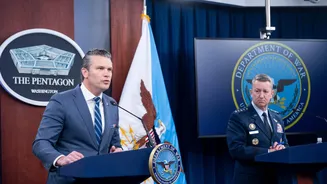
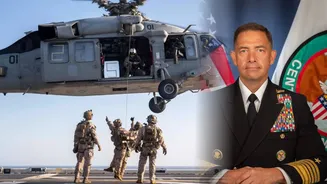
distinct operational options before President Donald Trump—each carrying different risks, timelines and escalation thresholds. At the centre of that briefing is Admiral Brad Cooper, head of US Central Command (CENTCOM), who will walk the president through scenarios that move beyond the current strategy of economic pressure and naval containment. According to officials familiar with the planning, the options are not theoretical constructs. They are executable frameworks. That distinction matters. Because it suggests Washington is no longer just signalling—it is preparing.
Three Military Options On The Table
One proposal described by sources involves what has been termed a “short and powerful” strike. The objective would be limited but sharp: hit selected infrastructure targets, disrupt Iranian operational capacity, and create leverage for negotiations that have so far stalled.
Details remain closely held, but the concept aligns with prior US doctrine—precision over duration, pressure without full-scale escalation. Whether such a strike would remain contained is another question.
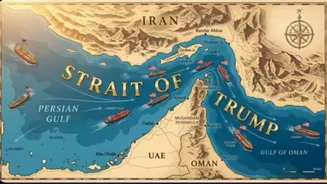
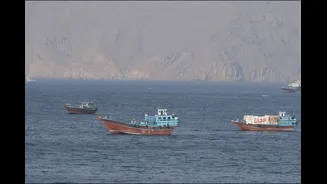
A second option moves into more complex territory. It centres on securing parts of the Strait of Hormuz to restore commercial shipping flows. That would likely require not just naval dominance but a degree of ground presence—potentially exposing US forces to direct engagement in a narrow and contested maritime corridor.
The third proposal reportedly under consideration is a special operations mission aimed at Iran’s stockpile of highly enriched uranium. Such an operation would be high-risk, intelligence-dependent, and politically sensitive, given the implications of physically securing nuclear material on Iranian soil.
General Dan Caine, Chairman of the Joint Chiefs of Staff, is expected to be present during the briefing—an indication of the seriousness attached to the options under review.
Blockade Strategy Still Central—For Now
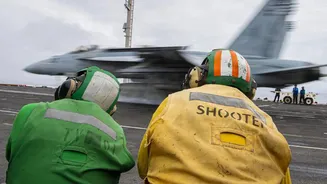
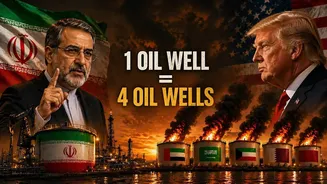
Despite the planning underway, Trump’s current approach remains anchored in economic pressure. He has already instructed aides to prepare for an extended blockade of the Strait of Hormuz, a move designed to choke Iran’s oil exports and force strategic concessions.
Privately, officials describe the blockade as the least risky of the available options—particularly when compared to renewed bombing campaigns or a sudden halt to hostilities. But the strategy is not without its own vulnerabilities.
There is growing concern within military circles that Iran could respond asymmetrically. Retaliatory strikes against US assets in the region remain a live possibility, especially if maritime restrictions tighten further.
And then there is the question of endurance—how long such pressure can be sustained without escalation.
Concerns Inside Washington
Complicating the picture are emerging concerns within the US leadership itself. Vice President JD Vance, according to officials briefed on internal discussions, has questioned whether the Pentagon is presenting a fully accurate assessment of the conflict.
One point of contention: the format of briefings. Trump, it is suggested, has at times been shown compressed visual summaries—“two-minute” snapshots—that may not fully capture battlefield realities.
There are also logistical concerns. Reports indicate that US missile stockpiles could face strain if the conflict continues at its current pace. That introduces a different kind of pressure—one not driven by diplomacy, but by supply.
War Cost And Strategic Drift
The financial cost of the war is beginning to surface more clearly. A senior Pentagon official has placed the figure at approximately $25 billion so far, with a substantial portion allocated to munitions.
Eight weeks in, the conflict sits in an uneasy space. There is a ceasefire, but it is fragile. Negotiations have stalled. Neither side appears ready to concede ground. Iran, for its part, has reportedly floated proposals that delay nuclear negotiations rather than resolve them—an approach Washington has so far rejected.