






Israeli Prime Minister Benjamin Netanyahu is facing accusations from political rivals that he could seek to reignite a war with Iran to strengthen his
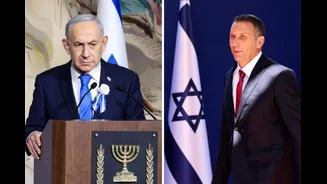
political position and remain in power following the country's October 27 election. According to a report by The Washington Post, Netanyahu pushed for fresh military strikes against Iran in the weeks leading up to the election but faced resistance from Israeli military chief Lieutenant General Eyal Zamir, who feared that renewed hostilities could disrupt the scheduled polls. Four people familiar with the discussions told the newspaper that Netanyahu also explored the possibility of a covert operation inside Iran through Mossad chief Roman Gofman, without informing his cabinet or Zamir. The reported plan raised concerns within Israel's security establishment, with officials fearing that an operation could provoke Tehran into retaliating and trigger another full-scale confrontation. Netanyahu's continued interest in military action has also alarmed opposition leaders, particularly as former military chief Gadi Eisenkot attempts to form a new government that could end Netanyahu's tenure. Eisenkot's bloc secured 48 seats in the election, falling short of the 61 required for a parliamentary majority. He has until December 20 to assemble a coalition. Last week, Eisenkot publicly urged Netanyahu to avoid military operations that could provoke Iran during the sensitive post-election transition. "Exercise restraint and caution against dangerous moves that can wait until a new government … is sworn in," Eisenkot wrote in a letter to the prime minister. He also warned that deploying security forces without an immediate threat could have serious consequences for Israeli democracy and public confidence in government institutions. Netanyahu's Iran strategy faces military resistance The report said Netanyahu's alleged differences with Zamir reflect a broader disagreement within Israel's security establishment over the objectives of another military campaign against Iran. While Netanyahu has repeatedly spoken about overthrowing the Islamic Republic, several military figures have questioned whether additional strikes would achieve that objective. Former Israeli military operations directorate chief Israel Ziv criticised the prime minister's approach, arguing that repeated attacks would not necessarily bring about regime change or encourage Tehran to negotiate. Netanyahu has also suggested in television appearances that he possesses classified intelligence indicating an urgent nuclear threat from Iran. He has used the issue to appeal to Eisenkot to join forces in a new government. However, Eisenkot has so far ruled out joining a government that retains Netanyahu as prime minister. The report also highlighted uncertainty over whether US President Donald Trump would support another round of joint military strikes. Former Israeli military intelligence Iran analyst Dennis Citrinowicz said Trump appeared to be moving away from further attacks, potentially complicating Netanyahu's plans. An Israeli security official denied allegations that Netanyahu and Gofman had planned a covert operation without military involvement, describing them as a "false accusation". Netanyahu's office did not respond to the newspaper's request for comment.