





The confirmed killing of Ali Larijani, one of Iran's most influential political figures, has introduced new uncertainty into the country's leadership at
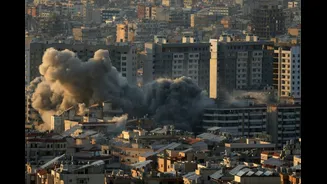
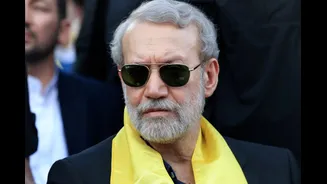
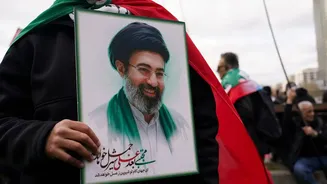
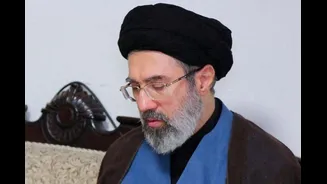
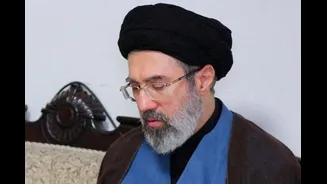
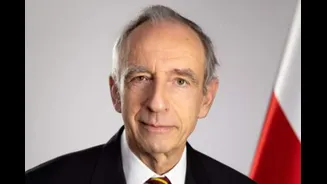
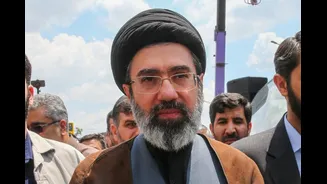
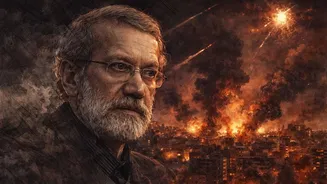
a critical moment in its war against Israel and the US. Iranian state-linked media reported on Tuesday that Larijani had been killed in an Israeli strike, hours after Israel said it had "eliminated" two senior Iranian officials in an overnight attack. According to Fars News Agency, Larijani was targeted by "American and Zionist regime fighter jets" while at his daughter's home in the Pardis district east of Tehran. The strike also killed General Gholam Reza Soleimani, head of the paramilitary Basij force. A Central Figure in Iran Larijani's importance to the Islamic Republic extended far beyond his title. As secretary of the Supreme National Security Council, he operated at the nexus of military planning, internal security, diplomacy and the authority of the Supreme Leader. In wartime, that role made him indispensable — particularly after the death of Ali Khamenei and amid uncertainty surrounding his successor, Mojtaba Khamenei. Ali Larijani had emerged as a central figure in the power corridors of Tehran at a time when the country's structure had suffered a massive hit.
His importance lied in his ability to build a bridge between rival facts of the political and security apparatus of Iran. A former parliamentary speaker and nuclear negotiator, and a member of a powerful clerical family, he commanded credibility across the clerical establishment, the Islamic Revolutionary Guard Corps and the technocratic state.
That position allowed him to maintain a degree of cohesion during periods of crisis. His absence, analysts say, could deepen divisions within the ruling elite at a time when coordination is essential.
Implications for the War
Larijani's killing is likely to have immediate operational consequences. As a senior decision-maker, he played a key role in translating ideological direction into policy and action. His removal leaves a gap in the system at a moment when speed and discipline are critical to Iran's wartime posture.
Now, with him gone, the Revolutionary Guards will try to consolidate power away from the political class. This may, in turn, lead to Iran becoming aggressive in its tackling of the war, thereby increasing not only internal but also regional risks.
Larijani's death is also seen as a setback for diplomatic efforts as for years, he has been an advocate of talks with international counterparts to resolve difference, an attitude that was seen as a soft stance by the hardliners in the country.
A Signal From Israel
The killing of the senior leader is part of Israel's broader strategy of eliminating the top leadership of Iran, besides targetting the country's infrastructure and military. By killing Ali Khamenei first, and now Larijani, Israel is aiming to disrupt Iran's decision-making abilities.
However, this is very different to what the US would want to take things ahead. According to analysts quoted by The Newsweek, the killing of senior political figures only complicates the situation as it brings a huge hindrance to negotiations.
The Rise of Larijani
Larijani has been at the centre of Iran's power structure, occupying several crucial roles. He served in the Revolutionary Guards during the Iran-Iraq War, later led the state broadcaster, and became Iran's chief nuclear negotiator in the early 2000s.
Western diplomats who dealt with him described him as sophisticated and intelligent. He has also been the speaker of the Iranian parliament for 12 years. The Supreme National Security Council praised his long service, saying he had worked "until the very last moments of his life" for the advancement of Iran and called for unity in the face of external threats.
Hamidreza Azizi, a visiting fellow at the German Institute for International and Security Affairs, told CNN that Larijani had been a "true insider who spent decades at the center of the system, which gave him credibility across different parts of the elite."
"The Islamic Republic is designed to survive the loss of individuals," Azizi said, "but figures with such diversified experience are not easy to replace."
What Next
Larijani had been widely viewed as a stabilizing presence during Iran's leadership transition following Khamenei's death. While not a successor himself, he was seen as capable of managing rivalries and ensuring continuity during a period of upheaval.
His death removes one of the few figures with the authority and experience to navigate that transition. It also raises new questions about whether Iran's leadership can maintain unity as the war intensifies.
In an interview in November 2024, Larijani had spoken about the deaths of senior figures, including Qassem Suleimani and Hassan Nasrallah. "Their martyrdom still feels surreal to me," he said. "History repeats itself as great leaders fight, offer themselves as sacrifices for the sake of the cause and pave the way for a new generation of freedom fighters."
Whether Iran can produce that next generation — and whether it can do so while under sustained military pressure — may now be one of the defining questions of the conflict.