






What is the story about?
DUBAI, United Arab Emirates (AP) — On Saturday, the United States and Israel initiated a significant military operation targeting various locations in Iran,
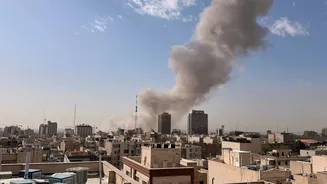
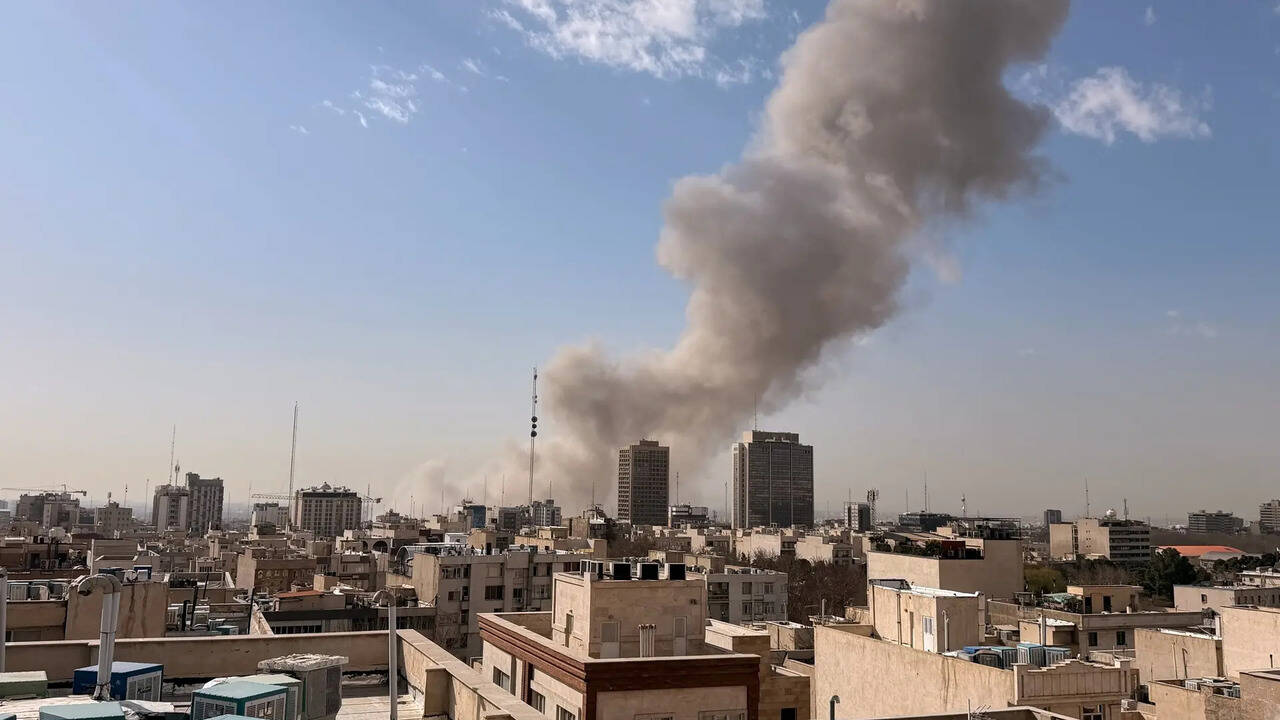
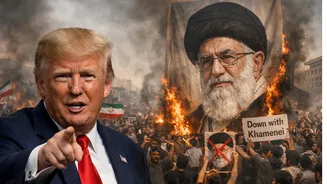
amid escalating tensions surrounding Iran's nuclear program. U.S. President Donald Trump urged the Iranian populace to seize control of their government, signaling a potential shift in the longstanding geopolitical conflict. The initial attacks appeared to focus on the residence of Iran’s Supreme Leader Ayatollah Ali Khamenei in Tehran, though his presence during the strikes remains unconfirmed. As smoke billowed from the capital, the situation rapidly escalated with Iran's Revolutionary Guard launching retaliatory drone and missile strikes aimed at Israel.
Escalation of Military Action
In a video statement, Trump declared the commencement of 'major combat operations in Iran,' highlighting the U.S. military's substantial buildup in the region aimed at pressuring Iran to negotiate regarding its nuclear ambitions. He reiterated claims that Iran has continued to advance its nuclear capabilities, while acknowledging the likelihood of American casualties during the conflict.Despite Iran's assertion that it had ceased enrichment activities since June, it has obstructed international inspections at the sites targeted by the recent airstrikes. Satellite imagery indicates renewed activity at these locations, suggesting attempts by Iran to assess and recover materials.
Regional Reactions and Retaliation
In response to the U.S.-Israel strikes, Iran's Revolutionary Guard announced the launch of a 'first wave' of missiles and drones targeting Israel. The Israeli military issued nationwide alerts as they attempted to intercept incoming fire. Reports of explosions were confirmed, but details regarding damage or casualties remain scarce.Simultaneously, a missile strike reportedly targeted the U.S. Navy’s 5th Fleet headquarters in Bahrain, and explosions were also reported in Kuwait and Qatar. Iraq and the United Arab Emirates closed their airspace, while Jordan experienced sirens signaling potential threats.
Broader Implications
As tensions surged, Prime Minister Benjamin Netanyahu of Israel characterized the joint military operation as a measure to eliminate what he termed an 'existential threat' posed by Iran. He expressed hope that the operation would empower the Iranian people to reclaim their government.Targets of the strikes included Iranian military installations and government symbols, according to sources familiar with the operations. The situation remains fluid, with ongoing developments as both sides navigate the escalating conflict.