








The United States and Iran have moved another step closer to a wider regional conflict, with fresh American strikes on Iranian targets triggering Tehran
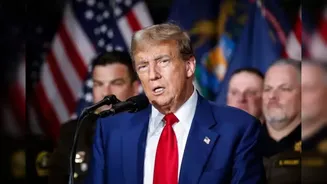
to announce a full closure of the Strait of Hormuz, one of the world's most important energy corridors. The move is bound to have a large-scale implication not only for these two nations but countries across the globe. The latest escalation began after the US military launched strikes on Iran for the second consecutive day. The attacks came just hours after US President Donald Trump publicly threatened further military action while simultaneously urging Tehran to return to negotiations. Also Read: US Launches Fresh Strikes, Iran Retaliates Targeting American Military Bases in Bahrain and Kuwait "We’re going to hit them again hard today," Trump told reporters at the Oval Office. The US decision to carry out additional strikes followed the downing of a US helicopter and growing frustration within the White House over stalled nuclear negotiations, according to a senior US official cited by Axios. Trump also suggested that a diplomatic breakthrough had been within reach. "We were really close to a deal but they keep tapping us along," he said.
Iran Announces Closure of Strait of Hormuz
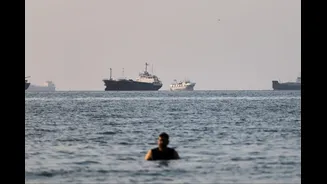
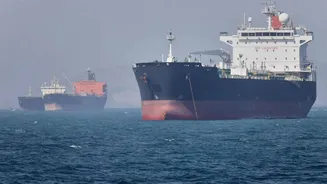
Following the latest US strikes, Iran announced that it was closing the Strait of Hormuz to all maritime traffic, including commercial vessels and oil tankers.
According to Iran's Mehr News Agency, the country's top military command warned that any vessel attempting to pass through the strategic waterway would be considered a target.
In a statement carried by Iranian media, Khatam al-Anbiya Central Headquarters, the armed forces' top operational command, said the move came in response to what it described as the "criminal aggressions of the American enemy" and fresh US attacks in southern Hormozgan province.
"The Strait of Hormuz is declared closed for passage for all types of vessels, including oil tankers and commercial ships," the command said.
It further warned that "any movement of vessels through the Strait of Hormuz will be targeted."
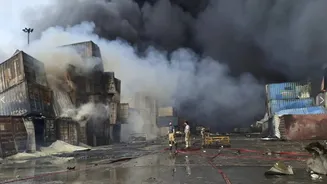
Iranian military-linked media later claimed that two vessels attempting to violate the closure had been struck.
US Rejects Iranian Claims
The United States has disputed Iran's assertion that the waterway has been successfully sealed.
In a fact-check posted on X, US Central Command (CENTCOM) stated: "CLAIM: Iran's Islamic Revolutionary Guard Corps claims that the Strait of Hormuz is closed. TRUTH: Commercial ships are continuing to transit in and out of the Strait of Hormuz tonight."
The conflicting claims have added uncertainty to global energy markets, with traders closely monitoring whether Iran can sustain an effective blockade of the waterway.
Why The Strait of Hormuz Matters
The Strait of Hormuz is not just another shipping lane. It is the world's most critical energy chokepoint.
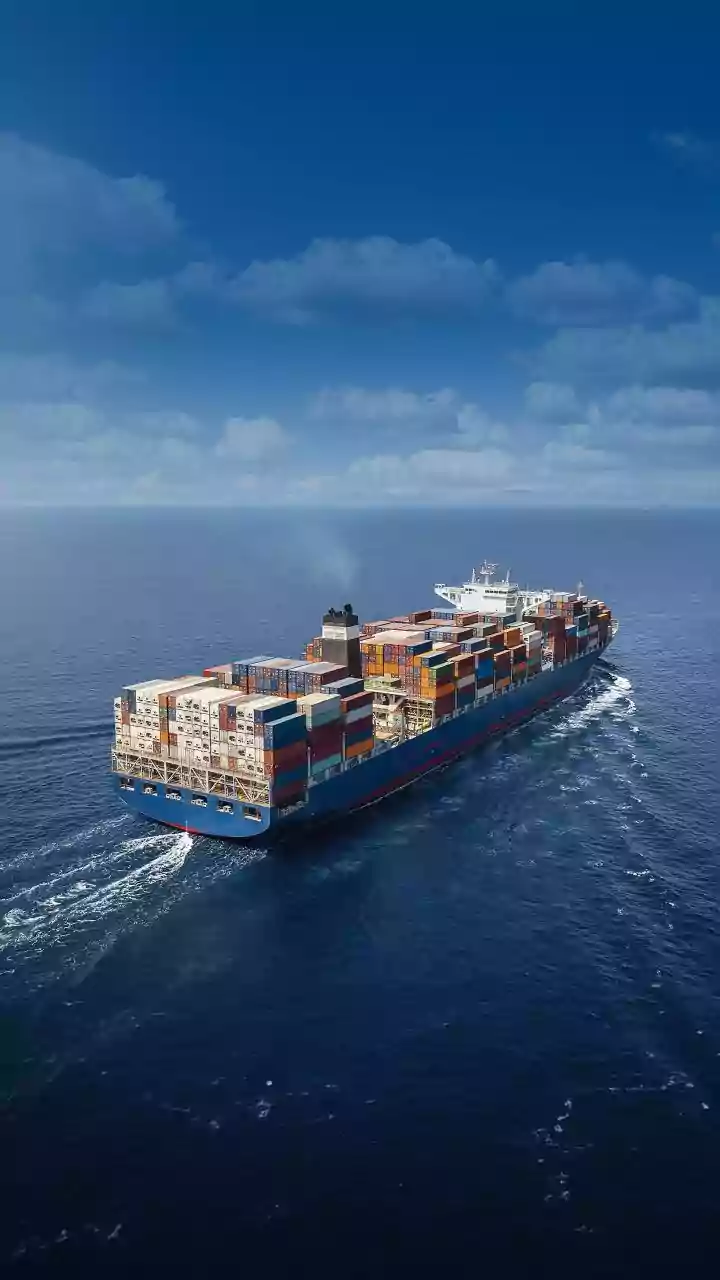
Located between Iran and Oman, the narrow passage connects the Persian Gulf to the Arabian Sea and serves as the main export route for oil-producing nations including Saudi Arabia, Iraq, Kuwait, the UAE, Qatar and Iran itself.
Nearly every major economy depends, directly or indirectly, on the uninterrupted flow of energy through this route.
Even the threat of disruption can send shockwaves through global markets.
The Economic Fallout: Why The World Cannot Ignore Hormuz
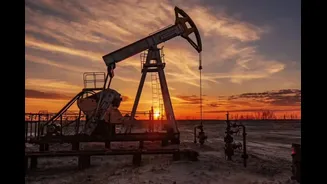
1. A Fifth of Global Oil Supply Is at Risk- According to energy market estimates, more than 20 million barrels of oil pass through the Strait of Hormuz every day.
- That represents roughly 20% of global oil consumption.
- Any prolonged disruption immediately tightens supply and drives up prices worldwide.
2. LNG Supplies Face Major Disruption
- Around 20% of global liquefied natural gas (LNG) exports transit through the strait.
- Major LNG exporters, especially Qatar, rely heavily on this route.
- A disruption threatens electricity generation, industrial production and heating supplies across Asia and Europe.
3. Oil Prices Are Already Surging
- Markets reacted immediately to the latest developments.
- Brent crude rose $2.30, or 2.47%, to $95.40 a barrel, while US West Texas Intermediate crude climbed $2.60, or 2.89%, to $92.63.
- US crude futures gained more than $3 during trading as investors priced in supply risks.
4. Inflation Could Return Worldwide
- Higher oil prices increase transportation, manufacturing and energy costs.
- Countries heavily dependent on imported fuel are particularly vulnerable.
- Several developing economies are already experiencing inflationary pressures due to rising energy costs.
5. Food Prices May Rise
- The impact extends beyond fuel.
- The disruption of fertilizer and urea shipments to South Asia and Africa threatens agricultural production and food security.
- Higher fertilizer costs eventually translate into higher food prices for consumers around the world.
6. Economic Growth Could Slow
- The United Nations Conference on Trade and Development (UNCTAD) has warned that continued disruption to global trade routes could weigh on economic growth.
- Global growth projections for 2026 have already come under pressure as geopolitical tensions increase.
7. Jobs and Poverty Could Be Affected
- According to International Labour Organization (ILO) assessments, sustained high energy prices can weaken economic activity, increase business costs and threaten employment, particularly in developing economies.
- A prolonged energy shock could push millions of vulnerable households deeper into financial distress.
The latest confrontation marks one of the most dangerous phases of the US-Iran standoff in recent years.
As both sides exchange threats and military strikes, the Strait of Hormuz has emerged as the central battleground in a conflict that now extends far beyond the Middle East.
The key question for global markets is no longer whether tensions will affect the economy - they already have. The real question is how long the disruption lasts.
If the waterway remains contested for weeks or months, the consequences could be felt everywhere: at petrol stations, in electricity bills, on supermarket shelves and across financial markets.
For now, the world's most important energy corridor sits at the heart of an escalating confrontation between Washington and Tehran - and the global economy is watching nervously.