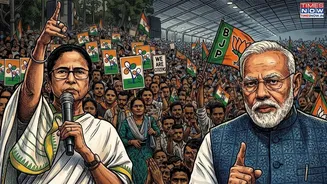






With just a few days left until West Bengal goes to the polls on April 23 for the first phase, let's examine the numbers and the arithmetic that is at play
in this election. For that, we must look at the previous polls' data, including the 2024 Lok Sabha data and how the two primary parties in West Bengal - the ruling TMC and the principal opposition BJP - fared in those elections. The emergence of the BJP in Bengal in the recent elections has made it a must-watch election in the 2026 assembly election list. The contest is not just being shaped by ideological battle but also by vote shares, welfare delivery, identity politics, and micro-regional swings. Five key charts tell the real story of where the state stands - and where it may be headed.
Chart 1: 2024 Lok Sabha Results — TMC’s Edge, BJP’s Persistence
The 2024 general election reaffirmed TMC’s dominance, but also underscored BJP’s entrenched presence.
- TMC: 29/42 seats, ~46% vote share
- BJP: 12 seats, ~39% vote share
- Congress: ~4.7% vote share
Despite a clear seat advantage, the vote gap between TMC and BJP remains under 10 percentage points, keeping the contest structurally competitive.
In the 2024 Lok Sabha elections in West Bengal, the TMC dominated the Assembly segment leads, securing 192 out of 294 segments, while the BJP followed with 90 segments. The Congress managed 11, and the Left just 1.
The minority vote factor continues to be decisive. With Muslims forming nearly 27–30% of the population, consolidation behind TMC has helped it dominate in key districts, particularly in south Bengal and border regions.
Chart 2: 2021 Assembly Election — Landslide vs Momentum
The last Assembly election remains the baseline for 2026.
- TMC: 215 seats, ~48% vote share
- BJP: 77 seats, ~38% vote share
- Left-Congress alliance: ~10% vote share, marginal seats
While TMC secured a commanding majority, BJP’s rise from a fringe player to the principal opposition was the defining shift in the assembly elections in 2021.
Interestingly, in the 2016 assembly election, the BJP could win just three assembly seats, with a vote share of roughly 10%. The saffron party since then has really gained a strong foothold in Bengal and is now a powerful challenger for the TMC.
But here’s the nuance: despite the BJP's rise in the state in terms of vote share, the seat conversion is still lagging, pointing to inefficiencies in regional spread, especially in southern and minority-heavy belts.
Chart 3: 2016, 2021 Assembly Elections — Who Won Where
The geography of Bengal politics reveals a clear divide:
- TMC strongholds: South Bengal, Kolkata region, minority-dominated districts
- BJP strongholds: North Bengal, Junglemahal, border belts
Crucially, 35 seats in 2021 were decided by margins under 5,000 votes, indicating high volatility.
Even a 1–2% swing in these seats could flip 15–20 constituencies, enough to reshape the election outcome.
Takeaway: Bengal is not a wave election anymore - it is a battleground of margins.
Chart 4: BJP vs TMC — SWOT Breakdown
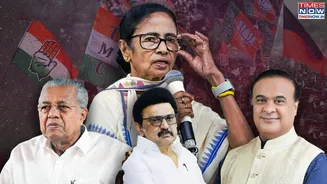
The TMC enters the contest with a formidable structural advantage, anchored in the leadership of Chief Minister Mamata Banerjee. Her personal connect with voters, combined with a deeply entrenched grassroots network, continues to give the party an edge across large parts of the state. TMC has also consolidated key voter blocs, particularly minorities and women, through targeted welfare delivery and sustained political messaging.
However, after over 15 years in power, signs of anti-incumbency are beginning to surface. Allegations of corruption, especially around teacher recruitment and local governance, have further dented its clean governance narrative in pockets.
On the other hand, the BJP draws strength from the national appeal and backing of Prime Minister Narendra Modi, which continues to energise its voter base. The party has made significant inroads in north Bengal, tribal belts, and select urban clusters, while steadily expanding its organisational cadre on the ground.
Yet, its growth remains uneven. The absence of a strong, widely accepted state-level leadership and limited penetration in minority-dominated regions continue to constrain its ability to convert momentum into a statewide electoral breakthrough.
Takeaway: TMC has structure. BJP has momentum, but not yet uniform reach.
The 2026 Equation: Stability vs Swing
Going into the elections, TMC looks to have an upper hand; however, the margins have drastically reduced in recent polls. In 2024, it led in 192 assembly segments, more than double BJP’s tally.
The 2026 West Bengal election will hinge on a few decisive factors: the extent of minority vote consolidation, the continued support of women benefiting from welfare schemes, the behaviour of swing voters in tightly contested constituencies, and the BJP’s ability to build credible, localised leadership beyond its central appeal.
The Big Picture
West Bengal is no longer a one-sided contest - but neither is it a fully competitive state yet.
It sits in a hybrid zone:
- A dominant incumbent with strong delivery
- A rising challenger with expanding vote share
- A fragmented opposition beyond the top two
The five charts together reveal a simple truth - this election won’t be decided by who leads - but by who converts votes into seats where it matters most. The results will be declared on May 4.