








What is the story about?
TEHRAN, Iran (AP) — On Sunday, Iranians expressed a blend of disappointment and defiance after peace negotiations with the United States failed to produce
an agreement despite lengthy discussions. U.S. officials attributed the breakdown to Iran's unwillingness to abandon its nuclear program, while Iranian officials held the U.S. responsible for the stalemate without elaborating on specific issues.
Impact of Negotiation Failure
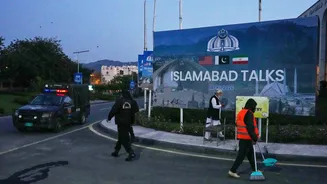
The unsuccessful high-stakes talks in Pakistan, which lasted 21 hours, cast uncertainty over the future of a fragile ceasefire that is set to expire on April 22. Although the ceasefire currently holds, the ongoing conflict has left many residents of Tehran apprehensive.Digital Isolation and Media Control
Since the onset of the war on February 28, Iranians have experienced a digital blackout, relying heavily on state-controlled media for information. A limited number of individuals have access to overseas satellite television channels, creating an information vacuum.Public Sentiment and Perspectives
At a newsstand in Tehran, Farhad Simia expressed his hope for a successful negotiation to end the fighting, stating, “I’m against war. I think negotiation is the better path.” He attributed the failure to the U.S. making “inappropriate demands.”Mehdi Hosseini shared similar sentiments, noting, “Considering the advantage Iran seemed to have on the battlefield, there was a real concern that we might lose all those gains in the negotiations.” He emphasized the importance of the Iranian negotiating team maintaining its position during the talks.
Symbolism in Tehran
Tehran's streets are adorned with large Iranian flags and billboards celebrating the nation's leaders and military successes. One prominent billboard depicted Iranian military personnel lifting a fishing net containing miniature U.S. military aircraft, accompanied by the message, “The Strait Remains Closed.”Voices of Resilience
Hamid Haghi attributed the talks' failure to “America's overreach,” asserting that the U.S. seeks control over the Strait of Hormuz. He remarked, “We can oversee (it) ourselves.”Mohammad Bagher, 60, echoed the resolve of many Iranians, stating, “We are a nation of dialogue and negotiation as long as our interests are respected. We will stand firm to the end, we are ready to sacrifice our lives, and will not give them one inch of our land.”
Human Cost of Conflict
The ongoing war has resulted in significant casualties, with reports indicating at least 3,000 deaths in Iran, alongside casualties in Lebanon, Israel, and other Gulf Arab states. The conflict has also severely damaged infrastructure across multiple Middle Eastern nations.Moreover, Iran's control over the Strait of Hormuz has disrupted oil and gas exports from the Persian Gulf, contributing to rising global energy prices.