



Two US service members were killed and one is missing in action, the military announced Saturday. This is the first time US troops have been killed since
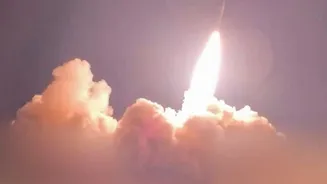
the fighting resumed two weeks ago. The incident raises the number of US service members killed in the war to 16. “On July 17, two U.S. service members in Jordan were killed in action as U.S. Central Command (CENTCOM) and partner forces defended against Iranian ballistic missile and drone attacks. Additionally, one service member is currently missing in action,” US Central Command said in a social media post. Four American service members were medically evacuated to hospitals in Jordan following the attack. The military said all four have since been discharged, while other personnel treated for minor injuries have returned to duty. The identities of the two service members killed have not been released. "Out of respect for the families, CENTCOM will withhold additional information, including the identities of the fallen warriors, until 24 hours after the next of kin have been notified," the command said. President Donald Trump, reacting to the deaths, told NewsNation that the deaths were "a very sad thing." "We hate to see it happen. It's in service to our country," Trump said. The US military on Saturday night said it began launching new airstrikes against Iran to "swiftly punish" it for killing American service members. "The strikes are designed to further degrade Iran's ability to threaten commercial shipping in the Strait of Hormuz and swiftly punish Islamic Revolutionary Guard Corps forces who launched attacks against American service members in Jordan last night," CENTCOM said in a post on X.
Inside Iran's Middle East Strikes
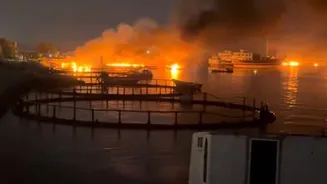
Iran on Saturday launched fresh missile and drone attacks on US military facilities and infrastructure across the Gulf, widening the conflict as American strikes on Iranian military targets entered a seventh consecutive day.
Kuwait was among the countries affected, with authorities reporting damage to a desalination plant and the suspension of operations at Kuwait International Airport because of repeated missile and drone threats.
Iran's Islamic Revolutionary Guard Corps (IRGC) said it had struck a US military support centre at Camp Arifjan and destroyed a radar facility at Ali Al Salem Air Base. It also claimed to have targeted sites in Bahrain and Jordan.
Kuwait's armed forces said they intercepted Iranian ballistic missiles and drones early on Saturday, adding that several firefighters and oil sector workers were injured while responding to the attacks.
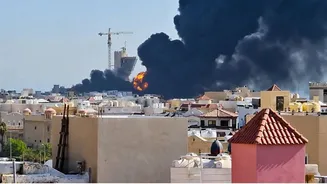
Kuwait Petroleum Corporation later said one of its oil facilities had been damaged in what it described as repeated Iranian attacks, causing significant damage and some injuries, according to the state news agency.
Iranian state media also reported that the IRGC had targeted Sheikh Isa Air Base in Bahrain, where it said US combat aircraft were stationed, as well as an intelligence data centre.
The Guards further claimed they had destroyed at least two US fighter aircraft and three other aircraft during a missile and drone attack on the US base at Al Azraq in Jordan. Reuters said it could not independently verify those claims.
Jordan's armed forces said they intercepted a number of missiles and drones that entered the country's airspace, adding that the military acted to protect the country's sovereignty and the safety of its citizens.
Saudi Arabia's early warning system also issued alerts urging residents in Al-Kharj and Yanbu to seek shelter. Two people familiar with the matter told Reuters the warnings followed an Iranian missile attack, although Saudi state media did not specify the cause of the alerts and government officials did not immediately comment. The IRGC made no reference to any attack on Saudi Arabia.
Separately, Iran's state broadcaster, Islamic Republic of Iran Broadcasting (IRIB), urged people to "stay away" from US military bases across the Gulf.
US Strikes Hit Bridges, Roads in Iran
Iranian state media reported on Saturday damage to bridges and roads in the south of Iran, and said that a water desalination plant in Jask was hit. It cited a local official as saying that about 10,000 people were facing water shortages.
Iranian state media reported strikes on two bridges, a railway station and an airport in the southern part of the Islamic republic, near the strategic strait, which is crucial to global oil and gas flows. Three people were killed in the attack on the bridges in Hormozgan province, state TV said on Telegram.
State TV in Tehran earlier reported two explosions in the western city of Bushehr -- home to Iran's only civilian nuclear plant -- in a "continuation of the American enemy aggression".
Iran's Fresh Warnings
In a statement, it said Iran had launched missile strikes targeting Sulaymaniyah in Iraq and Bahrain "in response to US acts of aggression and threats from terrorist groups." "People should stay away from US bases," the broadcaster said.
It also called on countries hosting American forces to close those facilities, saying: "If you want to remain safe from Iran's missiles, summon your #courage and assert your #independence, and shut down U.S. military bases on your territory."
The IRGC said the attacks were carried out in response to recent US strikes on bridges, power facilities and other infrastructure inside Iran. "Since there is no international institution to prevent the savagery of the U.S. military, we have no path before us except the Quranic command: 'Whoever attacks you, attack them in the same manner'," the group said, warning that further strikes could follow.
Iran's Health Ministry said 50 people had been killed and more than 500 injured in US strikes over the past three weeks.
State television reported that US airstrikes early on Saturday killed three people and injured eight others in Hormozgan province, near the Strait of Hormuz, while damaging two bridges and a road tunnel.
The semi-official Fars news agency later reported additional US strikes in the province on Saturday afternoon, quoting local authorities, but said there were no reports of civilian casualties.
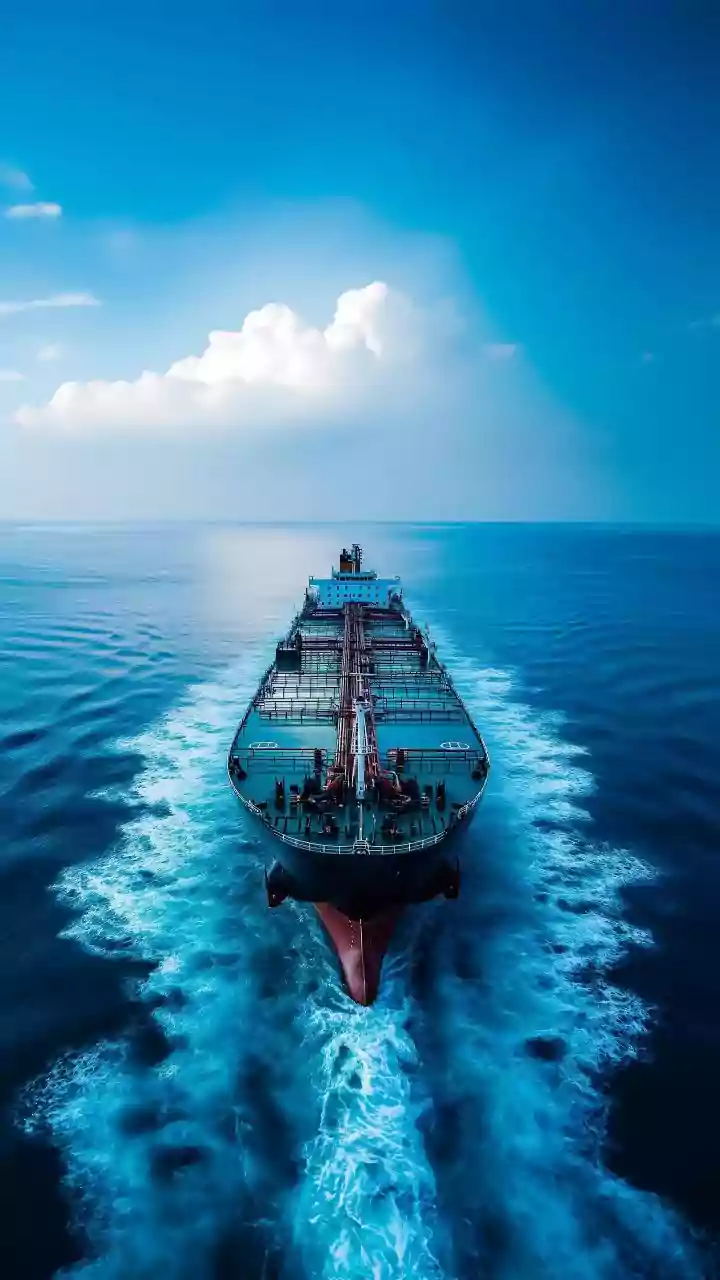
Iranian Foreign Ministry spokesperson Esmaeil Baghaei accused the United States of seeking control over the Strait of Hormuz, through which around one-fifth of the world's oil supply normally passes.
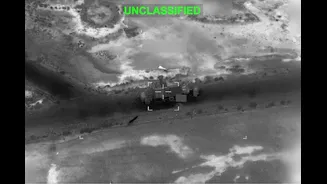
Earlier, CENTCOM said it had completed its seventh consecutive day of operations, targeting Iranian surveillance sites, military logistics infrastructure, underground weapons storage facilities and maritime capabilities.
"The United States Military has carried out strikes exclusively on military targets, including military logistics infrastructure," White House spokesperson Anna Kelly said. "In contrast, the Iranian regime has intentionally targeted civilian vessels in the Strait of Hormuz and lashed out against its neighbors who have no role in this conflict."
She added: "President Trump will not allow these acts of terrorism to continue unanswered, which is why he has directed CENTCOM to degrade Iran's ability to carry out these attacks and hold the regime accountable."