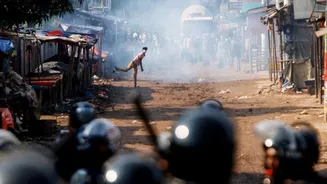







Bangladesh’s garment workers are set to receive a higher minimum wage after months of protests disrupted one of the country’s most important export industries.
A government-appointed wage board has agreed to raise the monthly minimum from 12,500 taka to 17,500 taka, although the offer remains well below the 30,000 taka demanded by workers. The chairman of the wage board said on Wednesday that a majority of its members had agreed to the revised figure. The increase will take effect in December, with workers expected to receive their new salaries in January. Whether the announcement will persuade workers to return to factories remains uncertain. Labour representative Babul Akhter acknowledged that the offer did not fully meet workers’ expectations, but urged them to resume work. “Although we are not completely satisfied, the outcome is not entirely bad either,” Akhter told reporters. He also pointed to the shorter interval between wage revisions, saying workers had previously received an increase every five years, whereas the latest revision had come after three years.
Workers' demand remains unmet
The proposed minimum wage of 17,500 taka is 5,000 taka higher than the existing 12,500-taka floor, but remains considerably below the 30,000 taka sought by protesters. The gap leaves a key question hanging over the agreement: will workers consider the increase sufficient to end the unrest?
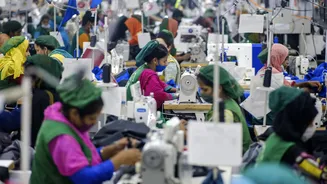
The dispute carries consequences far beyond the factory workforce. Bangladesh’s central bank describes the garment sector as the country’s “export engine”. The industry earns approximately $38 billion annually, employs around four million people and accounts for four-fifths of the country’s exports. Many of its workers are women from rural areas.
Protests hit a major export industry
The financial cost of the unrest has been substantial. The Bangladesh Garment Manufacturers and Exporters Association (BGMEA) estimated that the protests had caused losses of around $428 million, while orders worth another $254 million had moved to other countries.
Bangladesh is the world’s second-largest garment exporter after China. The industry has been central to the country’s economic development, providing employment to millions and generating a major share of its export earnings. Yet its expansion has repeatedly drawn attention to the wages, safety standards and working conditions of those employed in its factories.
The 2013 Rana Plaza disaster remains the most devastating reminder of those risks. The factory complex collapse killed 1,134 people and injured thousands, exposing serious safety failures in an industry on which millions of workers depend. Other incidents, including factory fires, have also resulted in fatalities, sometimes claiming dozens of lives.
The latest wage decision comes against this backdrop of economic dependence and longstanding labour concerns. While the proposed increase offers workers a higher minimum income, it does not meet the demand that brought them onto the streets. With the industry already reporting significant financial losses, the response from workers will determine whether the announcement marks a resolution or merely another stage in the dispute.