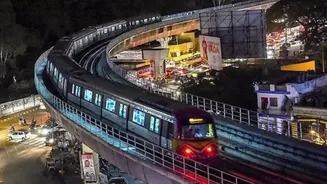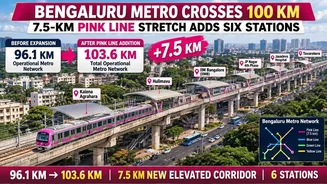







Bengaluru: Bengaluru's Namma Metro is set to cross the 100-km milestone with the inauguration of the 7.5-km elevated section of the Pink Line, adding six
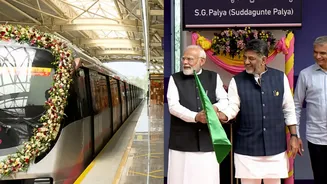
new stations to the city's operational metro network. The expansion will increase the network's length from 96.1 km to 103.6 km, making Bengaluru home to India's second-longest operational metro network after Delhi, according to reports. Prime Minister Narendra Modi inaugurated the new section on November 13, while passenger services are scheduled to begin at 6 am on November 14. Built at an estimated cost of Rs 3,470 crore, the elevated corridor will connect Kalena Agrahara to Tavarekere through six stations along the Bannerghatta Road stretch. The expansion is significant not just because of the additional kilometres of track but also because it brings metro connectivity closer to residential neighbourhoods, educational institutions, hospitals and commercial areas in south Bengaluru. The Pink Line is expected to make daily commuting easier for people travelling through Kalena Agrahara, Hulimavu, Bilekahalli, JP Nagar and surrounding localities. Bengaluru Metro expansion: Network grows from 96.1 km to 103.6 km With the addition of the elevated Pink Line section, Bengaluru's operational metro network will expand by approximately 7.8 per cent, crossing the 100-km mark for the first time. Before the launch, Namma Metro operated three lines, the Purple, Green and Yellow lines, covering approximately 96.1 km. The network had around 83 stations. The six additional stations will take the total to approximately 89 stations, subject to how interchange stations are counted. The new stretch increases the existing operational network by approximately 7.8%. The expansion also strengthens Bengaluru's position among India's major metro cities. At 103.6 km, it will rank behind Delhi and ahead of Mumbai in operational metro length. Which areas will benefit from the new Pink Line stations? The new elevated corridor runs through important residential and institutional areas in south Bengaluru. It will add six stations to the network: Kalena Agrahara, Hulimavu, IIMB, JP Nagar 4th Phase, Jayadeva Hospital and Tavarekere. The stations are expected to improve access to Bannerghatta Road, Hulimavu, Bilekahalli, JP Nagar and nearby residential pockets. The IIM Bangalore station will also improve access to the educational institution and surrounding areas, while Jayadeva Hospital station will serve as an important interchange point. One of the biggest advantages will be the connection with the Yellow Line at Jayadeva Hospital. This will allow passengers to switch corridors and travel towards Electronic City, HSR Layout and other parts of south Bengaluru without relying entirely on road transport. However, the Pink Line's connection with the Purple Line at MG Road and its eventual connection with the Blue Line at Nagawara are part of the full corridor's future connectivity. These links will not become operational with the opening of the six-station elevated section. How many people will benefit? What the ridership figures indicate The expansion is expected to benefit commuters living and working in south Bengaluru, particularly those travelling along Bannerghatta Road and areas surrounding the six new stations. However, there is an important distinction between the metro's network length and its population coverage. The increase to 103.6 km does not mean that the entire city is now covered by metro services. Nor has a verified official figure been established for the exact number of residents who will benefit directly from the new six stations. The potential impact can instead be understood through existing metro usage. Namma Metro was already carrying an average of approximately 9.16 lakh passengers daily, according to figures reported ahead of the Pink Line launch. This indicates the scale of demand for mass public transport in Bengaluru. The network has also witnessed substantial ridership growth following previous expansions. After the Yellow Line began commercial operations in August 2025, Bengaluru Metro recorded 10,48,031 passenger boardings on August 11, 2025. However, that figure is no longer the all-time record. Publicly available ridership data lists 12,07,223 rides on April 29, 2026, indicating that daily demand has continued to grow. The Pink Line's impact will depend on how effectively it connects residential neighbourhoods with employment hubs and other metro corridors. Its interchange with the Yellow Line is particularly important for commuters travelling towards Electronic City and other technology-sector locations. Metro frequency, trains and BMTC feeder bus services The elevated Pink Line section will initially operate with five trains. Four trains will be deployed for regular passenger services, while one will remain on standby. Trains are expected to operate at intervals of approximately eight minutes. Passenger services are scheduled to begin at 6 am on November 14, with the new corridor expected to provide another public transport option for commuters travelling along Bannerghatta Road. Last-mile connectivity will also play an important role in determining how many commuters use the new stations. The Bengaluru Metropolitan Transport Corporation (BMTC) has planned five dedicated feeder bus routes using 30 buses, with approximately 415 daily trips. These services are intended to connect metro stations with surrounding residential areas and activity centres, including Uttarahalli, BTM Layout, Arekere, Bilekahalli, Begur Lake and Singasandra. The proposed feeder services will operate at approximately 10-minute intervals during peak hours. The aim is to help passengers reach metro stations without depending entirely on private vehicles or auto-rickshaws.