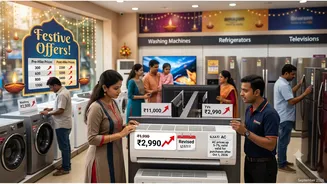










Consumers planning to buy air-conditioners, televisions, refrigerators and washing machines ahead of the festive season could face higher prices from October,
as manufacturers respond to rising raw-material, logistics, energy and currency-related costs. Several major consumer durable companies have communicated price increases to trade partners ahead of the Navratri-Diwali shopping period. The hikes vary across brands and categories, including ACs, TVs, refrigerators, among others, with some manufacturers raising prices by as much as 10 per cent, according to reports. LG Electronics India, however, has clarified that its October price revision will apply only to air-conditioners, with prices set to increase by 5-7 per cent from October 1, 2026. The company said no decision has been taken on revising prices of its other products as of now. The latest round of increases comes at a crucial time for the consumer durables industry, with the festive period traditionally accounting for a major share of annual sales. Why Consumer Electronics Prices Are Rising Manufacturers are facing pressure from higher input costs across several key materials. The price upstick is led by the increase in the prices of commodities including copper, resin, steel and aluminium, along with elevated logistics and energy expenses and adverse foreign-exchange movements. Across the broader industry, copper prices have climbed sharply, while aluminium, steel and resin have also become more expensive in recent months. The prolonged West Asia crisis and renewed raw-material inflation have added to the pressure on manufacturers and their supply chains. What Higher Prices Could Mean For Festive Shopping The timing of the latest price revisions could influence consumer behaviour during the year's biggest shopping window. Buyers who were already planning purchases may bring them forward to avoid paying more after the new prices take effect. However, repeated increases could have the opposite effect for some households, particularly as consumers reassess discretionary spending and compare products across brands and price segments. “A 5 to 8 per cent increase in the price of consumer durables at the beginning of the festive season could have a meaningful impact on consumer behaviour, particularly because this is reportedly the third price revision this year. While some consumers may advance purchases to avoid paying more, repeated increases could also lead buyers to postpone purchases, compare brands more closely or move towards more affordable models,” said Sonam Chandwani, Managing Partner at KS Legal & Associates. The latest increases follow earlier price revisions during the year. Cumulative price increases across some consumer durable categories are now estimated to have reached 16-18 per cent since January, increasing the pressure on manufacturers to balance margins with festive demand. As per Chandwani, manufacturers can revise prices in response to legitimate commercial factors such as input costs, freight expenses and currency movements. However, the way those prices and discounts are presented to consumers remains important. “Rising commodity, freight and currency costs are legitimate commercial factors that can influence pricing. The legal concern arises from how that revised price is communicated to the consumer. The consumer is entitled to clear and accurate information about the actual price payable and should not be misled through artificial discounts, inflated reference prices or undisclosed mandatory charges,” he added. She further said, “The Consumer Protection Act, 2019 places obligations on businesses against misleading advertisements and unfair trade practices. Therefore, festive promotions should accurately reflect the benefit being offered. If a product is advertised as being available at a significant discount, the underlying pricing history and the actual saving represented to the consumer should be genuine and capable of being substantiated.” Festive Discounts Under Consumer Protection Lens With companies raising prices close to the festive shopping season, the distinction between an actual discount and a promotional reduction from an inflated reference price could become increasingly relevant. Chandwani said, “With successive price increases, transparency becomes particularly important. Consumers should be able to distinguish between a genuine price reduction by a retailer and a promotional discount calculated against a recently increased or notional price. Any compulsory charges relating to installation, delivery, accessories or other services should also be clearly disclosed rather than appearing only at the final stage of the transaction.” For consumers, the upcoming festive season could therefore involve a trade-off between buying early to avoid announced price increases and waiting for promotional offers.