







What is the story about?
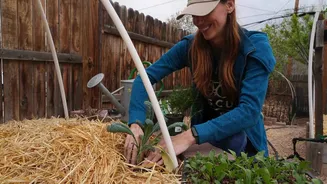
DENVER (AP) — Heather Grady cautiously transplanted beet seedlings into her garden as light rain fell, yet concerns about an impending dry winter and low
reservoir levels lingered. With most of Colorado experiencing drought, Grady and her husband, Terrance, explored methods to conserve water in their backyard vegetable garden. The West's winter of record-low snowfall has resulted in reduced snowmelt, impacting rivers and lakes that supply water to the region. This situation has prompted communities, agricultural producers, and businesses to adapt to a reality of diminished water resources.
Water Conservation Measures
In response to the drought, cities have enacted outdoor watering restrictions. Denver Water implemented its earliest drought restrictions in history on March 25, while Salt Lake City encouraged residents to voluntarily reduce water usage. Other cities like Los Angeles and Las Vegas have year-round watering regulations in place.Despite these limitations, individuals can still cultivate their own produce in a water-efficient manner. Experts provide guidance on starting a garden that conserves water, especially in arid conditions.
Assessing Water Sources
Greg Peterson, founder of The Urban Farm educational platform, advises gardeners to evaluate available water sources, including unconventional ones. Rainwater harvesting, collecting water from rinsing vegetables, and capturing condensation from air conditioners are effective methods for conserving water.Don Titmus, a co-educator, shares his experience of collecting greywater for his garden in Mesa, Arizona. He utilizes outdoor showers and washes dishes in basins to repurpose water for his plants.
Jamiah Hargins, executive director of Crop Swap LA, emphasizes the advantages of using rainwater, stating, “Rainwater has more oxygen than tap water. It actually makes the roots happier and the plants grow much better.”
Choosing the Right Plants
Selecting plant varieties that are suited to local conditions is essential for water conservation. Noelle Johnson, author of “The Water-Smart Garden,” suggests choosing hybrids that require less water or heirloom plants native to the region.Enhancing Soil Health
Healthy soil comprises dirt, air, organic matter, water, and biological life, and requires less water and fertilizer than unhealthy soil. Josie Hart, Associate Director of Sustainable Agriculture at Denver Botanic Gardens Chatfield Farms, recommends soil testing to identify nutrient deficiencies.When preparing soil for the first time, it is important to aerate hard dirt and incorporate compost or leaves for better texture. Over time, adding compost on the surface allows worms to distribute nutrients effectively.
Protection from Environmental Factors
Sun and wind can significantly dry out gardens. Planting near structures like fences or trees can provide necessary protection. Additionally, shade cloths can reduce evaporation by filtering sunlight, which is beneficial for plants stressed by heat.Johnson advocates for intensive planting techniques, which optimize space and reduce evaporation by allowing mature plants to shade younger ones. Planting directly in the ground instead of raised beds can also minimize exposure to the elements.
In arid climates, creating a waffle bed—a grid pattern of raised soil around plants—can effectively capture moisture, according to Hart. She states, “Creating a waffle bed is going to capture any moisture you have going and it will keep it there.”
Mulching is vital for retaining soil moisture and suppressing weeds, though caution should be taken with wood mulch, which can deplete nutrients.
Efficient Watering Techniques
Experts recommend using irrigation systems that deliver water directly to the soil, such as soaker hoses or drip systems. Spraying water tends to result in evaporation losses.While choosing an irrigation method may seem daunting, numerous online resources are available, including free workshops through urbanfarm.org and local nurseries.
Watering deeply but infrequently encourages plants to develop deeper roots. Hart advises watering for at least an hour during hot summer months, followed by several days without additional watering. The Grady couple plans to implement this strategy this year, shifting to deep watering three times weekly instead of daily short bursts.
“It's a huge change,” Grady remarked.