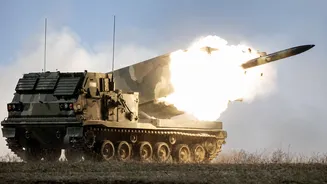

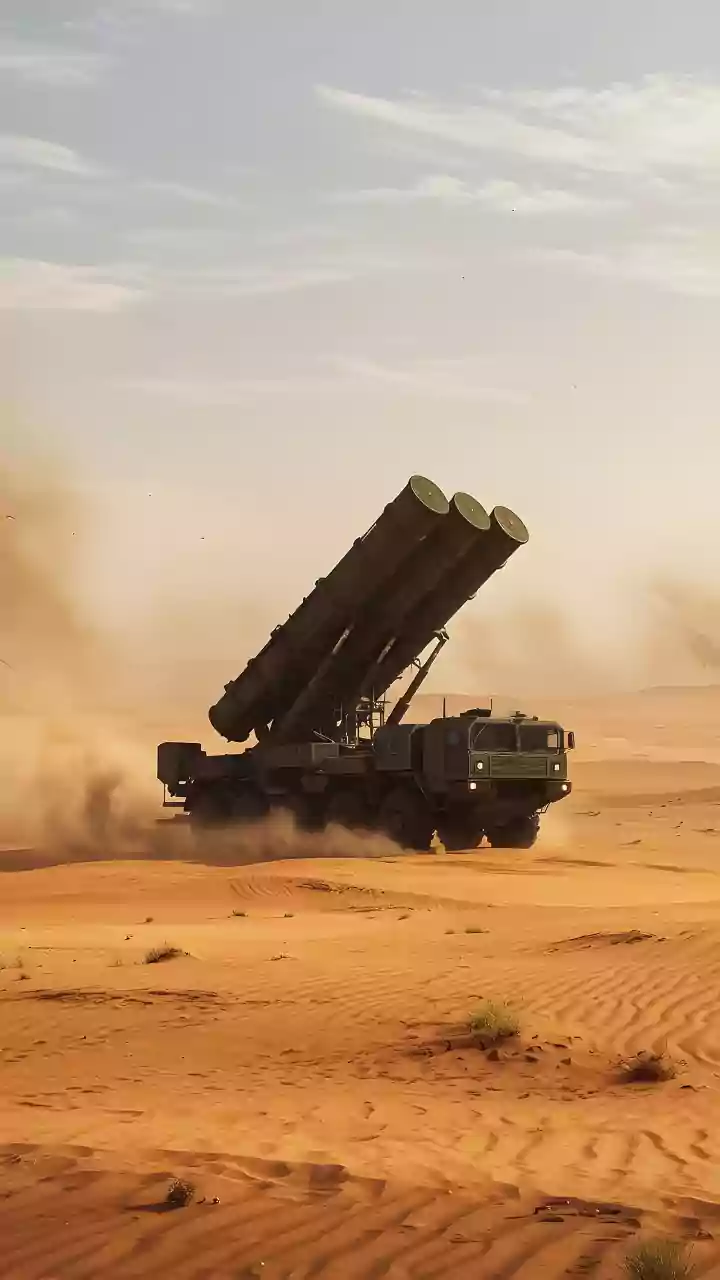







The United States military has reportedly consumed the vast majority of its available long-range precision strike missiles during the five-month conflict
with Iran, fuelling concerns inside Washington about the country's ability to sustain future high-intensity military operations. According to an exclusive Reuters report citing four people familiar with internal military assessments, the US Army has now used "virtually all" of its deployable inventories of Army Tactical Missile Systems (ATACMS) and the newer Precision Strike Missile (PrSM) during operations across the Middle East. The reported depletion comes as the conflict has stretched far beyond initial expectations. President Donald Trump had projected that the campaign against Iran would be relatively short when it began alongside Israeli operations in February. Instead, Reuters reported that prolonged combat has significantly reduced stocks of some of America's most advanced conventional precision weapons, prompting internal discussions about the implications for deterrence against other major adversaries, including China and Russia.
ATACMS And PrSM At The Centre Of Long-Range Strike Campaign
According to Reuters, ATACMS and PrSM have formed the backbone of the Army's land-based precision strike capability during the conflict. Both systems allow commanders to engage high-value military targets from significant stand-off distances without exposing combat aircraft to sophisticated air defence networks.
Two sources familiar with the data told Reuters that US forces had used "virtually all" available inventories of both missile types. A fourth source said US Central Command (CENTCOM) had almost exhausted the land-based missile stocks assigned to the Middle East before replenishing them from inventories positioned elsewhere around the world.
The newer Precision Strike Missile, designed to gradually replace the ageing ATACMS inventory, offers longer range and improved targeting capabilities. However, analysts note that production remains comparatively limited because the missile only recently entered operational service, making current inventories significantly smaller than those of legacy systems.
Military analysts have long regarded both missiles as critical for potential conflicts involving heavily defended adversaries such as China. Their ability to strike command centres, missile launchers and air defence systems from long distances makes them among the Army's most strategically important conventional weapons.
White House, Pentagon Reject Readiness Concerns
Responding to Reuters' reporting, President Trump rejected suggestions that the US military was facing a shortage of precision weapons. "Our defence companies are, at this moment, making more munitions than they have ever made before, in addition to expanding their plants and equipment at record levels," Trump said, adding that the United States still possessed "far more munitions than anyone in the world" and "far more than we need."
The Pentagon also sought to reassure allies and adversaries alike. Chief Pentagon spokesman Sean Parnell said America's armed forces retained all the capabilities necessary to execute military operations whenever directed by the president while continuing to maintain a deep arsenal to defend US interests globally.
Nevertheless, Reuters reported that internal discussions within the administration have increasingly centred on how much longer current operations against Iran can continue without affecting America's ability to respond rapidly to crises elsewhere.
Defensive Missile Stocks Also Under Pressure
The reported strain extends well beyond offensive strike weapons. Reuters, citing sources familiar with classified military assessments, reported that inventories of key defensive interceptors have also declined substantially during the conflict.
A recent study by the Center for Strategic and International Studies (CSIS) estimated that approximately 65% of US Patriot interceptor missiles deployed for the conflict had been expended between February and July. The same report estimated that stockpiles of THAAD ballistic missile interceptors had declined by at least 38% over the same period.
Reuters reported that two of its sources said those estimates broadly matched internal government assessments. One source also told Reuters that the US Navy has consumed slightly less than half of its global inventory of Tomahawk cruise missiles since the conflict began. Reuters noted that it could not independently verify that figure.
Tomahawk cruise missiles remain the Navy's principal long-range land attack weapon, launched from destroyers, cruisers and submarines to strike heavily defended targets without risking aircrews. Meanwhile, Patriot and THAAD systems provide the backbone of US ballistic missile defence by intercepting incoming missiles before they reach their targets.
Production Increasing As Pentagon Rebuilds Stocks
The reported drawdown has accelerated efforts to expand America's missile production capacity. Lockheed Martin continues shifting production from the ageing ATACMS to the next-generation PrSM, while the Army has already placed substantial procurement orders extending into 2027.
At the same time, Raytheon, now operating under RTX, has reached a tentative multi-year agreement with the Pentagon aimed at increasing production of Tomahawk cruise missiles, Patriot interceptors and other precision-guided munitions.
Defence analysts broadly agree that production rates are rising across the US defence industry. However, many caution that replenishing stockpiles after months of sustained high-intensity combat will likely require years rather than months. The reported consumption of long-range strike weapons during the Iran campaign has once again underscored that industrial capacity is becoming as strategically important as battlefield capability in sustaining modern warfare.