
India’s air dominance during the 88-hour Operation Sindoor forced Pakistan into agreeing to a ceasefire during the May 7–10, 2025 conflict, according to a detailed
European military assessment. The analysis notes that India secured a decisive operational edge by safeguarding critical assets, weakening adversary capabilities, controlling escalation dynamics and showcasing credible deep-strike capacity without breaching nuclear thresholds. The report, titled Operation Sindoor: The India-Pakistan Air War (7–10 May 2025), is authored by Adrien Fontanellaz and was published last week by the Centre d’Histoire et de Prospective Militaires (CHPM), an independent Swiss institution focused on military history and strategic studies, based in Pully, Switzerland. Also Read | Budget 2026: After Operation Sindoor, Govt Plans Biggest-Ever Capital Push for Armed Forces - Exclusive Established in 1969, CHPM is unaffiliated with any government and presents itself as a neutral platform for professional military research, force-preparation studies, and lessons-learned analysis. The publication was released under institutional oversight, with its review committee comprising Joseph Henrotin, a Paris-based strategic analyst linked to European defence think tanks; Claude Meier, a retired Swiss Air Force Major General and former Chief of Staff; and Arthur Lüsenti, a nuclear doctrine and arms control expert with experience at the Geneva Centre for Security Policy. According to the report, India’s response to the Pahalgam terror attack signalled a shift from past crisis-management precedents. The political leadership, led by Prime Minister Narendra Modi, authorised strikes on Jaish-e-Mohammed and Lashkar-e-Taiba infrastructure deep inside Pakistani territory, while giving the armed forces the autonomy to manage escalation.
How India Dominated The Airspace
The initial wave of Pakistani attacks on the night of May 7–8, 2025 triggered a second phase of Indian escalation, which had been planned during the preparatory stage of Operation Sindoor. On May 8, the Indian Air Force launched a sustained campaign of air interdiction and strikes targeting Pakistani air-defence systems.
The operation focused on border surveillance radars and long-range surface-to-air missile batteries and continued until the evening of May 9. Eight air-defence sites were hit on May 8, followed by four more the next day, with visual evidence confirming the neutralisation of at least two early-warning radars at Chunian and Pasrur.
The IAF also said it struck at least one HQ-9 battery, though Pakistan maintained that its air-defence systems shot down 25 drones on the morning of May 9. In a separate claim, an IAF S-400 battery reportedly caught the Pakistan Air Force off guard, possibly by remaining concealed near the border and engaged an Erieye or electronic warfare aircraft operating well beyond Indian airspace. The IAF asserted that the hostile aircraft was destroyed at a distance of nearly 300 kilometres.
According to the report, the combined impact of these operations sharply degraded both the reach and effectiveness of Pakistani airspace surveillance. Several radars that remained intact reportedly went silent to avoid drawing enemy strikes, creating conditions that could have enabled Indian aircraft to penetrate Pakistani airspace in a subsequent escalation phase.
The report states that Indian forces detected preparations for a Pakistani strike planned for the evening of May 9 and chose a near-immediate counteroffensive. Once the Pakistani action ended, between 02:00 and 05:00 on May 10, the IAF launched a wave of strikes using BrahMos, SCALP-EG and Rampage missiles.
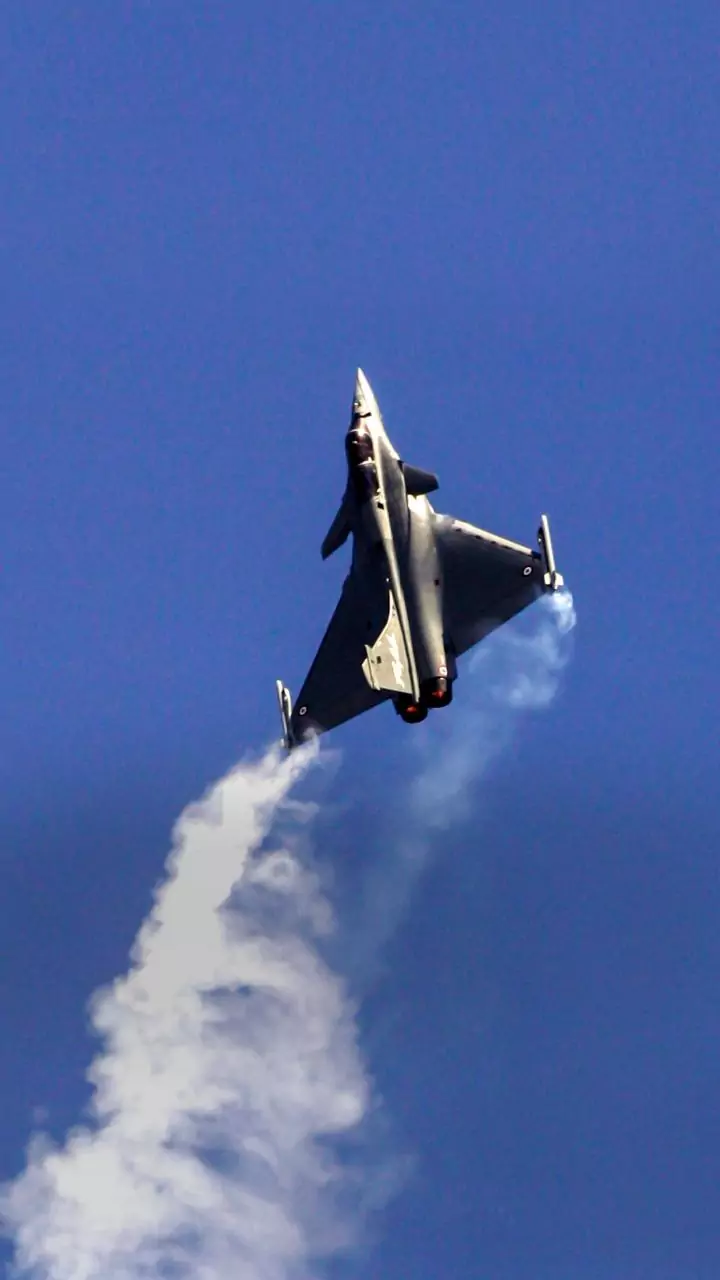
Fired from within Indian airspace by Su-30MKIs, Jaguars and Rafale fighters, the missiles hit seven targets up to 200 kilometres inside Pakistani territory, including a surface-to-air missile battery and five air bases.