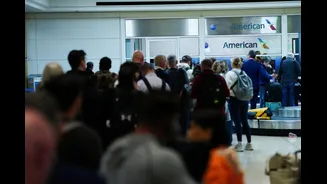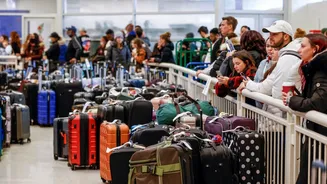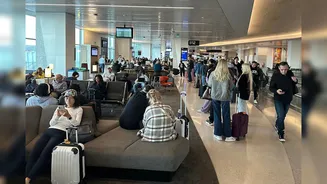







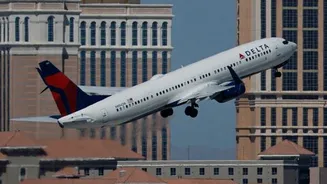

US flight disruptions continued through Sunday as over 10,000 flights were reportedly delayed for a third consecutive day in the aftermath of Friday’s
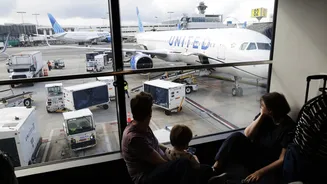
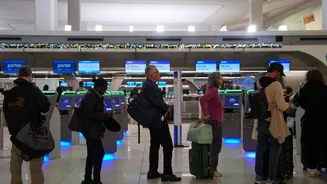
nationwide FAA ground stop. According to FlightAware data reported by multiple outlets, about 2,100 flights were cancelled and 9,400 delayed, more than 11,500 flights affected in total. Snapshots taken at different points in the day put cancellations between roughly 2,000 and 2,300, and delays between 7,500 and 9,400. One count showed 2,291 cancellations as of 3 p.m. ET, up from about 1,600 that morning. American Airlines was hit hardest, with 805 cancellations, about 13% of its schedule, followed by Delta with 360, or 7%. Sunday’s totals were well below Saturday’s 6,697 cancellations and Friday’s 9,201 as airlines worked through the backlog, and carriers were expecting a return to near-normal operations on Monday. Just over 1,300 of the more than 26,000 flights scheduled for Sunday were canceled, according to Cirium, an aviation analytics firm. That amounts to about 5.2% of scheduled flights. Prior to Friday’s ground stop, the average cancellation rate for U.S. departures was 3.4%. The four-hour stoppage was the longest in 25 years. It caused massive travel disruptions, but officials said they expected airline schedules to fully recover by late Sunday or early Monday. “As we look to the end of the day and into tomorrow, we should be running at full capacity,” Transportation Secretary Sean Duffy said Sunday. “We’re well on our way.” At Nashville International Airport, Lona Ivers, Will Ahern and their children were trying to get home to Minnesota after vacationing in Tennessee. They made it from Knoxville to Nashville with no problems Saturday, only to have their flight to Minnesota canceled. The Federal Aviation Administration on Sunday described a radar site in Amarillo, Texas, and a radio communications site in El Dorado, Arkansas, as potential sources for the problem, which involved excess data flooding the air traffic control system and causing intermittent disruptions to communications and radar feeds. Duffy said after a contractor replaced old copper wire with new fiber wire at the Arkansas site and the router was turned on, a problem then cropped up in Texas, cascading into the ground stop. “We didn’t think that should or would happen,” he told ABC’s “This Week.” In multiple appearances on Sunday news shows, Duffy continued to press Congress for billions of dollars for upgrades to the air traffic control infrastructure. “I can’t apologize for what was passed on to us. And I can’t blame Republicans or Democrats, because it’s all of them. It goes back, 20, 25, 30 years of a lack of investment,” he told NBC’s “Meet the Press.” The air traffic control modernization began last year after Congress approved $12.5 billion of funding. Duffy and the White House are pushing for $30 billion more to complete the work. About 70% of copper wire has been switched to fiber already, officials said Saturday. The Trump administration is pressing for $50 billion to address an aging air traffic control system after problems with routers apparently led to a rare nationwide grounding of all planes, but Democrats are demanding answers about how the administration has spent billions it’s already been given and why its funding request has soared. The growing rift over how to address the Federal Aviation Administration’s vulnerabilities comes as passengers across the country are struggling to get to where they need to go after thousands of flights were grounded Friday, and investigators are still trying to figure out what went wrong. President Donald Trump, who hadn’t spoken publicly or commented on the flight grounding, finally weighed in Sunday with comments on social media blasting his Democratic predecessor and calling for more money to pay for improvements to the system. The finger-pointing and blame-shifting between the Republican administration and Democrats in Congress underscored the political division that could only grow wider when Democrats take control in January and scrutiny of the Trump administration accelerates, even on a matter that impacts all travelers. (With AP inputs)