



India-US trade talks could face a fresh hurdle after the US Senate passed a Russia sanctions bill that could pave the way for tariffs of up to 100 per
cent on countries that continue to buy Russian oil and gas. The development comes at a crucial stage in the India-US trade negotiations, with both sides working towards an interim bilateral trade agreement. The two countries have made substantial progress, but a few issues are still awaiting finalisation. Just days ago, Ministry of External Affairs spokesperson Randhir Jaiswal said India and the US had done a "lot of work" on the proposed trade deal and were working towards resolving the remaining issues. "Both sides have done a lot of work in this regard. There are certain issues that need finalisation. Both countries are working towards finalising the interim bilateral trade agreement," Jaiswal said. A US Trade Representative (USTR) delegation had also visited India in June as part of efforts to advance negotiations on the agreement. However, the latest move by the US Senate has introduced a significant new uncertainty. On Friday, the Senate voted 86-11 to approve the Lindsey O. Graham Sanctioning Russia and Iran Act of 2026, targeting Russia and countries that continue to purchase its petroleum products. India and China are among the major buyers of Russian energy. The bill would give US President Donald Trump the power to impose tariffs of up to 100 per cent on goods from countries that rank among the top five importers of Russian oil and gas. The legislation still has to go through the remaining legislative process before it can become law. But its passage through the Senate raises an important question for India-US trade negotiations. Could the threat of punitive tariffs complicate or even put the interim trade deal on hold?
What experts think
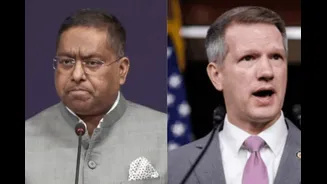
A senior White House economic adviser has said it is up to negotiating teams to determine whether a new US sanctions bill targeting Russian oil buyers will affect trade talks with India. Kevin Hassett, director of the White House National Economic Council, was responding to a question from ANI. He declined to elaborate, saying only that the question was "up to the negotiators."
For India, the issue could become particularly sensitive as New Delhi seeks to protect its access to Russian energy while simultaneously negotiating lower tariffs and greater market access with Washington.
Hassett has previously called the US-India relationship "complicated" but said he remains hopeful of a deal.
In February 2026, the two countries outlined an interim trade understanding proposing a lowered reciprocal tariff rate of 18% on Indian exports, in exchange for expanded Indian procurement of US energy resources and technology.
Implementation was disrupted, however, after the US Supreme Court invalidated the reciprocal tariff mechanism under the International Emergency Economic Powers Act (IEEPA), forcing the administration to adopt a temporary Section 122 framework.
Currently, under a subsequent Section 301 framework tied to forced-labour considerations, most Indian goods incur a 10% supplementary duty above standard Most-Favoured-Nation (MFN) rates.
Despite these shifting structures and uncertainties, both sides continue active dialogue on a transitional trade understanding designed to ease tariff pressures, broaden market access and deepen economic ties.
The key question now is whether the proposed trade agreement can be finalised despite the looming sanctions threat or whether the Russia factor becomes a fresh sticking point in India-US trade ties.
(With agency inputs)