







What is the story about?
TRIKORFO, Greece (AP) — Each year, millions of Orthodox Christians worldwide engage in a six-week ritual that promotes healthy eating habits as part of their
spiritual preparation for Easter. During this period, participants adopt a largely vegan diet, avoiding meat, dairy, eggs, and certain fish, while also refraining from oil and wine on weekdays, reflecting a communal effort to rediscover plant-based cuisine.
Culinary Adaptations in Greece
In Greece, even fast-food chains like McDonald's adapt to the Lenten season by offering menu items that comply with Orthodox dietary restrictions, such as shrimp wraps and plant-based burgers, although these options are not entirely oil-free.The practice of following these dietary guidelines is often referred to as fasting, but it emphasizes abstaining from specific foods rather than complete food deprivation, allowing for personal adaptations to individual needs.
Diverging Traditions
Christian customs regarding Lent vary significantly between Eastern and Western traditions. While Catholics may choose to give up personal indulgences, Orthodox Christians strictly avoid all animal products, except for shellfish.Popular Greek dishes, including moussaka and souvlaki, are absent during this time, with only certain seafood allowed, while many traditional dairy products are also excluded.
Monastic Practices
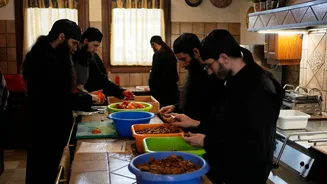
At the Monastery of St. Augustine and Seraphim in central Greece, 40 monks adhere to these dietary rules, cultivating much of their own produce, including zucchini and tomatoes, to prepare flavorful meals.The monks have developed techniques to enhance their meals, using tahini instead of oil for roasted potatoes and creating rich lentil dishes with homemade vegetable stock, all while listening to prayers during mealtime.
Spiritual Significance
Father Nektarios Moulatsiotis, the monastery's abbot, emphasizes that fasting is crucial for fostering deep reflection and spiritual focus. He likens it to endurance training, where occasional hunger pangs serve as reminders of discipline.“In the same way someone goes to the gym to shape their body,” Nektarios remarked, “the church is a gym for the soul.” He notes that a balanced diet can yield benefits beyond religious practice, enhancing self-control and awareness.
Health Benefits of Fasting
Researchers have studied the health effects of the Orthodox fasting periods, linking them to reduced risks of heart disease and type 2 diabetes. Eating a diet rich in whole grains, vegetables, and legumes can promote overall health.“Fasting certainly has benefits, provided it’s done correctly,” said Eirini Babaroutsi, a sports nutritionist. She notes that increased fiber intake during Lent aids digestion and highlights the importance of nutrient-dense foods.
Considerations for Participants
Experts advise caution regarding the six-week fasting cycle, particularly for older adults, young children, and those with health conditions. The Orthodox Church allows exemptions for individuals with special dietary needs.After Lent, it is advisable to avoid excessive eating, as indulging too much after a fasting period can strain the body. Many Greeks choose to participate only during Holy Week, which starts on April 5 this year.
Supermarkets and bakeries across Greece facilitate adherence to Lenten practices by offering a variety of compliant foods, including seasonal vegetables and seafood.
Gerasimos Mantalvanos, general manager of a central Athens fish market, noted that while many customers may overindulge on Easter Sunday, a return to moderation is common afterward. He stated, “A period of fasting, a little fish, and some abstinence from meat, I think these are good for the body.”