


What is the story about?
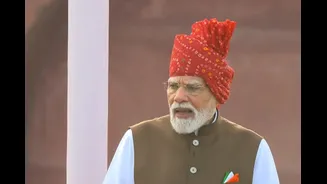
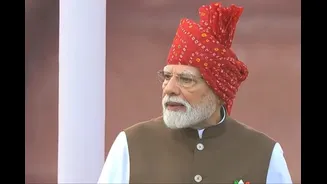
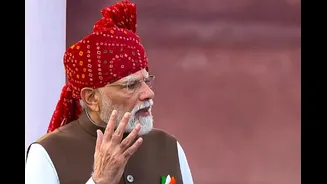
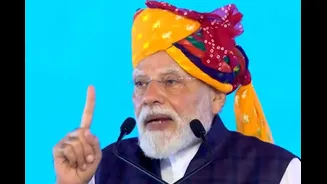
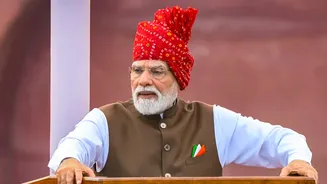
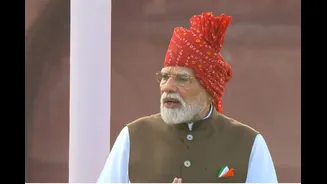
New Delhi: Prime Minister Narendra Modi's 80th Independence Day speech was not just a look back at India's journey since Independence - it was a blueprint
for where he wants the country to go by 2047. At the heart of that vision was 'Saptadhara', seven streams of India's energy, strength and willpower that PM Modi said can drive the country towards self-reliance and developed-nation status. From factories and farms to artificial intelligence, defence, green energy and India's cultural influence, the seven pillars span almost every major engine of India's future economy. PM Modi called on citizens and businesses to harness these strengths to make India more self-reliant and competitive globally.
Here is a closer look at the seven pillars of PM Modi's 'Saptdhara':
1. Manufacturing: The Engine Of Future Growth
Manufacturing was the first pillar of 'Saptadhara', with PM Modi calling for a major expansion of India's manufacturing capabilities.
"We need components as well as complete product," PM Modi said, stressing the need for India to become a key part of global supply chains.
He urged the manufacturing sector to focus on cost, quality and scale to compete globally.
"Our packaging should attract people, and our precision should become our identity," Modi said.
The broader message was clear: India must move beyond assembling products and build the components, technologies and finished goods that global markets need.
2. Kisan: Food And Farming
The second pillar is India's farm and food sector.
PM Modi identified farmers and agriculture as a key part of the country's future growth, highlighting the need to strengthen India's food and farming ecosystem.
The focus on agriculture also places India's farmers at the centre of the country's broader goal of becoming self-reliant.
3. Technology: From UPI To 6G
Technology and innovation form the third pillar of 'Saptadhara'.
"It is the age of data centres, robotics and emerging technologies. So, India will have to be the hub of these technologies. We have realised our potential through the introduction of UPI. We have to aim that Made in India's 6G reaches across the country," PM Modi said.
From data centres and robotics to 6G, PM Modi's message was that India must not merely consume new technologies but develop them and emerge as a global technology hub.
4. Gati Shakti: Building At Speed
The fourth pillar is Gati Shakti, or the ability to move people, goods and businesses faster through better infrastructure and connectivity.
PM Modi stressed the need for more roads and expressways to improve connectivity and give businesses a boost.
The focus on speed and infrastructure is closely linked to India's ambitions to strengthen logistics, attract investment and become a more competitive manufacturing and trade hub.
5. Raksha Shakti: Building India's Defence Muscle
The fifth pillar is Raksha Shakti, with Modi making a strong pitch for self-reliance in defence manufacturing.
He called for greater domestic defence production and highlighted the importance of emerging technologies such as drones and counter-drone systems.
The message was to reduce dependence on foreign suppliers while building India's own defence capabilities and technologies.
6. Green Energy: Powering The Next Growth Phase
Green energy forms the sixth pillar of 'Saptadhara'. PM Modi called for greater innovation in the green energy sector as India seeks to meet its growing energy needs while moving towards cleaner sources of power.
The emphasis on green energy also fits into India's larger ambition of combining economic growth with energy security and a lower-carbon future.
7. Soft Power: India's Global Influence
The seventh and final pillar is India's soft power.
PM Modi pointed to yoga, handicrafts, films, animation, gaming, digital content and the wider creative economy as areas through which India can expand its global cultural influence.
He also highlighted India's tourism potential, saying the country has the ability to attract visitors from around the world.
From national parks and cultural destinations to India's creative industries, Modi said these assets can become powerful drivers of India's global influence and economic growth.
What 'Saptadhara' Means For India's 2047 Goal
Together, the seven streams - manufacturing, farmers, technology, Gati Shakti, Raksha Shakti, green energy and soft power - form the economic, technological, strategic and cultural framework of PM Modi's 'Saptadhara' vision.
The idea fits into the larger ambition laid out in his 80th Independence Day address: an India that is self-reliant, technologically advanced, economically powerful and developed by 2047, when the country marks 100 years of Independence.