




What is the story about?
President Donald Trump and Secretary of State Marco Rubio have reiterated the possibility of U.S. military intervention in Cuba, particularly following
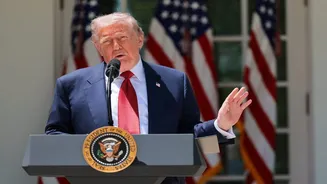
the announcement of criminal charges against former Cuban leader Raúl Castro. This renewed threat intensifies as the administration seeks to address Cuba's long-standing ties with U.S. adversaries. During a recent environmental event, Trump indicated that previous presidents have contemplated military action regarding Cuba, asserting, “it looks like I’ll be the one that does it.” This statement underscores the administration's commitment to addressing perceived threats from the Cuban government.
Rubio Expresses Doubts About Diplomatic Solutions
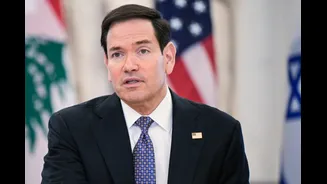
Marco Rubio, a prominent critic of Cuba's socialist regime and son of Cuban immigrants, conveyed skepticism about the potential for a diplomatic resolution under the current Cuban government. He emphasized that while the Trump administration prefers peaceful negotiations, the likelihood of achieving such an agreement appears low.Rubio stated, “Trump's preference is always a negotiated agreement that’s peaceful. That’s always our preference. That remains our preference with Cuba.” However, he expressed concerns about the Cuban leadership’s willingness to engage in meaningful dialogue.
Recent meetings between top Trump officials and Cuban representatives have reportedly not yielded satisfactory results, prompting further sanctions against the Cuban government. Rubio noted that Cuba has historically relied on delaying tactics in negotiations, stating, “They’re not going to be able to wait us out or buy time.”
Indictment of Raúl Castro and Military Preparedness
The Trump administration announced an indictment against Raúl Castro, accusing him of orchestrating the 1996 shootdown of civilian planes. This indictment has been perceived as a strategic move to justify potential military action against Cuba.In response to the charges, Cuban President Miguel Díaz-Canel condemned the indictment as a politically motivated act aimed at justifying military aggression. The U.S. military's deployment of the USS Nimitz aircraft carrier to the Caribbean coincided with the indictment, further escalating tensions.
Rubio refrained from detailing how the U.S. might act on the indictment against Castro, who is approaching his 95th birthday. Nonetheless, he acknowledged that while diplomatic solutions are preferred, the president retains the option to take necessary actions to protect national interests.
Escalating U.S. Sanctions and Regime Change Rhetoric
The Trump administration has intensified sanctions against Cuba, targeting the Grupo de Administración Empresarial S.A., a business conglomerate linked to the Cuban military. This move aligns with Trump's aggressive stance on regime change in Cuba, which he has threatened since ousting Venezuelan President Nicolás Maduro.Rubio articulated that Cuba represents a significant national security threat due to its alliances with China and Russia. He remarked, “Cuba poses a serious national security threat to America because of its security and intelligence ties with China and Russia.”
In a recent statement, Rubio criticized past U.S. policies that allowed families of Cuban military leaders to thrive in the U.S., asserting, “No longer will we permit the families of Cuban military elites to enjoy lavish lifestyles funded by stolen blood-money.”
International Reactions to U.S. Actions
China has publicly opposed U.S. sanctions and pressure on Cuba. A spokesperson for the Chinese Foreign Ministry expressed support for Cuba's sovereignty, stating, “China firmly supports Cuba in safeguarding its national sovereignty and national dignity and opposes external interference.”This international reaction highlights the geopolitical complexities surrounding U.S.-Cuba relations and the broader implications of U.S. foreign policy in the region.