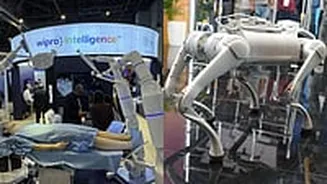






At the India AI Impact Expo 2026 in Delhi, a robotics start-up from Bengaluru called General Autonomy attracted strong attention online after sharing a video
of its new quadruped robot named “Param”. The company described Param as “India’s most powerful indigenous robot dog”. It stressed that Indian engineers designed and built the robot from scratch, rather than assembling imported parts. In a post on X, formerly Twitter, the company claimed that Param was fully built in India by Indians. The viral video shows Param walking confidently through busy Bengaluru traffic. The robot detects obstacles on its own and changes direction to avoid them. It can climb stairs up to 30 centimetres high and even “crab walk” sideways to pass through low spaces. The company said Param can move without human control, follow targets, and stand up again if it falls. Also Read: Bonnet Crushed, Seats Soaked in Blood: Five Dead in Bengaluru After Car Crashes and Topples "Enough of this nonsense! Presenting PARAM: India's most powerful indigenous robot dog. Not assembled, not bought, BUILT IN INDIA, built by INDIANS. For our nation, for our century, for our world! Jai Hind! @narendramodi @adgpi @AshwiniVaishnaw @GoI_MeitY @startupindia," the robotics company stated.
'Built in 7 Months, Presented to PM Modi'
When asked how long it took to build the robot, the company said the project has been running for around seven months. The team used experience from building a humanoid robot earlier and continues to improve Param every two weeks.
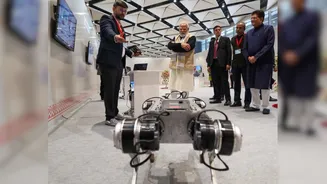
Last month, the start-up presented Param to Prime Minister Narendra Modi during a programme celebrating ten years of the Startup India initiative. The company said the Prime Minister advised the founder to take care of the robot during Delhi’s winter.
Also Read: ‘Sexual Assault of Corpse, Occult Practices’: Indore MBA Student’s Boyfriend Re-Enacts Crime at Scene
Quadruped robots, often called “robot dogs”, are useful because they move easily over rough ground where wheeled machines cannot go. Many countries use them for factory inspections, rescue work in dangerous areas, defence support tasks and research projects.
Param shows how Indian robotics technology is growing and aiming to compete globally.